

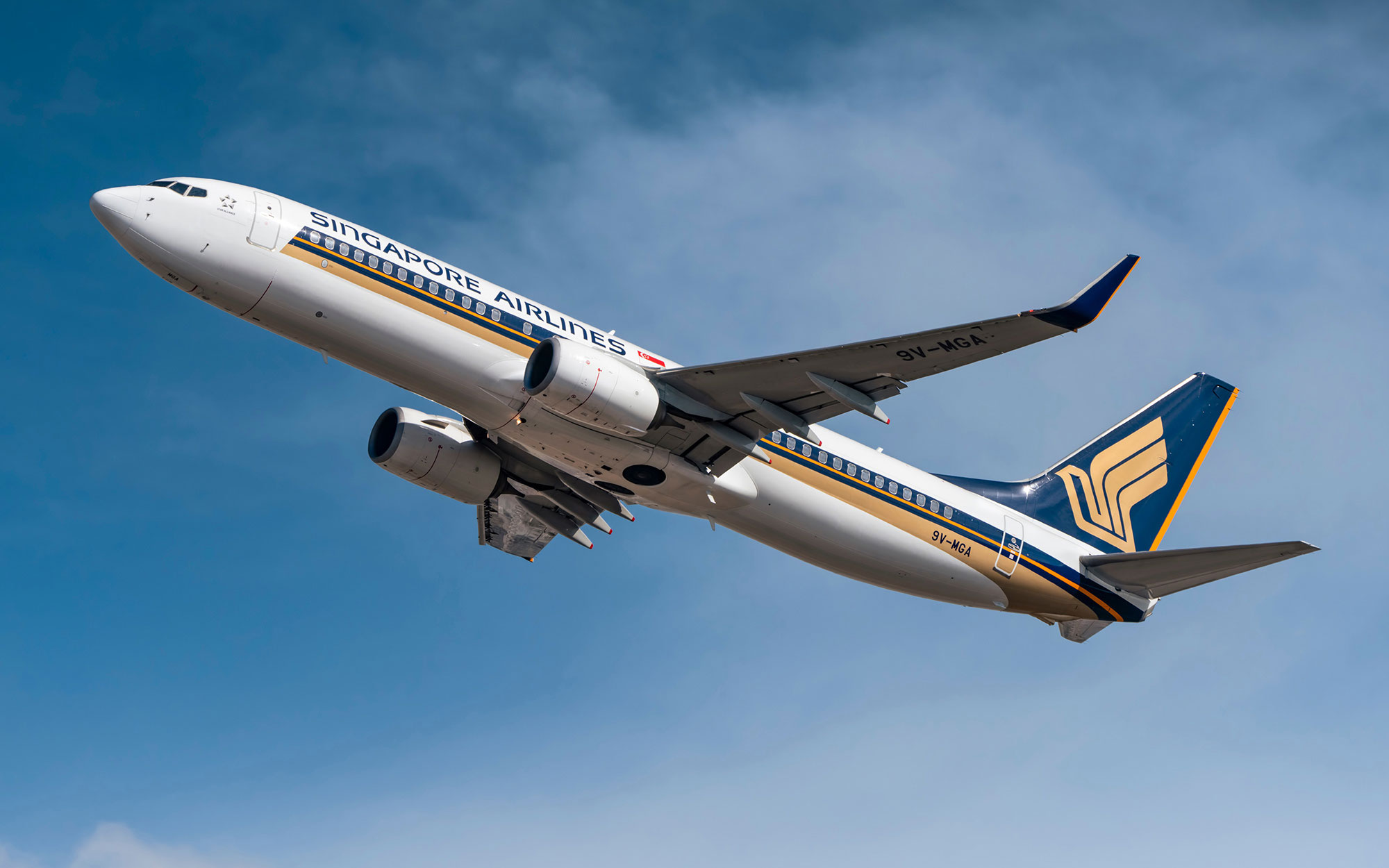
Singapore Airlines has an impressive fleet of over 140 passenger aircraft, and in recent years that’s grown to include not only wide-body jets but also single-aisle Boeing 737s, following the carrier’s merger of regional subsidiary SilkAir into mainline operations during the COVID-19 pandemic.
That has seen brand new regional cabin products on the Boeing 737-8 MAX now well established into the fleet, but on the flip side the MAX’s own woes meant that SIA was also forced to hold on to nine older SilkAir Boeing 737-800s, originally destined for Scoot, and deploy them on its own network, for the last three years.
It’s left the carrier, which promised flat-bed seats in Business Class fleet-wide by early 2020, with something of a “fly in the ointment” as part of its current fleet, though happily the original nine 737-800 aircraft total has already been whittled down to seven.
The good news is that September 2024 marks the beginning of the end for this relatively unpopular sub-fleet.
Boeing 737-800s leaving the fleet
The seven Boeing 737-800s in the Singapore Airlines fleet aren’t owned by the carrier, but instead are on operating leases, which come to an end between September 2024 and January 2026.
“Singapore Airlines’ (SIA) seven Boeing 737-800 aircraft are scheduled to leave our operating fleet as part of the Group’s ongoing fleet renewal plans.”
SIA Spokesperson
That’s already reflecting in the airline’s flight schedules for these aircraft over the upcoming northern summer and winter seasons.
By January 2025, only 40 weekly departures from Changi will be operated by a Boeing 737-800, compared to 107 weekly departures in April 2024.
However, the reduction starts much sooner than next year, as you can see in the following table.
| Singapore Airlines Boeing 737 Weekly Departures from SIN |
||
| Month | 737-800 NG | 737-8 MAX |
| April 2024 | 107 | 164 |
| May 2024 | 105 | 165 |
| Jun 2024 | 105 | 165 |
| Jul 2024 | 105 | 164 |
| Aug 2024 | 112 | 153 |
| Sep 2024 | 98 | 167 |
| Oct 2024 | 84 | 188 |
| Nov 2024 | 68 | 212 |
| Dec 2024 | 47 | 233 |
| Jan 2025 | 40 | 240 |
As you can see, operation of the Boeing 737-800 begins to reduce from September 2024, when the first lease expires, and reduces to less than 40% of April 2024 levels by January next year, by which time the oldest three aircraft will have left the fleet.
Overall SIA narrow-body operation is maintained at around 270-280 weekly departures from Changi throughout, thanks to increased operation of the Boeing 737-8 MAX, which is perhaps best illustrated in the graph below.
By January 2025, the Boeing 737-800 schedule is slimmed down to just 40 departures from Changi per week.On most days this comprises:
- 1 x daily Phuket (out of 6 flights)
- 2 x daily Penang (out of 5 flights)
- 3 x daily Kuala Lumpur (out of 8 flights)
This will make the aircraft type fairly easy to avoid, unless you are dead set on your departure timing when flying to or from these three cities.
This schedule can be flown by three aircraft, with a fourth still due to be in the fleet at that time, giving the airline a backup in case of disruption.
Which aircraft?
The current Singapore Airlines fleet of seven Boeing 737-800 aircraft is as shown in the table below.

| Singapore Airlines Boeing 737-800 Fleet | |||
| Registration | Age (Mar 2024) |
Owner* |
Lease Expiry* |
| 9V-MGC | 9.9 yrs | Standard Chartered | 2024 |
| 9V-MGD | 9.8 yrs |
Standard Chartered | 2024 |
| 9V-MGE | 9.6 yrs |
SDH Wings | 2024 |
| 9V-MGK | 8.8 yrs |
Merced Capital | 2025 |
| 9V-MGL | 8.6 yrs |
Merced Capital | 2025 |
| 9V-MGM | 8.5 yrs |
Merced Capital | 2025 |
| 9V-MGN | 8.5 yrs |
Merced Capital | 2026 |
* Source: Cirium
Singapore Airlines has previously shared that the lease expiries for its seven remaining Boeing 737-800 aircraft start in September 2024, with the final one ending in January 2026.
While we don’t have specific information on the lease end month for each aircraft registration, we can surmise that the oldest aircraft, 9V-MGC, is likely the one expiring in September 2024, while it’s almost certain that the newest, 9V-MGN, is the one expiring in January 2026.
We will therefore be saying goodbye to 9V-MGC, -MGD and -MGE between September and December this year, with the remaining four leaving during 2025.

Why it’s good news
As most of our readers know, these ex-SilkAir Boeing 737-800s received little more than a reskinned version of their former cabin products then they moved across to the SIA fleet, which sadly didn’t hide their seemingly primitive origins when compared to the rest of the airline’s cabins.
It’s especially true in Business Class, where three rows of recliner seats in a 2-2 configuration still adorn the forward cabin section – a far cry from the flat beds promised to be fleet-wide by 2020 – some four years ago.

The Boeing 737-800 is also the only aircraft in the Singapore Airlines fleet that doesn’t have Wi-Fi on board, which means you’ll be disconnected during your journey, and that’s for 5 hours 30 minutes in the case of Kathmandu flights!
In Economy Class the 737-800s have no seat-back entertainment screens, but instead there is a wireless streaming setup to view KrisWorld on your personal device from an onboard server (not connected to the internet, however).

That’s the same setup SilkAir was previously using to offer the service on board its aircraft as ‘SilkAir Studio’, but it often isn’t working, so bring a book!
We travelled to and from Phuket on a Boeing 737-800 in Business Class, and our detailed review will help you know what to expect from that cabin.

Although service was good and we were well fed and watered, it’s safe to say this is a waste of miles with clunky manual seat controls, no privacy, no Wi-Fi connectivity and in-flight entertainment via an iPad that didn’t work on either sector of our journey!
The very minor refresh Singapore Airlines made to this cabin on the 737-800s is apparent in the ‘before and after’ shot below – we actually prefer the warmer tones used in the SilkAir fit, compared to the ‘Premium Economy grey’ SIA has opted for.

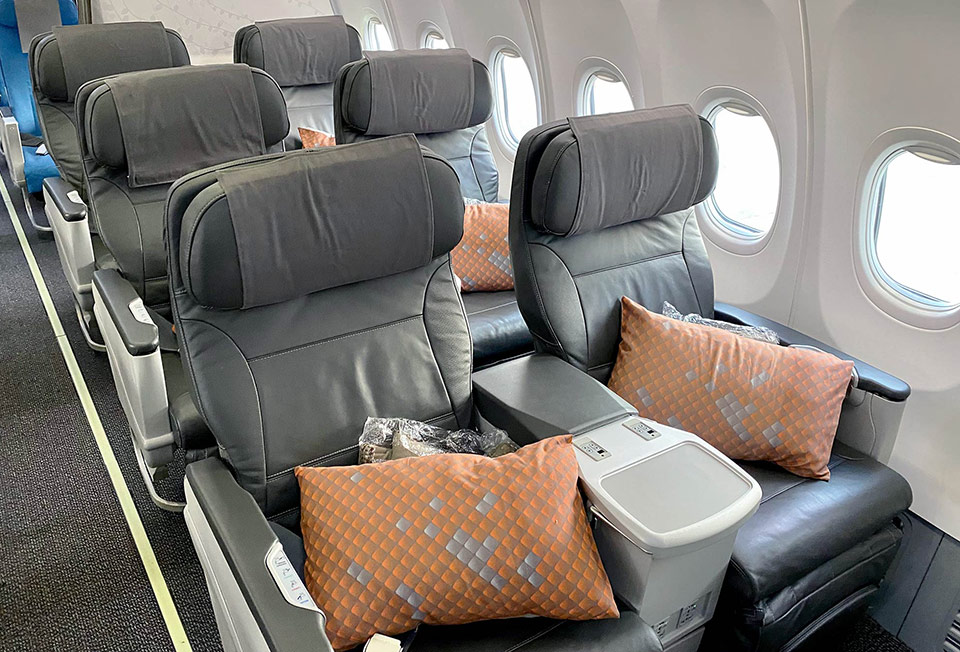
As you can see, apart from new upholstery and cushions there’s no major change to the hard product, with little privacy and no flat-bed function, both features of the airline’s other Business Class products including those fitted to the newer Boeing 737-8 MAX.
Speaking of the MAX, since this is replacing the Boeing 737-800 in an almost one-for-one swap on the network between September 2024 and January 2025, here are the details of the much-improved passenger experience on those jets, in both Business Class and Economy Class.
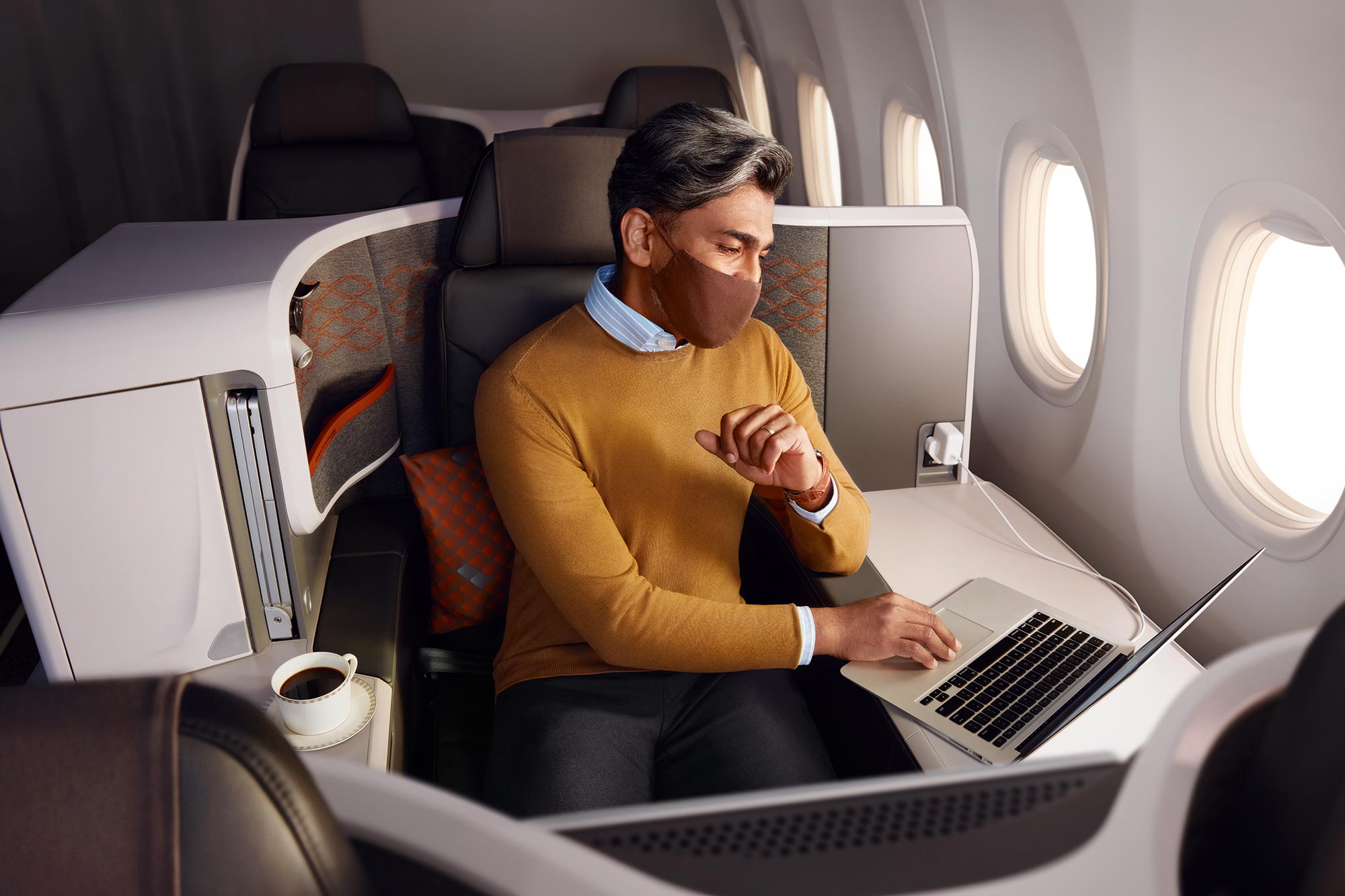
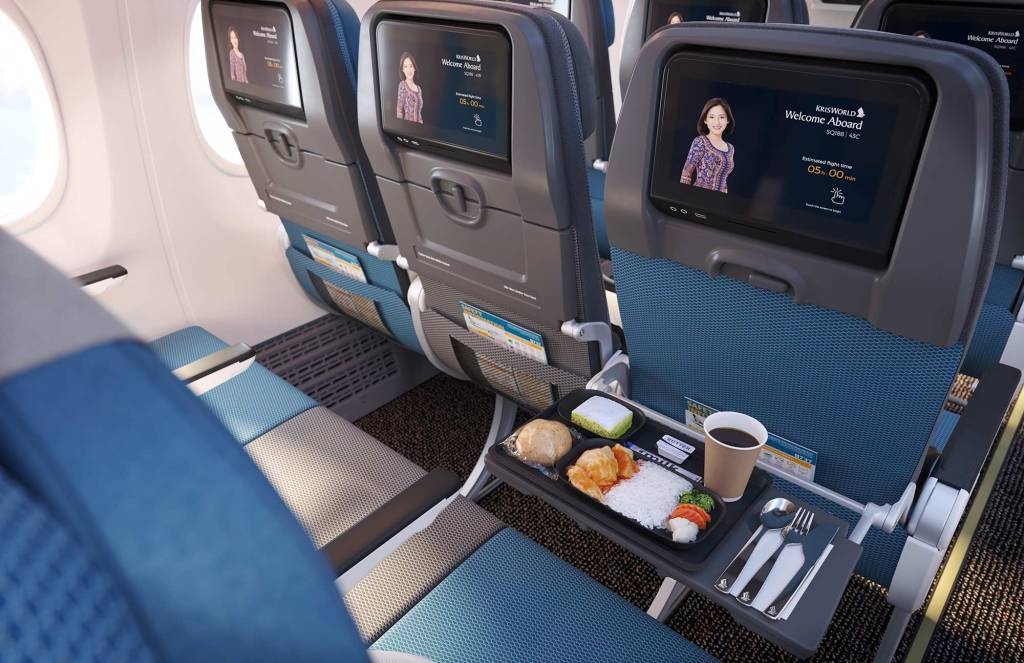
All of the MAXs have flat-bed seats in Business Class and seat-back in-flight entertainment screens plus device charging in Economy Class, so it’s a much closer experience to the wide-body fleet on these aircraft.
Where is the 737-800 flying?
We recently updated our full guide to SIA’s Boeing 737-800 routes between now and the end of the summer season in late October 2024.

Kathmandu is the longest route on the list, but thankfully that one moves across to the MAX from 27th October 2024.
In the coming months once future schedules are set more firmly, we’ll roll out a similar guide through to the end of March 2025, which will definitely reflect a significantly slimmed-down list of flights to be aware of if you’re wishing to avoid the ex-SilkAir cabin products.
New MAXs coming this year?
With SIA’s 16-strong MAX fleet already heavily deployed across the network, and weekly MAX departures set to increase by 50% between April 2024 and January 2025, we expect this also means that deliveries of brand new MAX aircraft will recommence later this year, to tie in with Boeing 737-800s leaving the fleet.
There have been no Boeing 737-8 MAX deliveries to the carrier since November 2022.

SIA has not yet provided an update on its FY24/25 (Apr 2024 – Mar 2025) new aircraft deliveries, though it certainly looks like some MAXs are part of the plan. The airline has confirmed to us that it will include the Boeing 737 fleet change information in its full year results, usually released in May.
“We will provide more details on our fleet development plans during our full year results.”
SIA Spokesperson

Summary
The Boeing 737-800’s days in the Singapore Airlines fleet are numbered, something we always knew but can now see reflecting in the type’s dwindling flight schedules from September 2024 onwards.
This will see the fleet cut by over a third, from seven aircraft to four, by January 2025, leaving only around six departing flights per day out of Changi to avoid if you’re targeting only the airline’s newest cabin products.
As you’d expect, Boeing 737-8 MAX aircraft will replace the -800s on the network in almost all cases.
Eventually by January 2026 this is a fleet we’ll no longer need to worry about, with flat-bed seats in Business Class and tip-to-tail free Wi-Fi finally a reality on all Singapore Airlines aircraft.
(Cover Photo: Shutterstock)
SQ also needs to get rid of the 737 Max as soon as possible.
SQ used to be famous (and rightly so) for its focus on safety.
Buying and keeping the 737 Max despite its never-ending serious safety problems is a stain on SQ’s reputation.
It makes me seriously question their judgement.
Airbus has perfectly good single aisle planes where you don’t have to worry about a door blowing out mid-flight.
I love your blog Andrew, but I expect you and other bloggers to highlight the safety issues with the 737 Max more.
Many people wrongly assume that all the problems with the 737 Max have been fixed.
If it’s a Boeing (737 Max), I’m not going.
I laugh when I see news report like these. Over 90% of flyers cares only about service, prices and safety. They don’t care about plane model unless it is the much faulted max with the tech problem. Shows how much you guys know your customers.
But this article is about the max because SQ is replacing 737800 with the max 8? Dont understand ur comment!
I do care about the plane model as it also reflects the availability of airline’s cabin products apart from possibly safety issue faced by some models. Airlines tend not to have identical cabin products in all of their aircraft. Such detailed report about the aircraft type is refreshing & informative for airlines enthusiasts, who enjoy planning & hunting various cabin products, indulging in the distinct experiences, or trying to avoid any (evade wasting miles points!).
Furthermore, those who read airlines blog / miles blog are usually care about aircraft types. The fact that Mainly Miles publishes such report is one of the differentiating factors that makes this blog exciting, comprehensive & unique to follow, as compared to others who don’t, perhaps due to insufficient information or thinking that majority of their readers don’t care at all. Oh, how could they ever be more wrong!
I do care about the plane model as it also reflects the availability of airline’s cabin product apart from possibly safety issue faced by some models. Airlines tend not to have identical cabin products in all of their aircraft. Such detailed report about the aircraft type is refreshing & informative for airlines enthusiasts, who enjoy planning & hunting various cabin products, indulging in the distinct experiences, or trying to avoid any (evade wasting miles points!).
Furthermore, those who read airlines blog / miles blog are usually care about aircraft types. The fact that Mainly Miles publishes such report is one of the differentiating factors that makes this blog exciting, comprehensive & unique, as compared to others who don’t, perhaps due to insufficient contents or thinking that majority of their readers don’t care at all. Oh, how could they ever be more wrong!
I have abandoned flying SQ long ago for various reasons. You have given me another reason for not looking for any SQ flights – their induction of the MAX fleet. Avoid this aircraft on any route at all cost.
When flying, safety is paramount.
Is it possible for SIA to mitigate the risk with a faulty model?
With all the safety concerns about Boeing 737- Max, it’s the aircraft I’m trying to avoid taking the gamble to fly in.
Even as SIA is increasing routes with this aircraft model to give passengers a better inflight experience over the older 737-800s model, it should never neglect the safety aspect of flying.
The most dangerous aircraft is the Boeing 737..Maxx which killed people in two fatal crashes, due to faulty software functions which caused the death of the people on board.
This malfunctioning software could not be switched off by the pilots. 737..Maxx are flying coffins.
It’s not a good idea to board any of those planes.