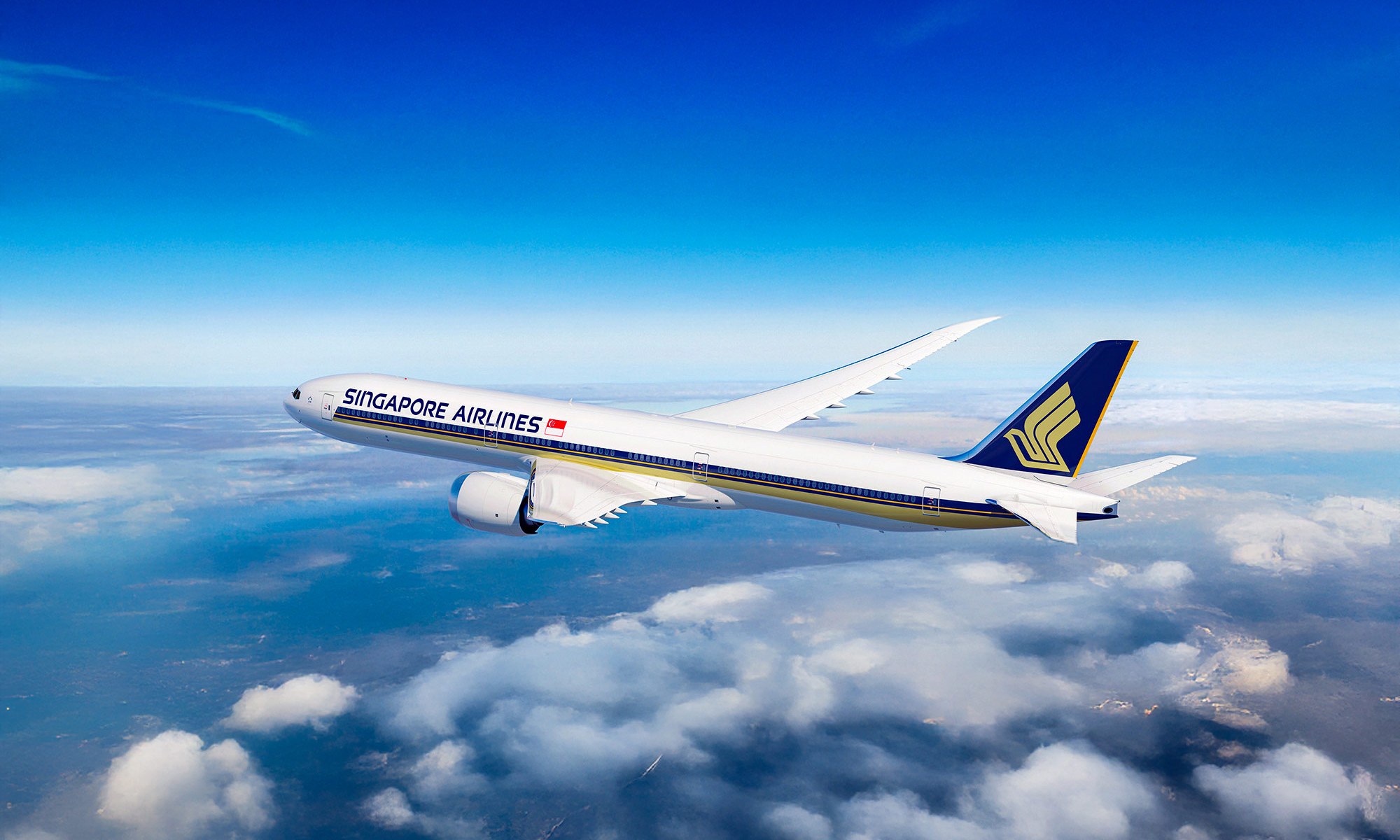

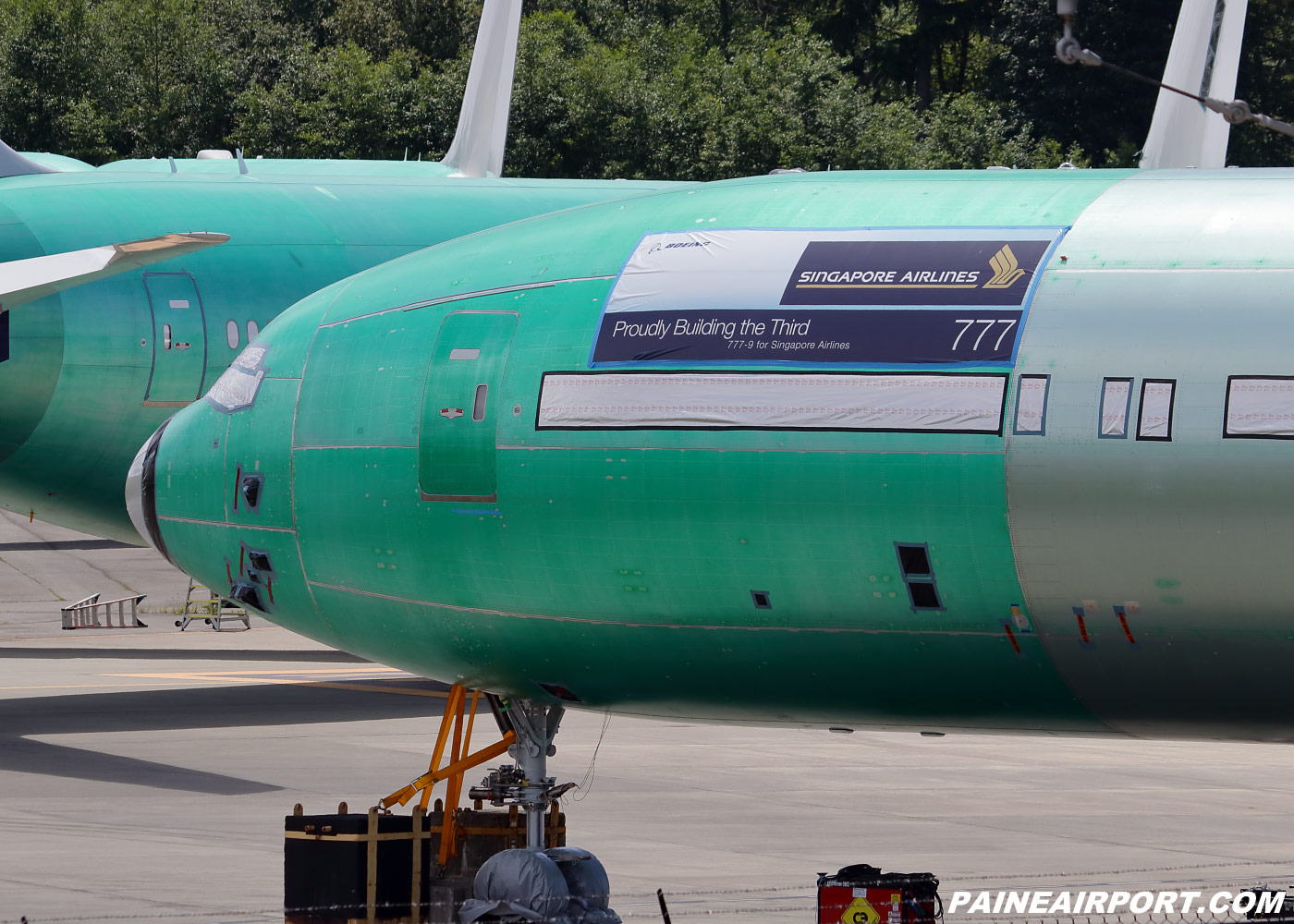
Just a couple of months ago, we reported on the first Singapore Airlines Boeing 777-9 taking to the skies for its inaugural flight – but not in immediate preparation for its delivery, instead as the fifth test aircraft in the beleaguered type’s certification programme.
While that represented progress of sorts, since then the aircraft’s extensive and slower-than-expected certification process with the Federal Aviation Administration (FAA) has led Boeing’s CEO to speak of a “mountain of work” still needing to be done, with those close to the matter already pointing to further delays.
It’s probably no surprise, therefore, that the manufacturer has today confirmed yet a further delay to the programme, with first customer deliveries pushed back for a fifth time.
Boeing 777-9 delayed until 2027
Today Boeing formally announced that its first 777-9, a type first launched in 2013, will not be delivered to a customer airline until 2027. With certification originally planned for 2020, that’s a full seven years behind schedule.
“During the quarter, the company updated its assessment of the 777-9 certification timeline and now anticipates first delivery in 2027, resulting in a pre-tax earnings charge of $4.9 billion.”
Boeing
Indeed the aircraft has become something of a poster child for aircraft development delays – originally slated for delivery to Singapore Airlines in 2021, the programme has faced multiple production setbacks that have pushed back timelines considerably.
Here’s a recap of how the Boeing 777X’s development has unfolded over the years.
- June 2019: A compressor anomaly found with the aircraft’s GE9X engines delayed the first flight from June 2019 to January 2020.
- September 2019: A passenger door blew off the 777X static test airframe during its FAA-observed ultimate load test, which was being conducted with the airplane stressed and pressurised beyond normal operating limits.
- July 2020: Boeing delayed the programme due to the industry situation caused by COVID-19, pushing first customer deliveries to 2022.
- January 2021: Boeing was forced to make actuator control modifications to satisfy regulators, further delaying the programme.
- May 2021: The FAA forced Boeing to slow 777X certification, in a “sternly worded letter” citing a long list of concerns including a serious flight control incident on a test flight in December 2020, when the aircraft pitched abruptly without input from the pilots. This setback pushed certification to at least 2023.
- March 2022: The FAA again wrote to Boeing stating that the certification schedule for the 777X was “outdated and no longer reflect[s] the program activities”.
- April 2022: Boeing delayed first 777X deliveries to 2025.
- November 2022: Flight testing of the 777X was halted following an in-flight engine failure in October 2022. Test flights resumed in mid-December 2022.
- July 2024: The FAA finally allowed Boeing to commence formal certification flights, following Type Inspection Authorisation (TIA) approval.
- August 2024: Test flights were grounded following the discovery of a severed thrust link component, a titanium beam that transfers thrust from the 11-ton engine to the wing strut.
- August 2024: Subsequent inspections found cracks in the thrust links on all other 777-9 test aircraft, including one that has clocked only 180 hours of flight time and hasn’t taken to the skies for nearly three years.
- October 2024: Boeing delays first 777X deliveries to 2026.
- January 2025: Flight testing of the 777X resumed, after a redesign of the thrust link component.
- August 2025: A fifth Boeing 777X joins the test programme, the aircraft is eventually destined for passenger service with Singapore Airlines.
- October 2025: Boeing delays first 777X deliveries to 2027.
(Photo: Matt Cawby)
The longest aircraft certification in history?
The Boeing 777X now seems to be earning a new accolade its manufacturer and customers would probably rather wish it wasn’t – as the world’s longest ever commercial aircraft certification programme.
Formally launched in November 2013 at the Dubai Airshow, an earliest delivery by 2027 would see the programme’s development and certification timeline taking at least 13 years, perhaps even 14 years.
As a comparison, the Airbus A380 – which had plenty of its own challenges – went from formal launch to commercial service entry in less than 7 years.
The Boeing 787 managed launch to commercial service entry in 7.5 years.
Even the more recent Airbus A350 took only 9 – 11 years, depending on which “launch” you pick (the 2004 version airlines hated vs. the 2006 ‘A350 XWB’ launch, which became reality).
So since the Boeing 777X was launched nearly 12 years ago, surely it already takes the title?

(Photo: Boeing)
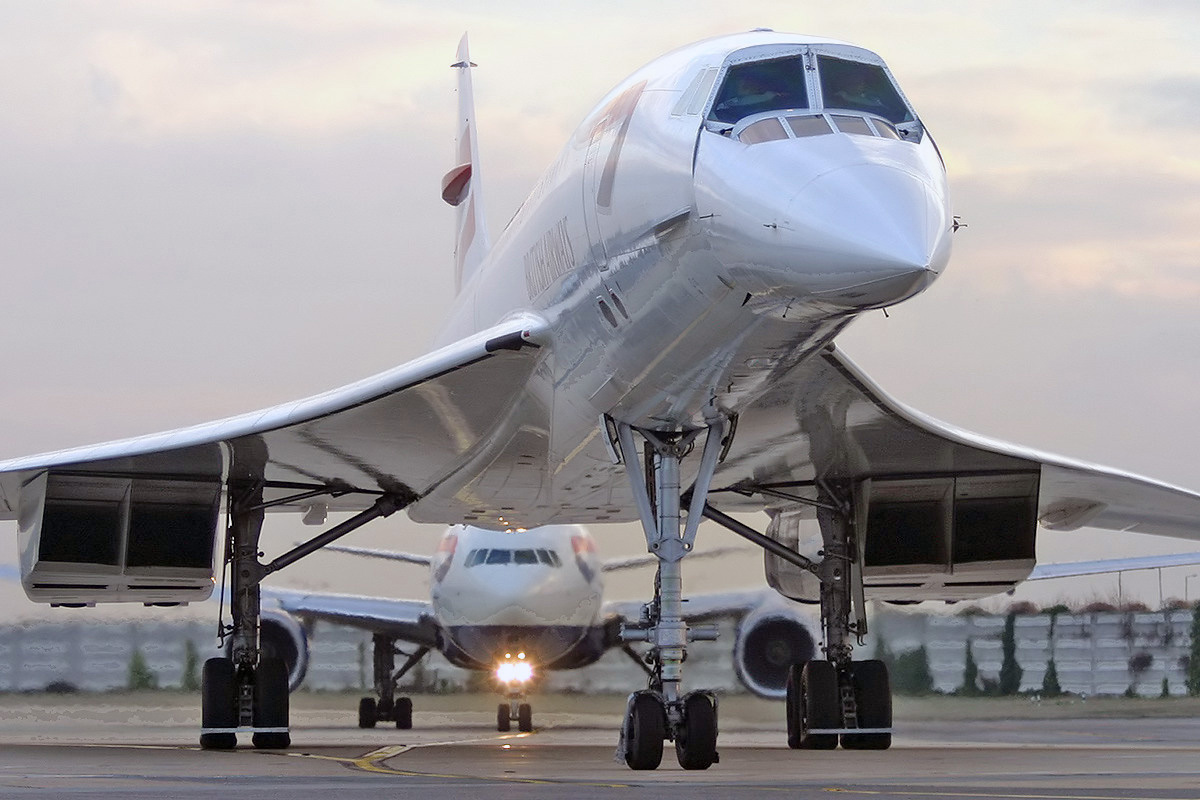
Well – no – and the answer lies with Concorde.
That supersonic passenger airliner was formally launched on 29th November 1962, when the UK-France treaty to develop the aircraft was agreed, but the first commercial flight didn’t take off until 21st January 1976 – 4,801 days later.
That means if the 777-9 doesn’t enter service by 9th January 2027, it will officially surpass Concorde’s 4,801-day certification period, becoming the longest commercial aircraft development in aviation history.
Given the latest programme delay, that seems all but certain.
(Photo: David Apps)
For perspective, the original Boeing 777-200 was launched in October 1990, then the aircraft first flew in 1994 and entered commercial service in June 1995.
That’s project launch to passenger flights in less than 5 years – for a brand new aircraft type.
What it means for Singapore Airlines
Singapore Airlines is eagerly anticipating its Boeing 777-9s not only to bolster its fleet with the latest fuel-efficient modern jets, but also to replace its ageing Boeing 777-300ERs, many of which were already supposed to be retired.
The first 777-9 was due to arrive in 2021, and it’s reasonable to assume that the carrier probably banked on having at least a dozen of the type in its operating fleet by now, some four years later.

(Image: SilverKris Magazine, July 2018)
Singapore Airlines is the fourth-largest customer for the Boeing 777X, after Emirates, Qatar Airways and Cathay Pacific, with 31 firm orders, all of which are for the 777-9.
Boeing 777X Passenger Aircraft Orders
as of October 2025
| Airline | Aircraft | ||
| 777-8 | 777-9 | ||
 |
Emirates | 35 | 170 |
 |
Qatar Airways | — | 90 |
 |
Cathay Pacific | — | 35 |
 |
Singapore Airlines | — | 31 |
 |
Etihad | 8 | 17 |
 |
British Airways | — | 24 |
 |
Lufthansa | — | 20 |
 |
Korean Air | — | 20 |
 |
All Nippon Airways | — | 18 |
 |
Air India | — | 10 |
 |
China Airlines | — | 10 |
 |
Ethiopian Airlines | — | 8 |
| Total | 43 | 453 | |
Source: Boeing
The oldest aircraft in SIA’s 777-300ER fleet – 9V-SWB – is already 19 years old.
Singapore Airlines typically keeps its passenger aircraft in service only until around age 15, but over half its active fleet of Boeing 777-300ERs have already surpassed that age.
At least the launch of new cabin products is no longer a factor.
In November last year, SIA announced that it would launch its brand new long-haul Business Class product – with closing privacy doors – on retrofitted Airbus A350 Long Haul aircraft from the first half of 2026, rather than wait for the Boeing 777-9s to arrive.
The airline’s new First Class seat, also originally destined for the 777-9, will be rolled out at the pointy end of Airbus A350 ULR aircraft from the first quarter of 2027 instead – a timescale that now looks certain to mean that will represent its in-service launch too, given this latest delivery delay.


Which 777-9s will SIA get?
Here’s the latest Boeing 777-9 production list, with the first 10 of SIA’s eventual 31-strong fleet of the type now allocated line production numbers.
Boeing 777-9 Production List
| Line Number | Customer | |
| 1605 | |
Emirates |
| 1611 | |
Emirates |
| 1615 | |
Emirates |
| 1620 | |
Emirates |
| 1624 | |
Emirates |
| 1629 | |
ANA |
| 1633 | |
ANA |
| 1638 | |
Lufthansa |
| 1642 | |
Emirates |
| 1647 | |
Emirates |
| 1651 | |
Emirates |
| 1656 | |
Qatar Airways |
| 1659 | |
Emirates |
| 1668 | |
Qatar Airways |
| 1670 | |
Lufthansa |
| 1672 | |
Qatar Airways |
| 1674 | |
Lufthansa |
| 1677 | |
Lufthansa |
| 1680 | |
ANA |
| 1682 | |
Emirates |
| 1685 | |
Lufthansa |
| 1688 | |
Lufthansa |
| 1723 | |
Singapore Airlines (test aircraft N2007L) |
| 1728 | |
Singapore Airlines |
| 1737 | |
Singapore Airlines |
| 1740 | |
Qatar Airways |
| 1746 | |
Singapore Airlines |
| 1781 | |
Lufthansa |
| 1785 | |
Singapore Airlines |
| 1788 | |
Qatar Airways |
| 1798 | |
Lufthansa |
| 1806 | |
Singapore Airlines |
| 1808 | |
Lufthansa |
| 1811 | |
Emirates |
| 1813 | |
Lufthansa |
| 1816 | |
Emirates |
| 1818 | |
Qatar Airways |
| 1821 | |
Singapore Airlines |
| 1823 | |
Qatar Airways |
| 1826 | |
Singapore Airlines |
| 1828 | |
Qatar Airways |
| 1831 | |
Singapore Airlines |
| 1833 | Unknown | |
| 1836 | |
Qatar Airways |
| 1839 | |
Singapore Airlines |
Source: Aviation Flights Group
We’ve got a full rundown about the many features, both known and likely, of these new ~300 seat aircraft in our dedicated article.

Summary
With Boeing now pushing first 777-9 deliveries to 2027, Singapore Airlines faces an even longer wait, potentially as much as another two years, before its next-generation long-haul twin-jets enter service.
Meanwhile, the 777X will likely become the longest commercial aircraft certification programme in aviation history – inevitably surpassing Concorde’s 13-year development once it finally enters passenger service.
The delay extends the retirement timeline for its aging Boeing 777-300ERs, but the good news is the carrier’s new Business and First Class products will soon launch on retrofitted Airbus A350s, instead of waiting for the 777-9’s much-delayed arrival.
Despite the setbacks, SIA remains one of the largest 777X customers, and the eventual arrival of the type will modernise its long-haul fleet and improve operational efficiency – just several years later than originally planned.
(Cover Photo: Boeing)
I’m surprised SIA haven’t planned for this, and ordered some A35K to replace aging 77W, or at least lease them prior to 779 deliveries.
Well so that means two things but it sounds frustrating because while SQ’s 77W seats are still up to current standards, it’s the frame that is aging – You can only refresh or refurbish so much that the frame in and of itself at some point or another would get scrapped.
The two things are:
1) Existing 77W. Besides the European routes and 2 US routes (like FRA-JFK requires 3 frames and NRT-LAX requires 2 frames), couldn’t they think about temporarily switching those to a standard long haul A359 (Not the SMV-SJ* series unless they have spares to do that)? I know the cost of that is the removal of First Class on fifth freedom routes but its just 4 seats. Would that temporarily even matter? Or unless NRT-LAX is needed, couldn’t they consolidate that to a full SIN-LAX morning nonstop service identical to SQ32/31 rather than have 2 evening flights (unless specific A359 long haul frames a confern)? SQ36/35 should be a morning departure not a second evening one.
2) HKG-SFO. That route is dominated by 2 UA 77W and 3 CX flights (77W and A359’s). Are they waiting for the frame to ALSO reinstate that route even if SQ32/31/33/34 are doing well? Its because since early 2022 got suspended due to COVID but they’re yet to reopen that fifth freedom route (i.e SQ8/7 which has historically never worked well for them or SQ2/1)?
I mean they can yank the 777’s from US routes and deploy them to say Australia (Sydney, Melbourne).
I was fine expecting it in 2026 with everything going well at Boeing but looks like 2027. Every year its frustrating to hear of a delay especially of a plane that is an existing variant.
Korean Air has 40 Boeing 777-9s on order. The articles mentiones 20.
Korean Air has 20 firm orders for the Boeing 777-9 at this stage. The airline’s August 2025 announcement for a further 20 777-9s is still an “intent to purchase” – not a firm order.
The article directly contradicts the order table provided as per the order table, CX (with 35 firm orders vs. SQ’s 31) is the 3rd largest 777X customer after EK and QR
You’re right – SIA was the third largest 777X customer until CX increased its order. Now SIA is fourth-largest. Corrected, thanks!
Hello Andrew,
Would there be a chance for Singapore Airlines to order the A350-1000 with the delays of the 777X?
They could do but I believe production slots for the A350 are basically already filled until the 2030-2032 delivery timeframe, so it likely wouldn’t be worth it now. Hopefully plenty of 777-9s in the fleet by then!
I prefer A350s more with this Airline.