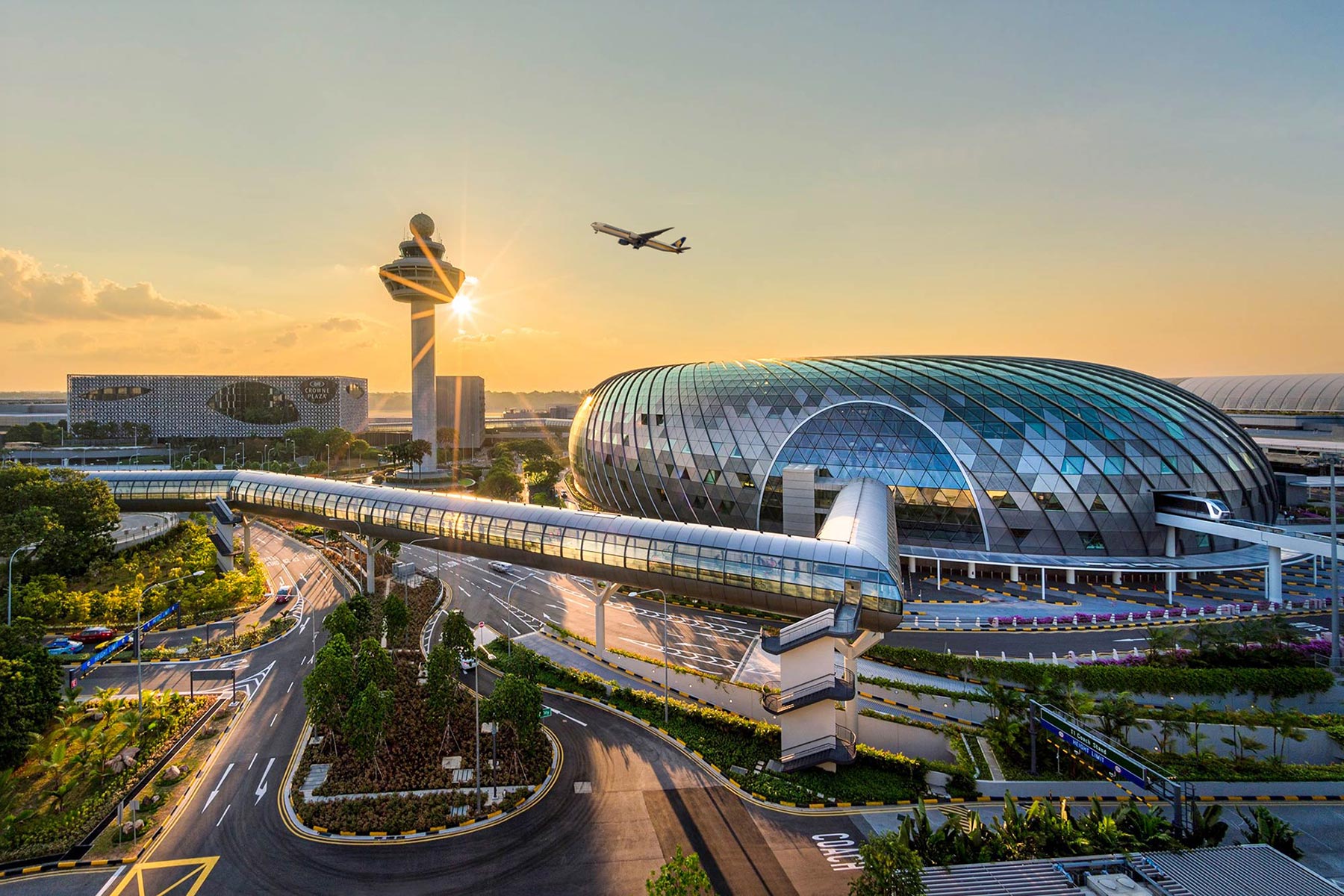

Singapore is set to introduce a Sustainable Aviation Fuel (SAF) levy that will add between S$1 and S$41.60 to every departing flight ticket from October 2026, making it the first country globally to impose such a charge.
Coming on top of the 21% airport fee increases we covered last year, this new levy – applicable to tickets sold from 1st April 2026 – means award redemptions from the Lion City face a double whammy that will push cash costs beyond our earlier projections.
What is the new SAF Levy?
The Civil Aviation Authority of Singapore (CAAS) announced the levy rates on 10th November 2025. The levy supports Singapore’s goal of having 1% of jet fuel used at Changi and Seletar airports allocated as SAF – a renewable, low-carbon alternative to conventional jet fuel – by 2026, rising to 3 – 5% by 2030.
The charges vary based on two factors: your destination and cabin class.
Economy and Premium Economy passengers face lower fees than those in Business and First Class, with the premium cabin levy set at four times the economy rate, Singapore’s first travel-class-differentiated aviation tax.
SAF Levy Rates (from 1st October 2026)
Here are the SAF Levy rates, applicable on a per-passenger basis for air tickets departing from Singapore sold on or after 1st April 2026, for departures from Singapore from 1st October 2026 onwards.
| Singapore SAF Levy (per passenger) |
|||
| Geographical Band | Economy Class Premium Economy |
Business Class First Class |
|
| Band 1 | Southeast Asia | S$1.00 | S$4.00 |
| Band 2 | NE Asia, South Asia, Australia, PNG | S$2.80 | S$11.20 |
| Band 3 | Africa, Central/West Asia, Europe, Middle East, Pacific Islands, NZ | S$6.40 | S$25.60 |
| Band 4 | Americas | S$10.40 | S$41.60 |
These fees will also be added to the cash element of award redemption tickets, and are in addition to the departure airport charges and taxes – currently set at S$65.20 per passenger but progressively increasing to S$79.20 per passenger in the coming years.
Carrier surcharges are also in addition when travelling on selected airlines, while on some routings, like Singapore – Australia, arrival taxes are also charged by the destination country.
Double whammy: Airport fees also increasing
Compounding the pain for award travellers, Changi is already raising passenger fees by 21% from April 2027 to April 2030, as we reported last year, lifting the current S$65.20 departure charge (Passenger Service / Security Fee, Aviation Levy and Airport Development Levy combined) to S$79.20.
This is designed to fund S$3 billion in projects like Terminal 3 upgrades and the eventual Terminal 5.

(Image: Changi Airport Group)
This means award redemptions will face a double hit: SAF Levy from October 2026, plus fee hikes from April 2027, pushing 2030 taxes for a New York Business Class ticket to S$145, over 60% more than today’s fees – assuming the SAF Levy does not change.
Impact on award redemptions
Let’s examine how these combined increases will affect popular award redemptions from Singapore. The following tables show the total taxes and fees payable on award tickets, including both the SAF Levy and the progressive airport charge increases.
Example: Band 1 Economy Class
| Singapore to Southeast Asia Economy / Premium Economy |
|||
| Period | Airport Fees | SAF Levy | Total Taxes |
| Current | S$65.20 | — | S$65.20 |
| Oct 2026 – Mar 2027 | S$65.20 | S$1.00 | S$66.20 |
| Apr 2027 – Mar 2028 | S$70.20 | S$1.00 | S$71.20 |
| Apr 2028 – Mar 2029 | S$73.20 | S$1.00 | S$74.20 |
| Apr 2029 – Mar 2030 | S$76.20 | S$1.00 | S$77.20 |
| From Apr 2030 | S$79.20 | S$1.00 | S$80.20 |
Here the SAF Levy impact is minimal – by April 2030 taxes of S$80.20 are 23% higher than today, but 93% of that increase stems from already-announced airport fee hikes, only 7% is from the SAF Levy, which is only charged at S$1 on these routings.
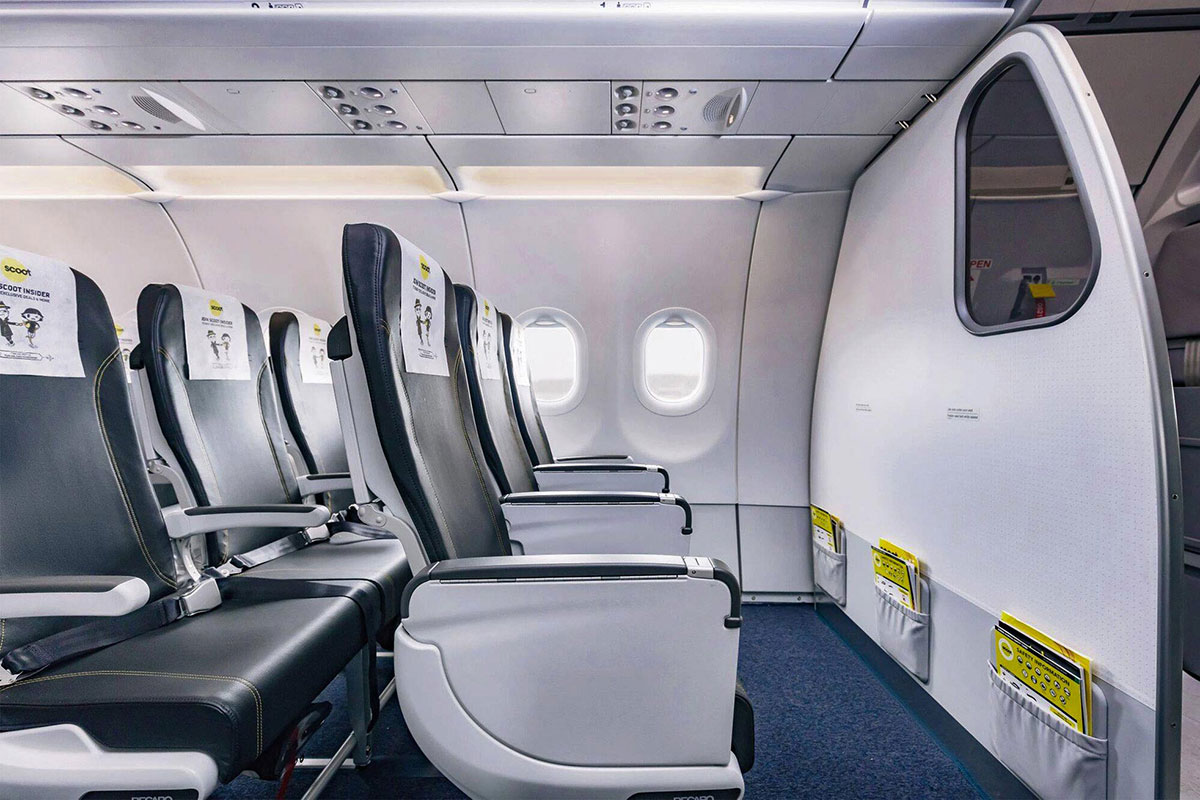
For example, a Scoot Saver award SIN-PEN booked using KrisFlyer miles is currently priced at:
- 1,500 miles + S$65.20
For travel from 1st October 2026, booked on or after 1st April 2026, the price will be:
- 1,500 miles + S$66.20 (+2% cash element)
(Photo: Scoot)
Example: Band 3 Business Class
| Singapore to Europe Business / First Class |
|||
| Period | Airport Fees | SAF Levy | Total Taxes |
| Current | S$65.20 | — | S$65.20 |
| Oct 2026 – Mar 2027 | S$65.20 | S$25.60 | S$90.80 |
| Apr 2027 – Mar 2028 | S$70.20 | S$25.60 | S$95.80 |
| Apr 2028 – Mar 2029 | S$73.20 | S$25.60 | S$98.80 |
| Apr 2029 – Mar 2030 | S$76.20 | S$25.60 | S$101.80 |
| From Apr 2030 | S$79.20 | S$25.60 | S$104.80 |
On longer routes like London in Business Class the effect is more marked. Here a near-S$40 increase in taxes by April 2030 is only 35% attributable to airport fee hikes, 65% of the increase is down to the SAF Levy.
For example, a Singapore Airlines Saver award SIN-LHR booked using KrisFlyer miles is currently priced at:
- 108,500 miles + S$65.20
For travel from 1st October 2026, booked on or after 1st April 2026, the price will be:
- 108,500 miles + S$90.80 (+39% cash element)

(Photo: MainlyMiles)
Example: Band 4 Business Class
| Singapore to USA Business / First Class |
|||
| Period | Airport Fees* | SAF Levy | Total Taxes |
| Current | S$89.20 | — | S$89.20 |
| Oct 2026 – Mar 2027 | S$89.20 | S$41.60 | S$130.80 |
| Apr 2027 – Mar 2028 | S$94.20 | S$41.60 | S$135.80 |
| Apr 2028 – Mar 2029 | S$97.20 | S$41.60 | S$138.80 |
| Apr 2029 – Mar 2030 | S$100.20 | S$41.60 | S$141.80 |
| From Apr 2030 | S$103.20 | S$41.60 | S$144.80 |
* Includes USA arrival taxes of S$24, subject to change
Non-stop flights from Singapore to the USA are the hardest hit – already more expensive than most redemptions thanks to USA arrival taxes, and in Business Class a new S$41.60 SAF Levy kicks in from 1st October 2026.
For example, a Singapore Airlines Saver award SIN-LAX booked using KrisFlyer miles is currently priced at:
- 112,500 miles + S$89.20
For travel from 1st October 2026, booked on or after 1st April 2026, the price will be:
- 112,500 miles + S$130.80 (+47% cash element)
The impact represents a smaller proportion when redeeming award tickets with carriers that impose significant surcharges on top of mandatory taxes, like fuel surcharges or award segment fees.
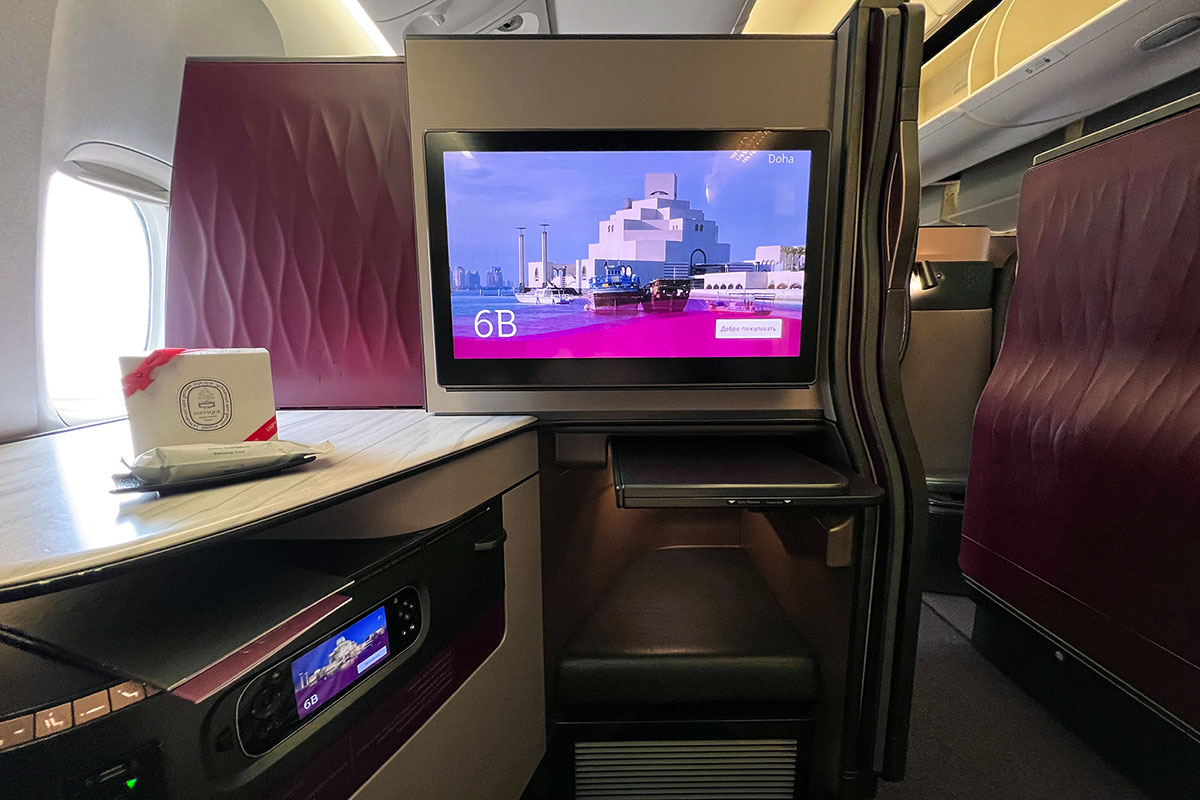
For example, a Qatar Airways Business Class award from Singapore to London via Doha will increase in cost from 75,000 Avios + S$349.40 today, to 75,000 Avios + S$375.00 from 1st October 2026 (a 7% cash increase).
(Photo: Shutterstock)
Similarly a British Airways Business Class award non-stop from Singapore to London will increase in cost from 110,000 Avios + S$289.80 today, to 110,000 Avios + S$315.40 from 1st October 2026 (a 9% cash increase).
Ironically, KrisFlyer members will therefore feel the biggest relative impact. While other programmes already sting with carrier surcharges that dwarf these new fees, Singapore Airlines’ surcharge-free awards mean members feel the full weight of the increase.
The transit passenger exemption
Here’s where it gets controversial: transit passengers won’t pay the SAF Levy at all. This exemption applies to around a third of Singapore Airlines’ passengers overall, who merely connect through the carrier’s Changi hub en-route from their origin to destination city.
On some SIA routes like London, transit passengers account for over 60% of passengers.

(Photo: Shutterstock)
The decision makes commercial sense – Singapore needs to remain competitive as a transit hub competing with the likes of Abu Dhabi, Dubai, Doha, and Hong Kong – but it creates an odd situation where Singapore residents effectively subsidise the costs of purchasing SAF for transit passengers, who fly alongside them on the same routes.
Higher taxes for premium cabins
With this levy, Singapore not only becomes the first country globally to impose a mandatory SAF Levy on passengers – a distinction that may not be entirely welcome – but also joins an exclusive club of jurisdictions that differentiate aviation taxation by travel class.
These include Hong Kong, the Maldives, the United Kingdom, and France.
The Business and First Class cabin multiplier of four times the Economy and Premium Economy rates for the upcoming SAF Levy is based on IATA’s Passenger CO2 Calculation Methodology.
How to avoid the levy (for now)
There’s a simple strategy to avoid the SAF Levy, at least temporarily: book your tickets before 1st April 2026, for any travel after 1st October 2026. The levy only applies to tickets sold from April 2026 onwards, regardless of how far beyond October 2026 you travel.
However, with most airlines only selling tickets 11-12 months in advance, this window of opportunity is somewhat limited. For shorter regional routes in Economy where the levy is just S$1 or S$2.80, the extra effort is probably not worthwhile, unless your plans are definite.
But for that New York Business Class redemption? The S$41.60 saving per person could make it worth planning ahead.

(Photo: Glenn Beltz)
Can you ‘game’ the system with a stopover?
You might think booking flights with stopovers could reduce the levy, since it’s only based on your flight’s immediate next destination, not your entire ticketed itinerary.
Technically true, flying Singapore – Hong Kong – San Francisco on Cathay Pacific will attract just S$2.80 / S$11.20 in SAF Levy, versus S$10.40 / S$41.60 for the non-stop Singapore – San Francisco Singapore Airlines or United Airlines flights.
The problem, however, is twofold:
- It’s not free to transit through Hong Kong
Around S$37 / S$41 is payable in Economy / Business Class. This immediately outweighs any SAF Levy saving - Cathay Pacific applies a fuel surcharge on its award tickets
Currently set at around S$119 for a SIN-HKG-SFO routing
For Business Class, this brings the award cost to 115,000 Asia Miles + S$279.70, instead of 112,500 KrisFlyer miles + S$130.80. Yes, technically Singapore is collecting S$30.40 less in SAF Levy from your ticket – but it’s certainly not worth it since you are paying much more overall.
In another example, choosing Finnair’s one-stop service from Singapore to New York via Helsinki attracts the Band 3 charge instead of Band 4 – an example that saves S$16 in Business Class SAF Levy versus Singapore Airlines’ non-stop service.
However, this award flight will cost you 125,000 Avios + S$187.60, compared to 117,000 KrisFlyer miles + S$130.80, because even though the SAF Levy will indeed be S$16.00 less, you’ll also be hit with:
- Finnair’s fuel surcharge: S$22.60
- Finland’s transfer passenger fee: S$9.30
- Finland’s security charge: S$9.50
- Finland’s air transport supervision charge: S$1.40
- USA International arrival tax: S$30.00 (not applicable to SIA award tickets)
Net effect: Singapore will of course get S$16 less in SAF Levy from you, but you’ll pay S$56.80 more in total fees, not to mention the inconvenience of a Helsinki layover and the difference in miles outlay.

(Photo: MainlyMiles)
As you can see, any SAF savings from choosing stopovers are typically offset by additional airport taxes at the transit point.
There’s one exception we found, and that’s SIA’s Singapore – Tokyo – Los Angeles service (SQ12/11).
Taxes on this two-sector journey are only S$16.20 more than for the carrier’s Singapore – Los Angeles non-stop flights, because Japan applies minimal additional charges for international transit passengers.
| SIA Singapore – Los Angeles Award Pricing including SAF from 1st October 2026 |
||
| Cabin | Singapore – Los Angeles (non-stop) |
Singapore – Los Angeles (via Tokyo Narita) |
| Economy Class |
44,000 miles + S$89.20 + S$10.40 SAF = S$99.60 |
44,000 miles + S$105.40 + S$2.80 SAF = S$108.20 |
| Premium Economy | 79,000 miles + S$89.20 + S$10.40 SAF = S$99.60 |
79,000 miles + S$105.40 + S$2.80 SAF = S$108.20 |
| Business Class |
112,500 miles + S$89.20 + S$41.60 SAF = S$130.80 |
112,500 miles + S$105.40 + S$11.20 SAF = S$116.60 |
| First Class | n/a | 154,000 miles + S$105.40 + S$11.20 SAF = S$116.60 |
That will make it S$14.20 cheaper to redeem in Business / First Class, once the SAF Levy kicks in (and of course this routing is your only SIA First Class option to Los Angeles anyway).
However, in Economy or Premium Economy it’s still slightly more expensive to stop in Narita – by S$8.60.
Region banding is odd – but logical
Singapore has also been clever in its band allocation for the SAF Levy.
Notice how the Middle East is lumped into Band 3 alongside Europe, despite Singapore – Dubai being shorter than Singapore – Sydney (Band 2)? This classification means passengers flying Middle East carriers (Emirates, Etihad, Qatar Airways) to Europe pay the same S$6.40 / S$25.60 SAF Levy as those on non-stop European services.
It’s likely a strategic move to prevent the Gulf carriers’ one-stop routings becoming more attractive from a cost perspective.
While that doesn’t particularly affect award tickets much (ME3 airlines add insane carrier charges to redemption tickets), Singapore Airlines in particular would be at a significant disadvantage if it had to charge a higher SAF Levy for cash tickets on non-stop Europe flights than Emirates did for the same routing via Dubai.

Beyond passenger flights: Cargo and private jets also hit
The levy extends beyond commercial passengers. Cargo shipments will pay S$0.01 to S$0.15 per kilogram depending on destination, while private jets and business aviation face aircraft-based charges ranging from S$40 for small aircraft on regional routes to S$6,500 for large jets flying to the Americas.
What’s driving this charge?
CAAS positions the levy as essential for aviation sustainability, with funds going into a statutory SAF Fund managed solely for purchasing sustainable aviation fuel and environmental attributes. The Singapore Sustainable Aviation Fuel Company (SAFCo) will handle procurement and administration.
“The introduction of the sustainable aviation fuel levy marks a major step forward in Singapore’s effort to build a more sustainable and competitive air hub.
Han Kok Juan, Director-General, CAAS
“It provides a mechanism for all aviation users to do their part to contribute to sustainability at a cost which is manageable for the air hub.”
The timing is significant – while SAF production doubled last year, it still accounts for only 0.3% of global jet fuel volumes according to IATA. Singapore’s target of 1% by 2026, potentially rising to 3-5% by 2030, is ambitious given the limited global supply.
SAF currently costs three to four times more than traditional jet fuel.
The rates announced are actually lower than initial estimates from early 2024, when CAAS projected S$3, S$6 and S$16 for Economy travel to Bangkok, Tokyo and London respectively.
The actual rates of S$1, S$2.80 and S$6.40 reflect lower prevailing SAF costs – though this silver lining may be temporary. Mr Han expects the levy to remain at current levels “for a few years” while the target stays at 1%.
Industry concerns
The International Air Transport Association (IATA) has acknowledged the early announcement of Singapore’s SAF Levy as positive for planning purposes, but expressed concern about its potential “dampening effect on air travel”.
While IATA recognises that Singapore’s model may suit its unique circumstances – particularly its limited capacity to produce SAF domestically – the association is hesitant to recommend such a policy framework to other countries.
“We accept that Singapore’s model is unique. There appears to be some positive elements of the model… but as to whether this is a model that can be replicated, we would be advocating still that most countries look at incentivising (SAF) production. That’s probably more straightforward.”
Sheldon Hee, Regional vice president Asia Pacific, IATA
Nonetheless, Singapore Airlines has thrown its support behind the levy, stating it aligns with the SIA Group’s commitment to gradually increase sustainable aviation fuel use. Meanwhile, major logistics airlines DHL and FedEx are still assessing the impact on their cargo operations.
The bigger picture: Award costs climbing
For award travellers based in Singapore, these stacking fees will be another erosion of redemption value, a topic that’s fresh in many minds following a hike in KrisFlyer redemption rates that kicked in earlier this month.


By 2030, a Business Class award to Europe will attract over S$100 in taxes before even considering carrier surcharges or destination fees. Ultra long-haul Business Class redemptions to the Americas will see total taxes approaching S$145.
The levy is supposedly fixed while the SAF target remains at 1%, but CAAS has already signalled it will be reviewed when it increases to 3 – 5% by 2030.


Summary
Singapore’s new SAF Levy adds yet another layer of costs to award redemptions from Changi Airport. While the amounts seem modest in isolation – especially for short-haul Economy travel – they compound with the already-announced airport fee increases to create a bigger impact on redemption value, especially on longer routes.
For frequent flyers planning premium cabin long-haul redemptions, the strategy is to book before April 2026 where possible, but after that everyone will need to factor these increasing costs into their redemption calculations.
What are your thoughts on Singapore’s new SAF Levy? Let us know in the comments below.
(Cover Photo: Changi Airport Group)
Makes repositioning even sweeter, even by a tad.
SAF surcharge on Scoot Plus seats will be priced at economy while Jetstar’s business class seats, which are similar to Scoot Plus, will be surcharged at business class rates. If I were Jetstar, I’d rebrand their business class to premium economy as well.
Need to consider their loss of pricing power, if any, from such a move.