

The Singapore – Seoul route has seen a flurry of new airlines and flight options added since the end of the COVID-19 pandemic, with five carriers now operating a significant 80 weekly services on the route, marking a significant increase of over 40%.
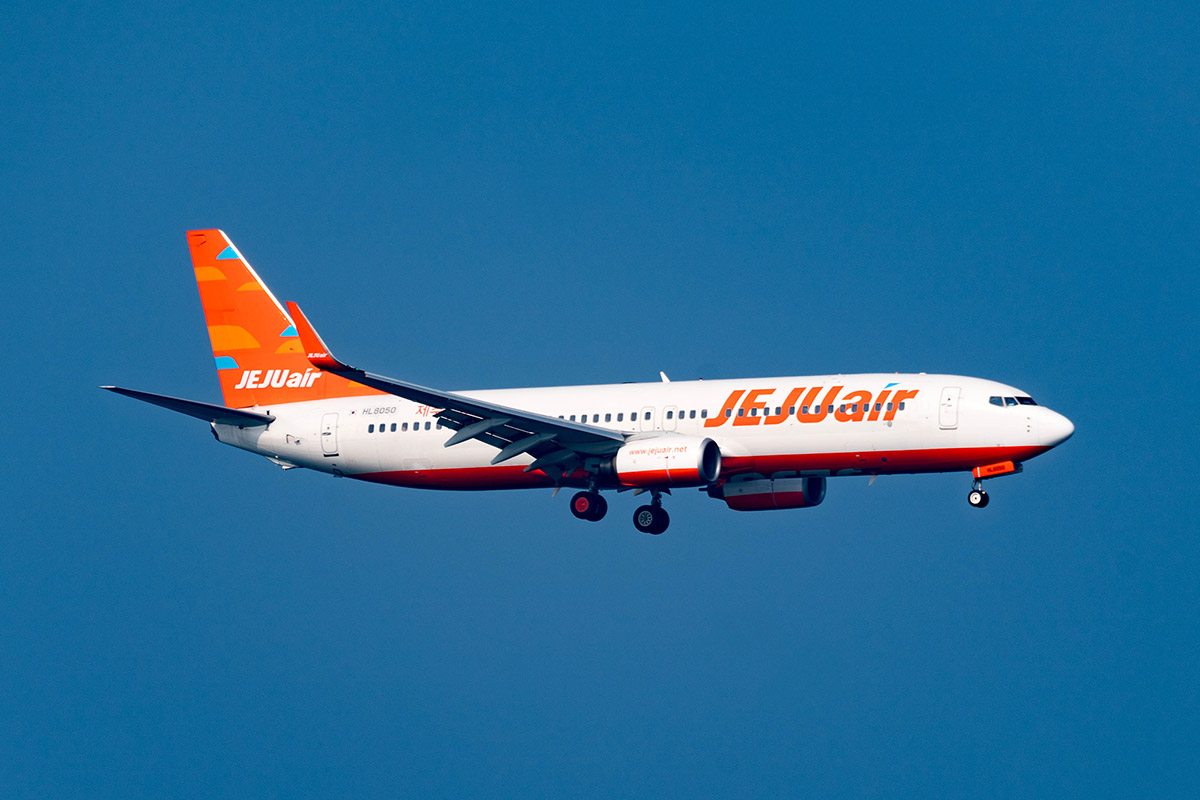
This week we have news of yet another airline joining the mix from late July, with low-cost carrier Jeju Air set to double its presence at Changi Airport with the addition of daily Singapore – Seoul services, supplementing its existing daily link between the Lion City and coastal beach destination Busan.
News of this service increase comes just months after the airline’s tragic accident in Muan, South Korea, following a bird strike, which sadly claimed the lives of 179 of the 181 passengers and crew and remains under investigation.
The schedule
Here’s how Jeju Air’s schedule looks on this new Singapore – Seoul option, from late July 2025.
Jeju Air
Singapore ⇄ Seoul
From 25th July 2025
| Days | |||||||||
| M | T | W | T | F | S | S | |||
 |
7C2622 737-800 |
||||||||
| SIN 02:20 |
ICN 10:10 |
||||||||
|
7C2621^ 737-800 |
||||||||
| ICN 20:05 |
SIN 01:20* |
||||||||
^ 7C2621 commences one day earlier, on 24th July 2025
* Next day
An overnight service is offered from Singapore to Seoul, departing at 2.20am with touchdown at 10.10am the same day, after a flying time of 6 hours 50 minutes.
(Photo: Masahiro Takagi)
On the return leg, Jeju Air offers one of the latest departures of the day from Seoul, leaving shortly after 8pm and arriving at Changi Airport at 1.20am the following morning, with a flight time of 6 hours 15 minutes. This timing should give you enough time to head home, rest, and still make it to work the next (or should that be the same) day.
On the return leg, Jeju Air offers one of the latest departures of the day from Seoul, taking off just after 8pm and touching down at Changi Airport at 1.20am the next day. With a flight time of 6 hours and 15 minutes, this schedule should allow you to head home, grab some rest, and still make it to work later that morning.
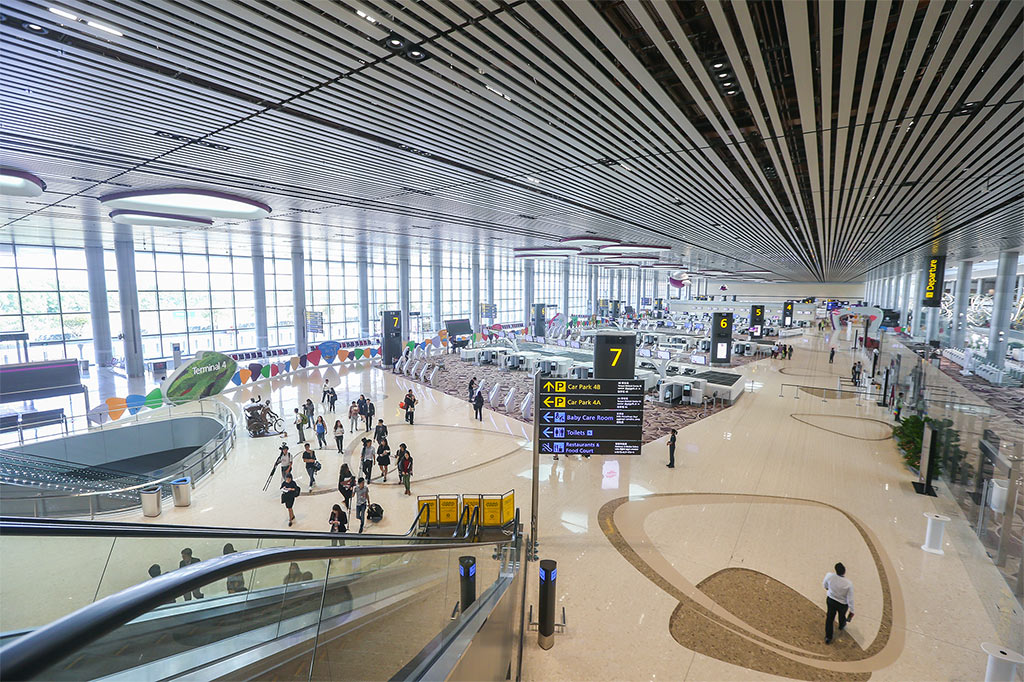
Jeju Air operates to and from Terminal 4 at Singapore Changi Airport.
(Photo: Changi Airport Group)
At 4,549km, this will be Changi Airport’s second longest flight operated by a narrow-body aircraft, after Peach’s recently introduced non-stop Osaka flights, which use Airbus A321LR aircraft.
Seoul services will supplement Jeju Air’s daily Singapore – Busan flights, which also operate in and out of Changi T4 each night, a route first launched in June 2019.
Seats and fares
Jeju Air will be the only airline operating narrow-body aircraft on the Singapore – Seoul route, with Boeing 737-800s used for the daily flight.
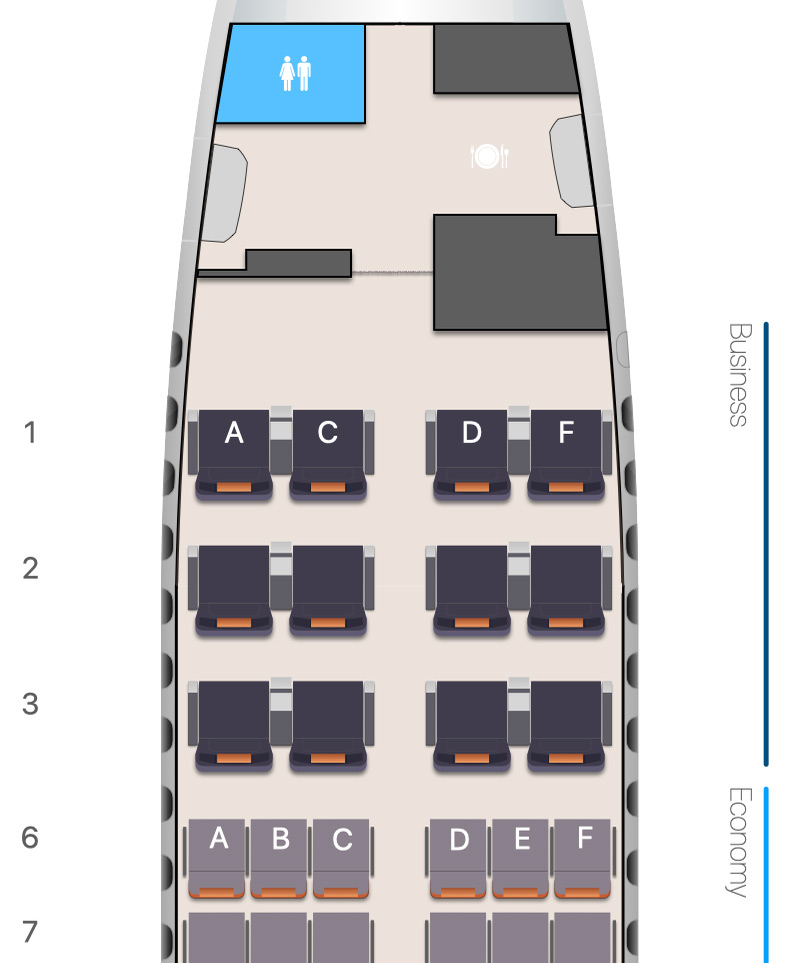
The airline is effectively a low-cost carrier, but does offer a Business Lite product in the first three rows of its aircraft in a 2-2 configuration, a more comfortable experience than the 3-3 layout in the rest of the cabin.

(Photo: BillionMiler)
This also includes priority check-in at Seoul, a complimentary baggage allowance with priority handling, and an in-flight meal.
(Image: aeroLOPA)
Launch fares on Jeju Air’s new Singapore – Seoul flights aren’t really too competitive, with the lowest round-trip ticket coming in at S$588 including taxes and fees, for travel in August 2025.
By comparison, other carriers on this route have tax-inclusive round-trip Economy fares during this period starting from:
- T’way Air: S$528
- Asiana: S$568
- Korean Air: S$568
- Scoot: S$574
- Jeju Air: S$588
- Singapore Airlines: S$778
Indeed it appears the carrier’s cheapest ‘Fly’ fare product has not yet been loaded on the route, only ‘FlyBag’ and ‘Biz Lite’ are available at this stage.

By comparison, the airline’s round-trip fares on its existing Singapore – Busan flights start from as little as S$343 on some dates.

(Photo: Jeju Air)
As the only narrow-body operator between Singapore and Seoul, we are a little surprised that Jeju Air isn’t undercutting other airlines on this route at this early stage of booking. As we recently reported, competitor T’way Air now offers twice-daily Airbus A330 flights on this route, including flat-bed budget ‘Business Class’.’
Record capacity for Singapore – Seoul and South Korea
In December 2019, just prior to the COVID-19 pandemic, three airlines operated 56 weekly non-stop flights between Singapore and Seoul.
Fast forward five years and the route now sees 80 weekly non-stop flights operated by five airlines, a record total.
- Asiana: 14/wk
- Korean Air: 21/wk
- Scoot: 3/wk
- Singapore Airlines: 28/wk
- T’way Air: 14/wk

(Photo: Thiago B. Trevisan / Shutterstock)
Jeju Air’s introduction of daily flights from 25th July 2025 will offset Asiana’s removal of one of its two daily Singapore – Seoul services from 30th March 2025, bringing overall frequencies back to 80 per week in each direction across six carriers.
- Asiana: 7/wk
- Jeju Air: 7/wk
- Korean Air: 21/wk
- Scoot: 3/wk
- Singapore Airlines: up to 28/wk*
- T’way Air: 14/wk
* 21/wk during July, August and September 2025
Elsewhere in South Korea, Busan is served daily by Jeju Air and four times weekly by Singapore Airlines, while Scoot also operates five times weekly to and from Jeju.
This will bring total Singapore – South Korea flights to a record-breaking 96 per week during peak periods of the northern summer 2025 season.
Singaporeans don’t need an ETA to visit South Korea
South Korea recently extended its K-ETA waiver for Singaporean visitors, along with those holding 21 other nationalities including those with passports issued in Australia, Germany, the USA, and the UK.
That means for arrivals from now until 31st December 2025, you can avoid both the application process and the 10,000 KRW (~S$10) application fee per person, for tourist trips to the country.

(Photo: Shutterstock)
Only a paper arrival card or an e-Arrival card need to be submitted in this case.


Summary
Jeju Air is expanding its presence at Changi Airport with the launch of daily non-stop flights between Singapore and Seoul from 25th July 2025, making it the sixth airline on the route, quite an increase from just three carriers pre-pandemic.
This addition, which comes despite the airline suffering a fatal crash in late December 2024, will help maintain overall flight frequencies between Singapore and Seoul at the current level of 80 per week, even after Asiana drops one of its two daily flights.
It will also contribute to a record 96 weekly flights between Singapore and South Korea during peak periods this summer, when your alternative non-stops to Busan and Jeju are included.
While Jeju Air is a low-cost carrier, its flights do feature a small ‘Business Lite’ cabin with enhanced comfort and amenities. However, its initial fares are not the cheapest on the route, with round-trip Economy tickets starting at S$588 – higher than competitors like T’way Air and Asiana.
(Cover Photo: Shutterstock)
Eh, no thanks.
Correction: 2 flight attendants did survive the crash, even though all passengers were killed. So there were ‘only’ 179 fatalities, not 181… not that it makes a difference to those poor departed souls!