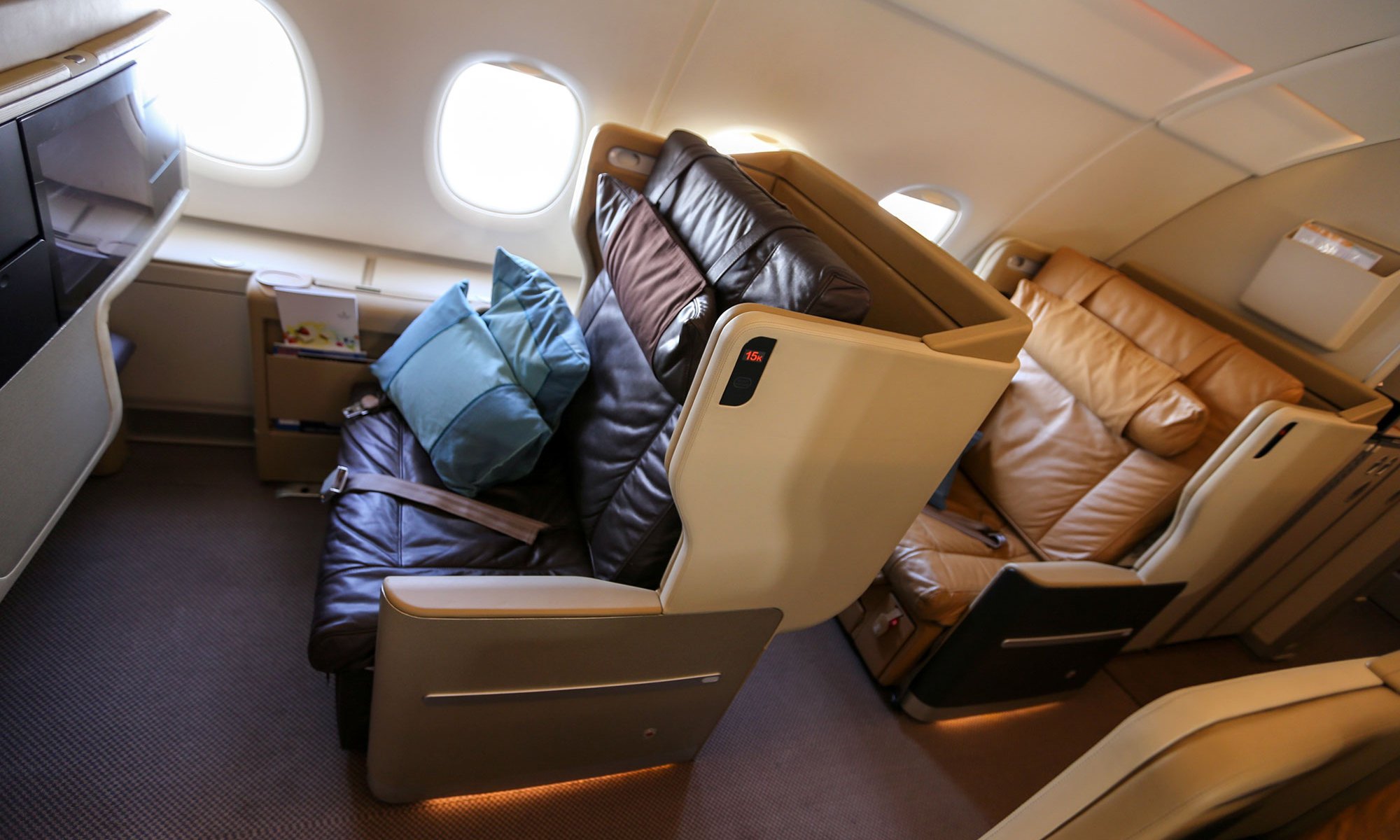

In late 2009, a brand new Singapore Airlines Airbus A380 sat sealed up on the tarmac in Toulouse, France. It was the carrier’s 11th superjumbo, and as far as you could see, it was ready for delivery. The paint was fresh, the engines tested, the cabin fitted out with SIA’s pioneering new super-wide flat-bed Business Class seats.
But it wasn’t going anywhere.
The aircraft had been due to fly to Changi in January 2010. Instead, it would remain parked on the ramp in France for six months – not because of any problem with Airbus, but because of a scandal unfolding half a world away, in Yokohama, Japan.
It was a scandal that involved falsified safety tests, forged regulatory stamps, software designed to fool inspectors, and no fewer than 150,000 aircraft seats installed across more than 1,000 aircraft operated by 32 airlines worldwide.
Singapore Airlines was about to get caught up in the fallout from one of the most serious deceptions ever to beset the aviation industry.
Here’s the full story of the Koito seats scandal – how it happened, how it unravelled, and the chaos it caused for SIA and airlines around the world.
The SIA seats caught up in it all
To understand the Koito scandal, you first need to understand the seat at the centre of it, as far as SIA was concerned.
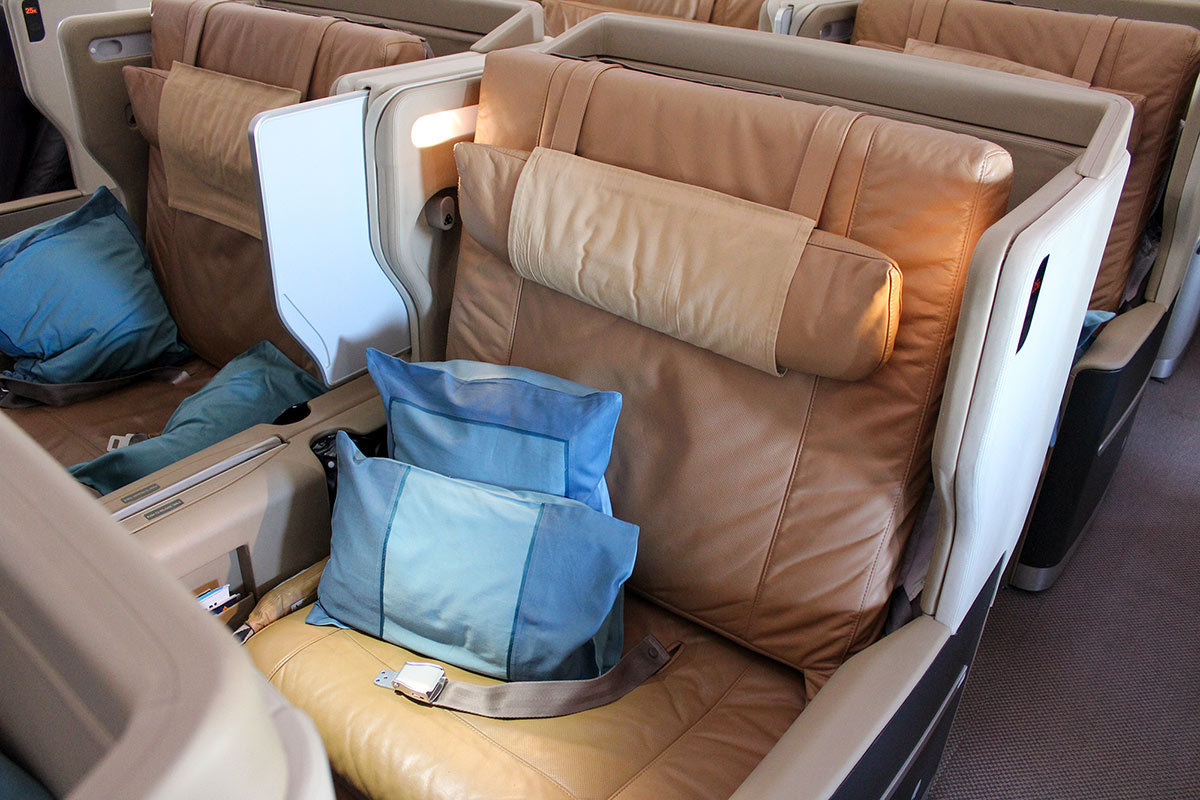
In January 2006, Singapore Airlines unveiled what it called “a new world of luxury”, a completely redesigned Business Class product featuring the widest fully flat bed in the sky.
At 30 inches across, the seat offered over 25% more lateral space than its predecessor, and the airline marketed it as a game-changer for long-haul premium travel.
(Photo: Shutterstock)
The seat was manufactured by Koito Industries of Yokohama, Japan, as an exclusive design for Singapore Airlines. It was a coup for both parties – SIA got a unique, industry-leading product, while Koito secured a prestigious contract with one of the world’s most respected carriers.
The 2006 Business Class debuted on SIA’s Boeing 777-300ER aircraft between Singapore and Paris in December 2006, before rolling out across a wider network as new aircraft were delivered:
- By March 2007: Additional 777-300ER routes encompassing seven additional cities, including Barcelona, Frankfurt, San Francisco and Hong Kong
- October 2007: The 2006 J seat saw its Airbus A380 launch, on Singapore – Sydney flights, with an even wider 34-inch seat fitted to the superjumbo
- 2008 onwards: Further Airbus A380 and Boeing 777-300ER deliveries
By 2009, SIA had over 1,800 of these Koito-manufactured Business Class seats installed across its fleet, on A380s, A340s and Boeing 777s.
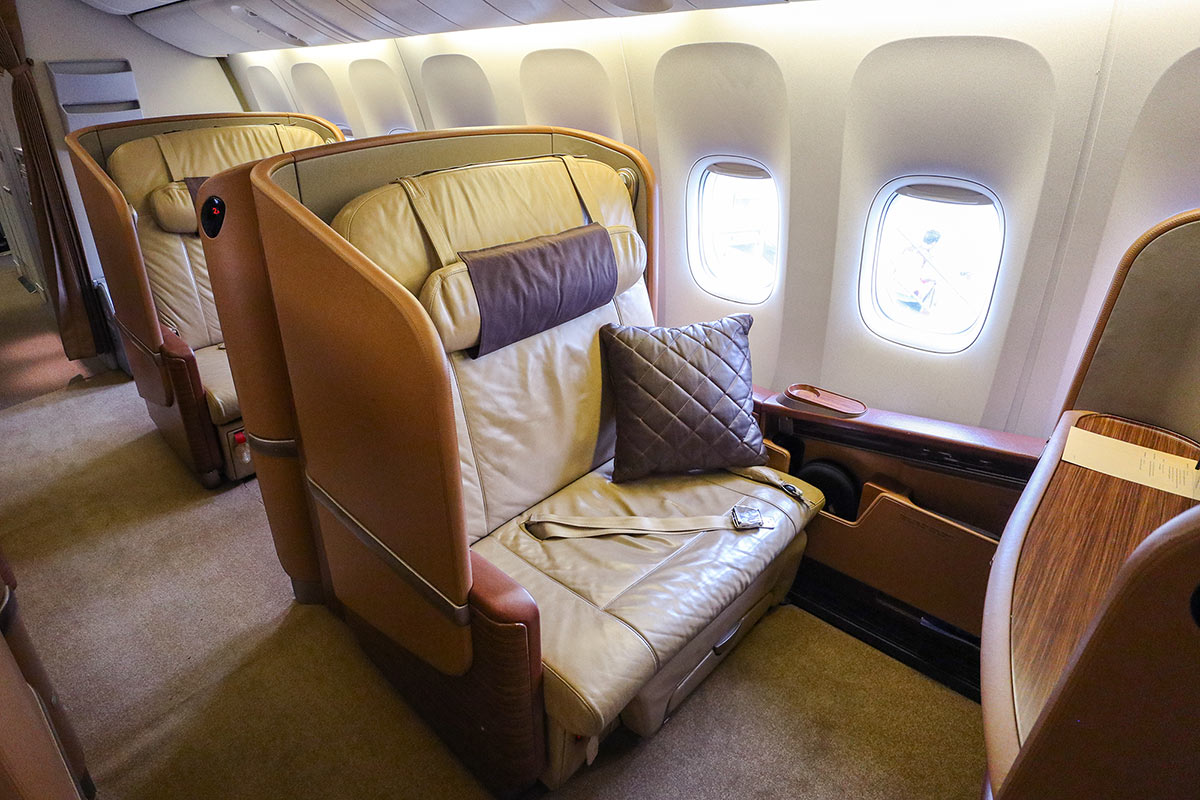
The carrier had also commissioned Koito to produce the 2006 First Class seats being fitted to new Boeing 777-300ER aircraft, and retrofitted to its Boeing 777-300 (non-ER) jets.
(Photo: MainlyMiles)
Koito was now deeply embedded in Singapore Airlines’ premium cabin strategy.
What nobody knew – not SIA, not Airbus, not Boeing, and apparently not even the Japanese aviation regulator – was that Koito had been systematically falsifying safety test data on its aircraft seats… for approximately 15 years.
The first cracks appear
The first hint that something was wrong came in early 2009, though it seemed innocuous enough at the time.
Japan’s Civil Aviation Bureau (JCAB) noticed that Koito had delivered aircraft seats to Japan Airlines covered with a material not certified for use on aircraft.
Seat fabric certification might sound like a minor administrative matter, but it’s actually critical, because approved materials are specifically designed to slow the spread of fires in aircraft cabins.

In an in-flight fire scenario, the right or wrong fabric could mean the difference between fires spreading uncontrolled or being successfully extinguished – in a post-crash fire, between passengers escaping, and passengers not.
The JCAB issued Koito with a verbal warning. The company acknowledged the lapse, and promised to do better.
But what seemed like a simple quality control failure was only the beginning. A house of cards was about to fall.
EASA calls out Koito
Over in Europe, the European Aviation Safety Agency (EASA) had been growing increasingly concerned about Koito.
The regulator felt the Japanese manufacturer wasn’t being transparent, by not sharing enough information with European clients about its production processes and quality controls.
EASA began asking questions. Koito’s answers, apparently, weren’t satisfactory.
In September 2009, EASA took the extraordinary step of withdrawing its Production Organisation Approval (POA) from Koito Industries. This was, in regulatory terms, a nuclear option. It meant Koito could no longer produce seats or seat parts for aircraft destined for worldwide operators of new Airbus planes.
“Our withdrawal of the POA is what I would describe as an emergency measure. EASA’s directive applies to all Airbus planes, even if they are flown outside Europe.”
Dr. Daniel Höltgen, EASA spokesman, September 2009
The implications were immediate and severe. Airbus could no longer install Koito seats on any aircraft, including those destined for Singapore Airlines.
SIA’s 11th A380, 9V-SKK, with its Koito seats already fitted, was sealed up in Toulouse. Delivery was indefinitely postponed.
“Evaluating evidence”
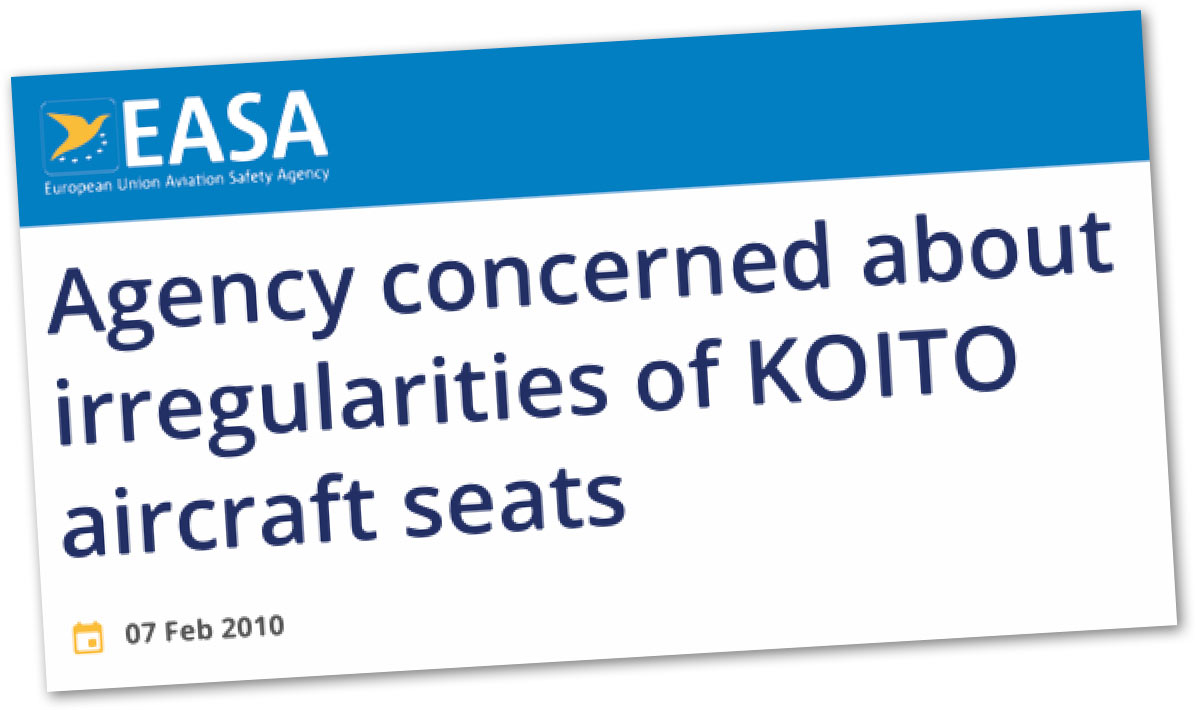
By February 2010, with 9V-SKK still parked in France and questions swirling about what exactly was wrong with Koito’s seats, EASA released a public statement.
“The Agency is currently evaluating evidence from the Japan Civil Aviation Bureau (JCAB) regarding irregularities in the design and production of Koito seats manufactured in Japan and installed in a number of aircraft types.”
EASA Press Release, 7th February 2010
This was no longer just about fitting new seats to aircraft. The investigation had expanded to cover seats already installed, including the hundreds of Koito Business Class and First Class seats already flying on Singapore Airlines’ A380 and 777-300 aircraft.
(Source: EASA)
The European regulator had called Koito’s bluff. The following day, the truth came out.
The confession
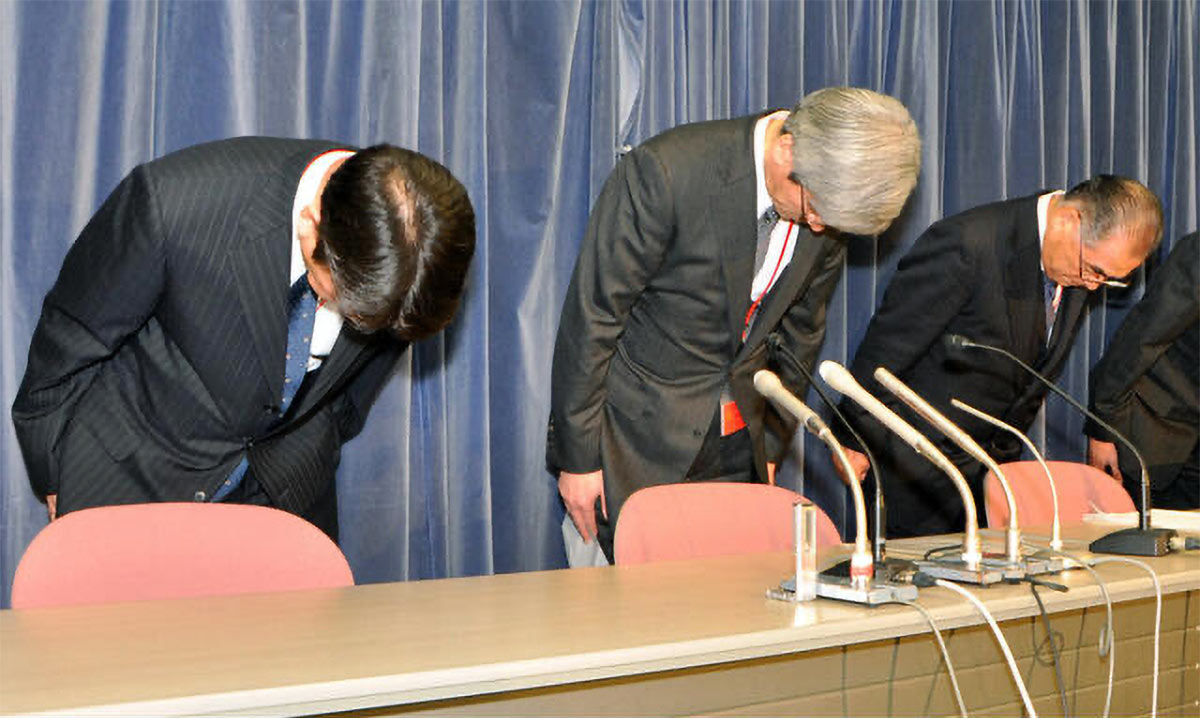
On 8th February 2010, Koito Industries President Takashi Kakegawa stood before reporters in Tokyo and made a stunning admission that sent shockwaves through the industry.
The company had deliberately falsified safety test results on its aircraft seats. Not just recently. Not just occasionally. Systematically, across the organisation, for as far back as records existed.
“Fraudulent acts were conducted across the organization. Our wrongful acts concerning seats for aircraft severely impair our credibility as an enterprise that engages in aviation-related business, and we feel remorse for, and sincerely apologise for, having caused considerable inconvenience and concern to customers and other parties”.
Takashi Kakegawa, President, Koito Industries, 8th February 2010
“The whole section in charge was systematically involved in it’.
(Photo: Newscom)

The scope was staggering. Approximately 150,000 seats installed on around 1,000 commercial aircraft operated by 32 airlines in 24 countries were potentially affected. The planes were mainly Boeing and Airbus aircraft, the workhorses of the global airline industry.
Among the affected carriers were Air Canada, KLM, Scandinavian Airlines, Japan Airlines, All Nippon Airways, Continental Airlines, EVA Air, Thai Airways – and of course, Singapore Airlines.
And the fraud had been going on since the mid-1990s.
“Fraudulent acts can be traced back to the mid-1990s, as far back as we have records. It was an organizational fraud, as such conduct has been found in multiple divisions”.
Shigeru Takano, Director, JCAB Airworthiness Division, February 2010
The market reaction was swift and brutal. Koito’s share price collapsed by 33%, falling by ¥80 to just ¥159 on the Tokyo Stock Exchange.
How they did it
The methods Koito used to deceive regulators were as elaborate as they were brazen.
Aircraft seats undergo rigorous testing before they can be certified for use. They must meet strict standards for:
- Crashworthiness: the ability to withstand impact forces in an emergency landing (tested at 9g and 16g loads)
- Flammability: resistance to fire spread (critical for in-flight fires and post-crash survival)
- Structural integrity: strength under normal and emergency conditions
Koito systematically cheated on all three.
The deception took multiple forms:
- Fabricated test results: When seats failed tests, Koito simply made up acceptable-looking data, instead of redesigning the products.
- Recycled data: Results from previous tests on different seat models were applied to newer products that had never actually been tested to the required standards.
- Rigged computers: Perhaps most audaciously, Koito developed software that would display “acceptable-looking readouts” on screens whenever inspectors from the Transport Ministry came to observe testing procedures.
- Forged stamps: According to FlightGlobal, multiple sources said Koito used its own rubber stamp to falsely indicate that some seats had been cleared by the JCAB – effectively forging regulatory approval.
- Unauthorised materials: Seats were built with materials not specified on approved drawings, including adhesives and fabrics that hadn’t been certified for aviation use.

The company later admitted the fraud occurred because “orders had increased and delivery schedules had tightened”. In other words, Koito couldn’t keep up with demand, so instead of missing deadlines by properly testing products, it simply lied.
Did it actually matter?
One might ask: were the seats actually unsafe, or was this just a paperwork scandal? The answer came as JCAB-supervised retesting got underway through 2010.
The results were alarming.
“Results from tests performed by Koito with the supervision of JCAB confirmed that a high proportion of seat models failed the requirements for structural, flammability and occupant injury criteria”.
EASA Airworthiness Directive, June 2011
This wasn’t a case of seats narrowly missing targets or failing on technicalities. A “high proportion” of models failed the actual safety tests. These were seats that might not protect passengers in a survivable crash. Seats that might accelerate the spread of fire in an emergency.
“The scope and the extent of these activities are not like anything we have observed before”.
Les Dorr Jr., FAA Spokesman
Regulators concluded that the contamination was so pervasive that nothing Koito had produced could be trusted.
“JCAB and EASA have concluded that all data (both design and manufacturing) generated by Koito must be treated as suspect. The level of falsification and the length of time over which the falsification occurred, in combination with the lack of retained records, prompted EASA to deem that all Koito seats exhibit unsafe conditions of varying degrees”.
EASA
That no one went to prison for any of this is frankly unbelievable.
Singapore Airlines caught in the crosshairs
For Singapore Airlines, the timing couldn’t have been worse.
The carrier had built almost its entire long-haul premium cabin strategy around Koito. Its fleet of 2006 Business Class seats was already flying across A380s, A340s and Boeing 777-300ERs. More A380s were on order with Koito seats specified. A major cabin refit programme was underway on Boeing 777-300 aircraft using Koito’s 2006 First Class seats.
All of it was now in jeopardy.
The immediate impacts were painful for the carrier:
A380 delivery delays
SIA’s 11th A380 (9V-SKK) had already been stuck in Toulouse since late 2009. It would eventually be delivered in July 2010, six months late, after receiving a special exemption.
But three more A380s were also delayed: 9V-SKL, 9V-SKM, and 9V-SKN. The 12th aircraft (9V-SKL) had been due to allow the Singapore – Tokyo – Los Angeles route to switch across to the superjumbo, replacing Boeing 747-400 operations on that service.
Instead, SIA was forced to retain 747-400 operations for an additional six months while regulators and manufacturers wrangled over what to do about the seats.

(Photo: Rob Finlayson)
Boeing 777-300 refit programme halted
The cabin refit programme on SIA’s Boeing 777-300 (non-ER) aircraft ground to a halt.
The carrier had promised that its new First Class and Business Class products would feature on five routes by late 2009. Instead, only one aircraft completed the refit between July 2009 and April 2011, a period of nearly two years.
SIA had to roll back on its promises to passengers, through no fault of its own. “Koito” must have become a swear word in Airline House.


Existing fleet under scrutiny
Under the emerging regulatory requirements, every single Koito seat in SIA’s fleet would need to be verified as safe, or potentially be replaced.
The airline found itself having to work closely with Koito, Airbus, Boeing, and multiple regulatory authorities simultaneously.
“We are working closely with Koito, the aircraft manufacturers and relevant regulatory authorities. We expect the issues will be resolved soon”.
Nicholas Ionides, Singapore Airlines spokesman, February 2010
“Soon” would prove optimistic.
The global fallout
Singapore Airlines was far from alone in its suffering.
Japan Airlines had Koito seats installed in 184 aircraft. All Nippon Airways had them in 141 aircraft. Both Japanese carriers later sued Koito for damages.
Continental Airlines, EVA Air, and Thai Airways International all suffered delivery delays on new aircraft.
Thai Airways would eventually take Koito to court in London, seeking compensation for the chaos caused when new aircraft couldn’t be fitted with seats. The case, decided in 2015, resulted in Thai Airways being awarded over US$107 million in damages – primarily for the cost of leasing replacement aircraft while their new jets sat seatless and grounded.
Singapore Airlines received approximately S$79 million in compensation in early 2013, combined between Boeing and Koito – a significant sum, but hardly adequate for years of delayed deliveries, a stalled refit programme, and the reputational cost of having to break promises to passengers.

Meanwhile, the Koito scandal came at a particularly awkward time for Japanese manufacturing. Toyota, which held a minority stake in Koito Manufacturing (Koito Industries’ parent company), was simultaneously grappling with a massive global recall over car accelerator and brake issues.
Two major Japanese manufacturers, both involved in safety-critical systems, both embroiled in scandal. The timing was brutal for Japan’s reputation for quality and craftsmanship.
The regulatory response
By late 2010, both EASA and the FAA had developed proposed airworthiness directives to address the Koito situation. The challenge was enormous: how do you deal with 150,000 potentially unsafe seats already flying?

The solution was a complex “test-and-grandfather” compliance framework.
The EASA approach
2 years: Airlines had to determine the most basic crashworthiness capabilities of their seats. The reasoning was stark – “Failure of the seat, in combination with an emergency landing, is considered catastrophic”.
EASA calculated this timeframe using accident statistics:
“Historic accident data suggests an accident rate of approximately 1.5×10⁻⁷ per flight hour for accidents where seats play a significant role in reducing fatalities (either directly or by preventing injuries that would stop occupants from rapidly evacuating the aircraft)”.
EASA FAQ Document, October 2010
3 years: Airlines had to determine whether seat cushions were compliant with flammability testing – to verify protection for in-flight fire scenarios and post-crash fire survivability.
6 years: For seats that passed basic static strength tests and flammability testing, but hadn’t been verified for dynamic (16g) crashworthiness requirements, airlines had six years to complete additional testing.
10 years hard stop And here was the crucial difference from the FAA – EASA decreed that even seats passing all mandated tests must be completely removed after 10 years, noting that they “have shown compliance to only an abbreviated test programme”.
“EASA has been unable to find a way to accept that seats which do not comply with significant parts of the applicable requirements remain in service indefinitely…
EASA FAQ Document, October 2010
“…the choice of ten years is also to be seen as a generous allowance”.
The FAA approach
In tandem with EASA, the FAA issued its proposed Airworthiness Directive (AD) in September 2010, triggering an avalanche of objections from across the industry.
The Association of European Airlines (AEA) argued that Koito’s retesting under JCAB supervision should negate the need for an AD entirely. The Association for Asia Pacific Airlines, China Airlines, and Japan Transocean Airlines made similar arguments. Even Koito itself “respectfully questioned the basis” for proceeding, claiming “no actual unsafe condition has been verified”.
Airlines warned of staggering costs. The AEA stated there would be “significant impacts and costs involved: hundreds of millions of dollars in retrofitting seats including months – possibly years – of ground time if seats cannot be sourced”.
Some airlines resorted to desperate measures. All Nippon Airways (ANA) formally asked to be excluded from the AD entirely, offering to either replace the seats within 10 years or simply sell the affected aircraft within four to five years.
ANA was essentially saying “let us keep flying these seats and we promise we’ll either replace them eventually or just sell the planes”. Remarkable.
The FAA refused to budge.
“We do not agree to withdraw the NPRM”, the agency responded.
“It is a fact that some seats have failed during testing. Failure of the seat, in combination with an emergency landing, is considered catastrophic”.
US FAA
The FAA’s final Airworthiness Directive was issued on 2nd June 2011. The AD acknowledged the serious nature of the issue:
“This AD was prompted by a determination that the affected seats and seating systems may not meet certain flammability, static strength, and dynamic strength criteria. Failure to meet static and dynamic strength criteria could result in injuries to the flight crew and passengers during emergency landing conditions. In the event of an in-flight or post-emergency landing fire, failure to meet flammability criteria could result in an accelerated fire”.
FAA Airworthiness Directive, June 2011
Interestingly, the FAA did not impose a 10-year removal requirement. If seats passed the applicable testing within 2, 3 and 6 years, they could remain in service indefinitely, under FAA rules.
Singapore Airlines actually made a formal submission during the FAA rulemaking process, requesting that the FAA recommend that EASA remove its 10-year limit. The FAA’s response was diplomatic but clear:
“We acknowledge the importance of harmonizing with EASA, and we have coordinated with EASA on our respective ADs. However, EASA’s 10-year limiting requirement is a result of its regulatory requirements, and the FAA is not in a position to recommend changes to this”.
US FAA’s response to SIA’s submission
The formal directives also laid bare the full depth of the fraud.
Regulators discovered that Koito’s flammability testing facility, the “oil burner” used to test seat cushion fire resistance, didn’t even meet required standards. And the FAA declared that none of the TSO (Technical Standard Order) markings on any Koito seat could be considered valid, because they had been “obtained in violation of the TSO process”.
Every Koito seat in the world was, effectively, flying without valid certification – as far as the FAA was concerned.
The long road to resolution
For Singapore Airlines, getting its delayed A380s delivered required creative regulatory workarounds.
In early 2011, Airbus issued an “exceptional authorisation” allowing Koito-made Business Class seats to be installed on SIA’s delayed superjumbos under Airbus’s own production organisation approval.
“We have three A380 deliveries coming up in the next few months and the priority has been to work with Airbus and Koito to meet certification requirements for the business class seats”.
Singapore Airlines, 2011
The 12th A380 (9V-SKL) eventually entered service, allowing SIA to finally retire the Boeing 747-400 from the Singapore – Tokyo – Los Angeles route. The Boeing 777-300 refit programme also eventually resumed and was completed, though many years behind schedule.
But when EASA’s formal Airworthiness Directive landed in June 2011, there was a curious omission. AD 2011-0098 specifically listed A300, A310, A318, A319, A320, A321, A330, A340 and various Boeing types in its applicability. The A380 was conspicuously absent.
For the next two years, SIA’s A380 Koito seats existed in a regulatory grey zone, covered by the conditions attached to the Airbus exceptional authorisation, but not by a formal AD.
That changed in August 2013, when EASA issued a dedicated A380 Airworthiness Directive. AD 2013-0169 specifically named 11 SIA A380s – 9V-SKA through 9V-SKK – the first to eleventh aircraft, and imposed the same testing and removal requirements as the main AD.
The compliance timelines were deliberately harmonised. Because the A380 AD came two years after the main directive, EASA compressed the windows to produce the same absolute deadlines: 2 months instead of 2 years for initial determination, 1 year instead of 3 for flammability testing, and 8 years instead of 10 for the hard removal of seats that had passed dynamic testing.
The result: Singapore Airlines’ A380 Koito seats faced the same August 2021 removal deadline as seats on every other aircraft type covered by the original AD.
That deadline had real consequences, even years after the scandal broke.
When Hi Fly acquired two of Singapore Airlines’ earliest A380s (the former 9V-SKA and 9V-SKB) for charter operations in 2018, the Portuguese operator chose to retain the Koito Business Class seats rather than replace them immediately.
“These seats are in use until August 2021. It’s not an exemption for Singapore Airlines, it’s a worldwide AD. We did not change the seats, because actually the seats are really, really good. They are pretty large, pretty reliable, pretty comfortable, so we thought it would be a mistake to replace them by not-so-good seats before 2021”.
Paulo Mirpuri, President, Hi Fly, 2018
Hi Fly eventually decided not to extend its lease on the aircraft. By the time the 10-year deadline arrived, the 2006 Business Class seats – once the widest flat beds in the sky – were effectively illegal. But no one was using them.
What happened to Koito?
The scandal devastated Koito Industries’ aircraft seat business.
Boeing confirmed it would no longer offer Koito seats to customers. Airbus stopped installing them. Airlines scrambled for alternative suppliers. Koito’s order book dried up.
In April 2010, Koito announced it would stop taking new orders for aircraft seats for up to three years to focus on remediation work, checking the approximately 1,000 aircraft with its seats already installed.
In August 2011, Koito Industries restructured, spinning off its non-aviation businesses (rolling stock instruments, traffic signals, and environmental systems) into a separate company called Koito Electric. The goal was to protect those businesses from the fallout of the seat scandal.
The company later changed its name to KI Holdings. In 2019, it became a wholly owned subsidiary of parent company Koito Manufacturing, and was delisted from the Tokyo Stock Exchange. In 2020, KI Holdings was absorbed entirely into Koito Manufacturing.
Koito no longer manufactures aircraft seats.
The parent company, Koito Manufacturing Co., Ltd., continues to operate – now headquartered in Tokyo rather than Yokohama. It remains a major global supplier of automotive lighting systems, producing headlights, tail lights, and signal lamps for cars around the world. It also manufactures some aircraft parts, railway vehicle systems, and traffic control displays.
But for obvious reasons, aircraft seat manufacturing is no longer on the menu.
The aftermath for Singapore Airlines
In the years following the scandal, Singapore Airlines moved on, and in doing so, gave another Japanese company an unexpected opportunity.
JAMCO Corporation, a Tokyo-based manufacturer that had supplied galleys and other interior components to SIA for years, stepped into the breach. According to JAMCO, Singapore Airlines approached them with an urgent request for assistance when the Koito crisis left its A380 deliveries stranded without certified seats.

“Several years ago, JAMCO was presented with a major opportunity when it received a sudden request for assistance from Singapore Airlines Limited, with which it had established a business relationship supplying galleys and other components for many years. At that time, Singapore Airlines was having difficulties because Airbus A380 models could not be equipped with seats due to quality problems caused by a seat supplier. In response, JAMCO took over the duties of the supplier, conducted safety tests to fix the problems, and quickly supplied the needed seats”.
JAMCO Corporation
Having proven itself in a crisis, JAMCO was subsequently invited to bid on future seat programmes.
The company won contracts to supply the premium cabin seats for SIA’s 2013 Business Class (on new Boeing 777-300ERs, and later Airbus A350 LH and ULR aircraft) and the 2017 Business Class (on newer A380s delivered from 2017 onwards, and later retrofits).
Koito’s scandal had effectively created a new player in the premium aircraft seat market.

(Photo: MainlyMiles)
The 2006 Business Class seat served SIA well despite its troubled origins. It operated for over a decade on A380s, Boeing 777-300ERs and eventually found its way onto Boeing 777-200ER aircraft as well.
The final Singapore Airlines flight with the 2006 Business Class seat operated in March 2020.
Though they probably didn’t know it, in the midst of a pandemic, Business Class passengers on SQ321 from London Heathrow to Singapore touching down into Changi on 28th March 2020 at 6.54pm were the last to ever experience these seats in SIA service, as we covered in our dedicated article.


Summary
The Koito seats scandal remains one of the most significant safety frauds in aviation history.
For Singapore Airlines, the consequences were particularly acute: delayed A380 deliveries, a stalled cabin refit programme, and years of regulatory uncertainty over its entire Koito-equipped fleet, not to mention a hard deadline for the replacement of thousands of seats.
But the wider question is how the fraud went undetected for so long. Fifteen years of systematic deception, across an entire organisation, under the nose of the regulator supposedly overseeing it.
“The Koito scandal is widely considered the most serious deception ever to beset the aircraft interiors sector, and many insiders still scratch their heads over how it could have gone unnoticed — seemingly for several years — by the Japan Civil Aviation Bureau”.
Runway Girl Network
For passengers who flew on Koito-equipped aircraft during those years, and there were millions of them, it’s a sobering thought. The seats they trusted to protect them in an emergency were almost certainly never properly tested.
Fortunately, no accidents occurred where Koito seat failures contributed to injuries or fatalities. The scandal was one of paperwork and deception, rather than tragedy.
(Cover Photo: Daniel Gillaspia)
Andrew, you’re to be congratulated on the outstanding journalism demonstrated in this article. Painstakingly researched, well done.
I do miss the 2006 J. It was a spacious, luxurious and tactile product, from an era when SIA was the indisputable leader in aviation. But after this, it’s easy to see why they’re shy when it comes to innovation.
I second that! Excellent work, Andrew.
Thank you for the articleI. I enjoyed reading it!
My memory is kinda hazy but wasn’t a narrower of the 2006 J class product fitted on SIA’s A330 as well ? Was it by Koito as well ?
No the A330s (and regional 777s) had the Weber 7118 seats in a 2-2-2 layout – only 20 inches wide.
The narrower version of the 2006 J seat you’re probably thinking of is the one that was fitted on 777-300ERs, 777-200ERs and A340-500s. These were 30 inches wide, compared to 34 inches on the A380.
Love these recent pieces, solid journalism