

Singapore Airlines is in early discussions with both Airbus and Boeing over a potential order for at least 50 large widebody aircraft, according to a Reuters report from early June, citing two industry sources.
The airline is said to be evaluating either the Boeing 777X, of which it already has 31 on order in the 777-9 variety, or the Airbus A350-1000, which would be a new variant (though certainly not a new type) for the world’s largest A350 operator.
Perhaps of equal importance, the reported deal structure would also include options for dozens of additional aircraft on top of the initial commitment.
SIA’s official response gave nothing away, with the airline telling Reuters it regularly reviews its fleet renewal plans, declining to comment on “any confidential discussions that we may or may not be having”. Neither Airbus nor Boeing responded to requests for comment.
With the Farnborough International Airshow running from 20th to 24th July, this week is prime season for aircraft order speculation, so it’s a good time to unpack what SIA might actually be shopping for – and why, as we’ll show, an order of this size is arguably the bare minimum the airline needs, rather than some ambitious growth splurge.
SIA’s long-haul fleet today
Here’s the airline’s current long-haul fleet, the portion of the operation this order would ultimately renew.
| Singapore Airlines Long Haul Fleet | |||
| Aircraft | In Fleet | Seats | Current Age (years) |
| A350-900 LH | 34 | 253 | 2 – 10 |
| A350-900 ULR | 7 | 161 | 8 |
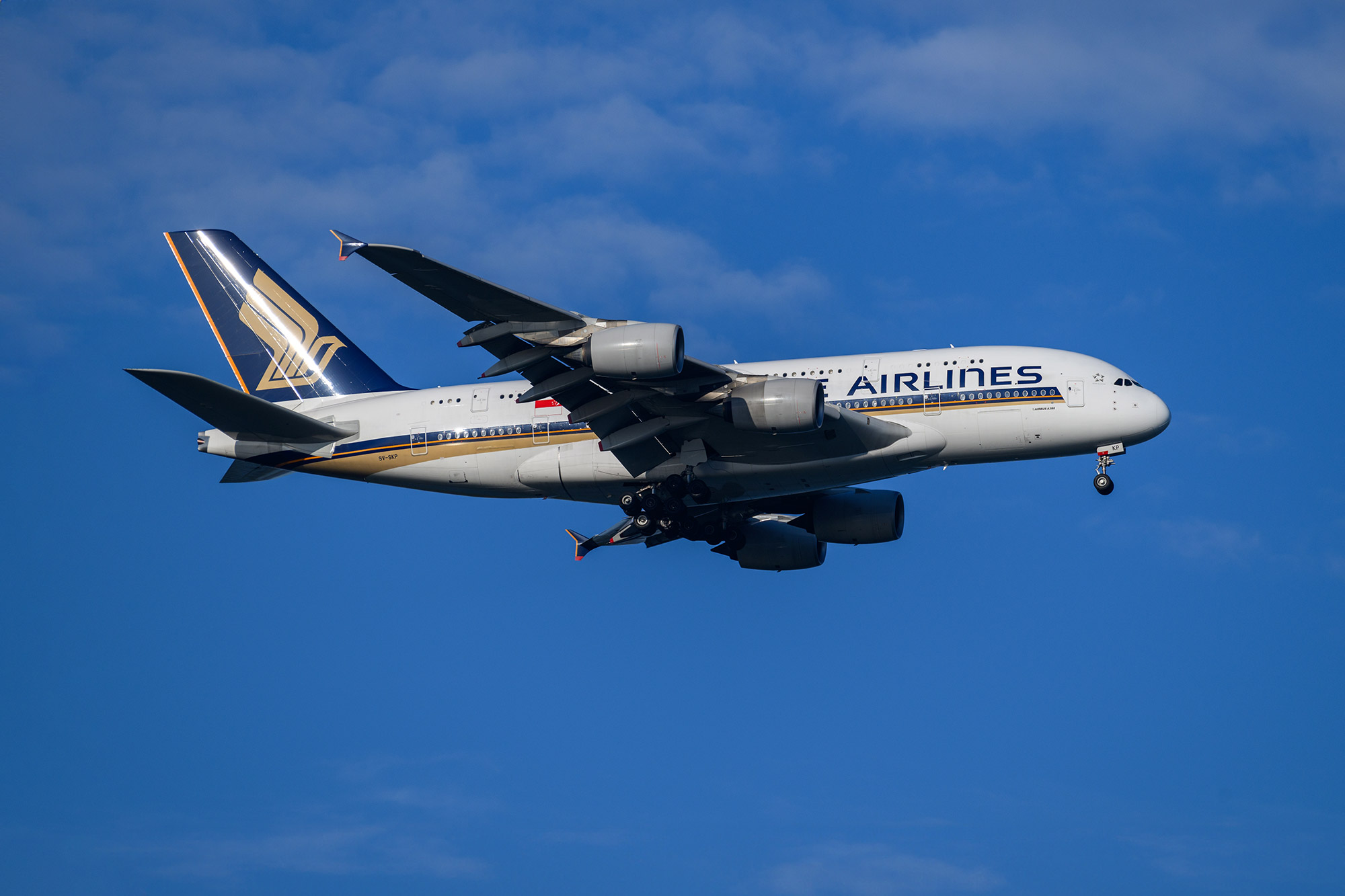
| A380 | 12 | 471 | 8 – 16 |
| 777-300ER | 22* | 264 | 11 – 20 |
| Total | 75 | ||
* Reducing to 21 this financial year.
That excludes the 24 Airbus A350 Medium Haul and 28 Boeing 787-10 aircraft, which handle regional flying and are a separate (and later) replacement question, plus over 20 Boeing 737-8 MAXs which handle short-haul duties on thinner routes.
The old 15-year rule is now more like 15 – 20
Singapore Airlines built its reputation partly on operating one of the world’s youngest fleets, historically moving passenger aircraft on to other carriers or converting them to freighters at around the 15-year age mark.
Realistically, that rule is stretching to more of a 15 – 20 year window, and partly for good reason.
Modern aircraft types like the Airbus A350 feature digital systems health monitoring, continuously analysing data to predict component degradation and flag emerging issues, supporting targeted maintenance inspections rather than the more conservative schedules of older generations.
Keeping a well-monitored 17-year-old A350 in reliable service simply isn’t the proposition a 17-year-old 747 once was.
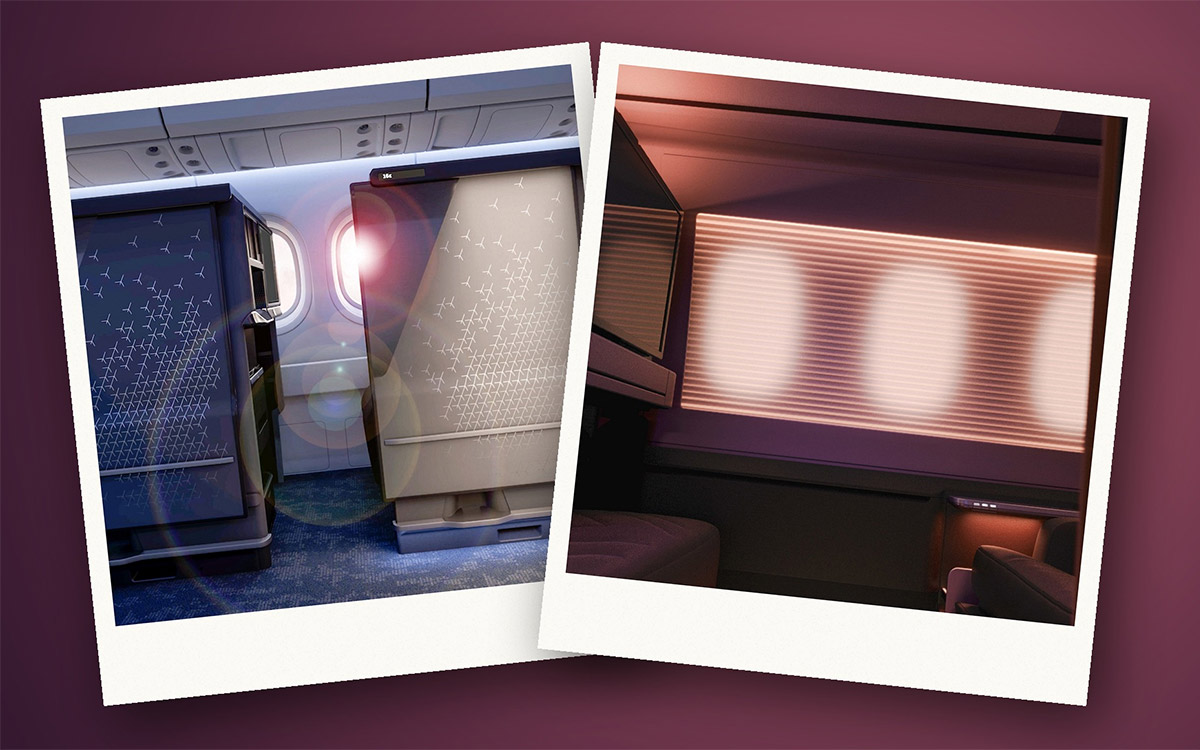
There’s also a return-on-investment logic. SIA’s Airbus A350 Long Haul fleet undergoes a major cabin retrofit from 2027, including all-new First and Business Class products, and that level of investment typically only makes sense if these jets then remain in service for a further 7 – 10 years.

Even on that extended timeline, however, a replacement wave is coming – and it arrives in clearly defined phases:
- Boeing 777-300ER (11–20 years old): the most pressing case. Expect one-for-one swap-outs as 777-9s finally start arriving from 2027.
- Airbus A380 (8–16 years old): run the 12 superjumbos to 20 years of age, and replacements are needed from 2031 through to 2038.
- Airbus A350-900 LH (oldest already 10): post-retrofit, replacement kicks in from the mid-2030s.
- Airbus A350-900 ULR (~8 years old): replacement from the late 2030s.
SIA’s current order isn’t nearly enough
Against that 75-aircraft long-haul fleet, what does SIA actually have inbound?
The answer is short and sweet – 31 Boeing 777-9s. That’s it, on the long-haul passenger side.

(Image: Boeing)
The original 20 were ordered in 2017, with a further 11 added during the airline’s COVID-era order book restructuring in 2021.
The seven Airbus A350 Freighters arriving from the second half of 2027 are cargo aircraft, replacing the 747-400F fleet, so they don’t help here, though as we’ll see, they do bring one interesting side benefit.
Now the maths:
- 75 long-haul aircraft requiring replacement between now and around 2040
- 31 aircraft on order
- a 44-frame shortfall, before a single jet for growth
Viewed that way, “at least 50 aircraft, plus options for dozens more” is hardly an aggressive expansion play. It’s closer to the minimum required just to stand still, with the options providing the real growth headroom for a carrier that intends to keep expanding.
Order in 2026, fly in 2033
Why start talks now, when the first of these replacements isn’t needed until the early 2030s?
Well, that’s how long the queue is. The Boeing 777-9 already has over 540 firm orders before a single delivery has taken place, swollen further by Emirates’ order for 65 additional aircraft at the Dubai Airshow last November.
Airbus, meanwhile, is working to lift A350 production to 12 aircraft per month by 2028, but the type is heavily sold for years ahead. Air Canada’s recent (February 2026) A350-1000 order won’t translate to first delivery until late 2030, a near five-year wait.
It’s a similar story across the wider industry.
IATA put the global aircraft order backlog at around 18,100 aircraft as of May 2026, more than half the size of the entire active world fleet, with new orders continuing to outpace deliveries.
Analysts at IBA note that meaningful new aircraft delivery slots are increasingly unavailable until around 2033 on the narrow-body side, with Airbus wide-body positions opening from 2032 – 2033 and Boeing’s constrained until around 2034.
In other words, an order signed in late 2026 or early 2027 realistically translates to deliveries from the early-to-mid 2030s, which is precisely when SIA’s A380 retirement wave will likely peak and the A350 LH fleet replacements also join the queue, as those planes turn 20.
Wait two more years to sign, and the right delivery slots almost certainly no longer exist.
Option 1: More Boeing 777-9s
The path of least resistance? SIA already has 31 of the type on order, crew training and infrastructure planning underway, and the Boeing 777-9 is the largest commercial aircraft in production. It’s the natural (if partial) successor to the A380 at the flagship end of the fleet.
The programme, of course, remains one of the industry’s longest-running soap operas.
Originally due in service in 2020, the 777-9 is now targeting first delivery in 2027, with Lufthansa as launch operator. FAA Administrator Bryan Bedford said in June that he expects the remaining 737 MAX variants to be certified first, with the 777-9 following in early 2027, while Boeing said this month that the majority of certification Type Inspection Authorisations have now been granted, with only TIA 5 and the ETOPS approvals still to come.
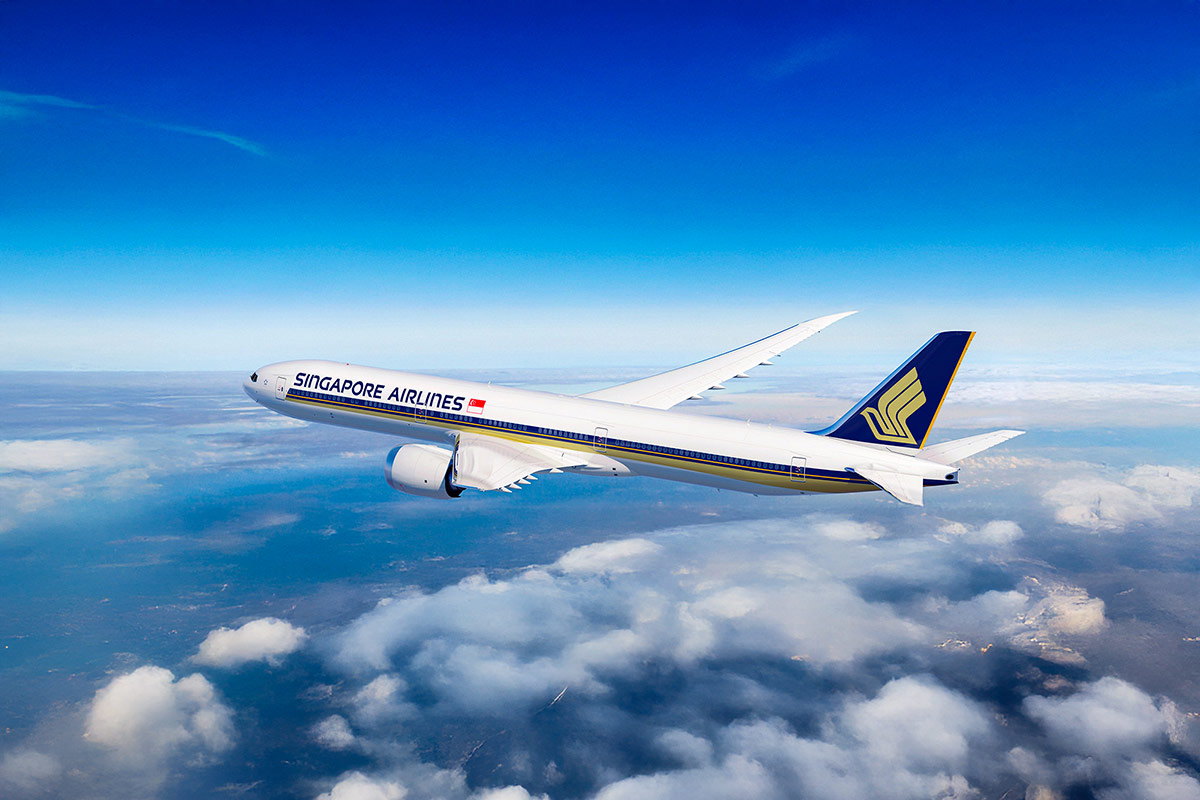
A top-up order would deepen commonality, and Boeing would doubtless offer attractive terms to a marquee Asia-Pacific customer like SIA.
The counterweight is programme risk. SIA has already waited the best part of a decade for its first 777-9, and the smaller 777-8 (broadly a 777-300ER-sized aircraft, but with longer range) remains further behind still.
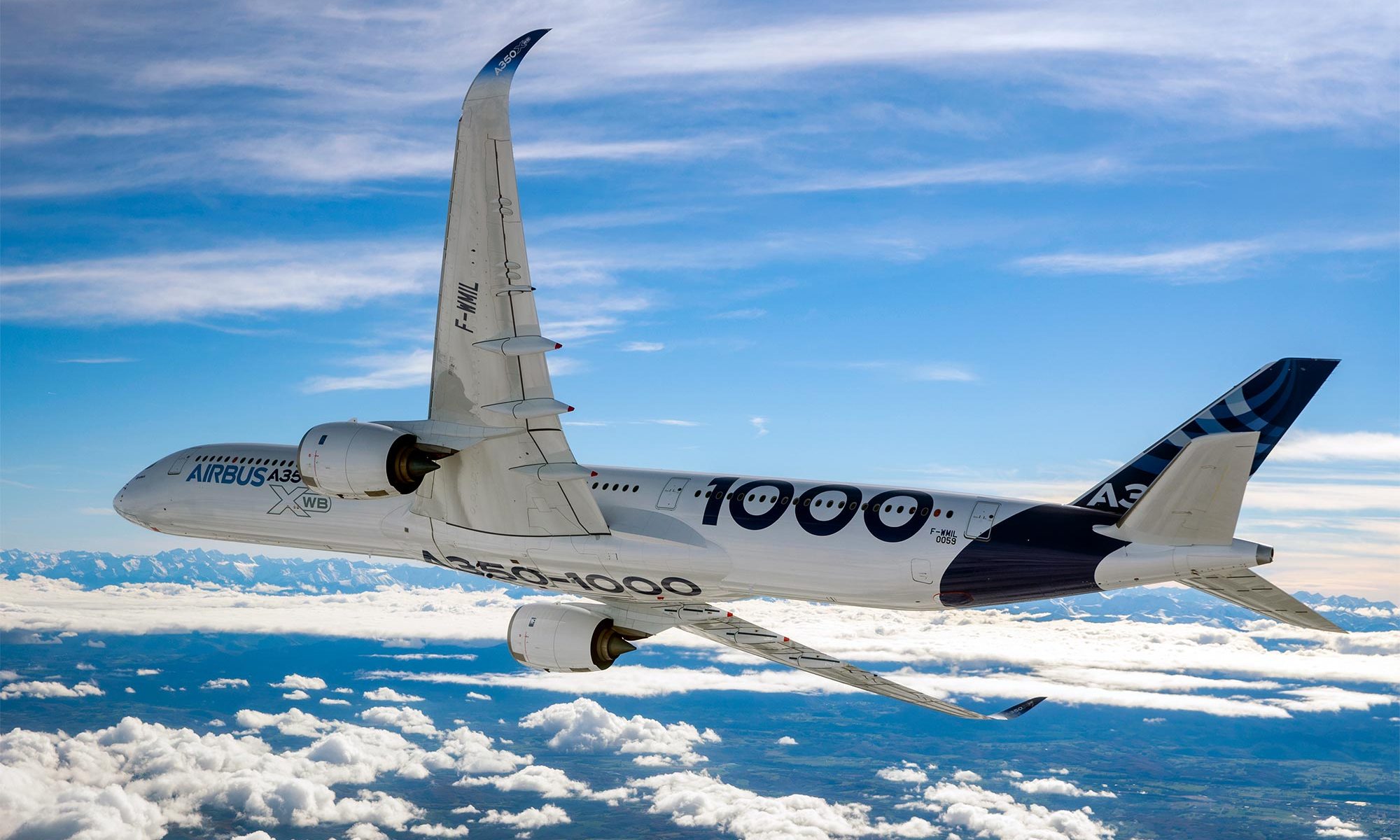
Option 2: The Airbus A350-1000
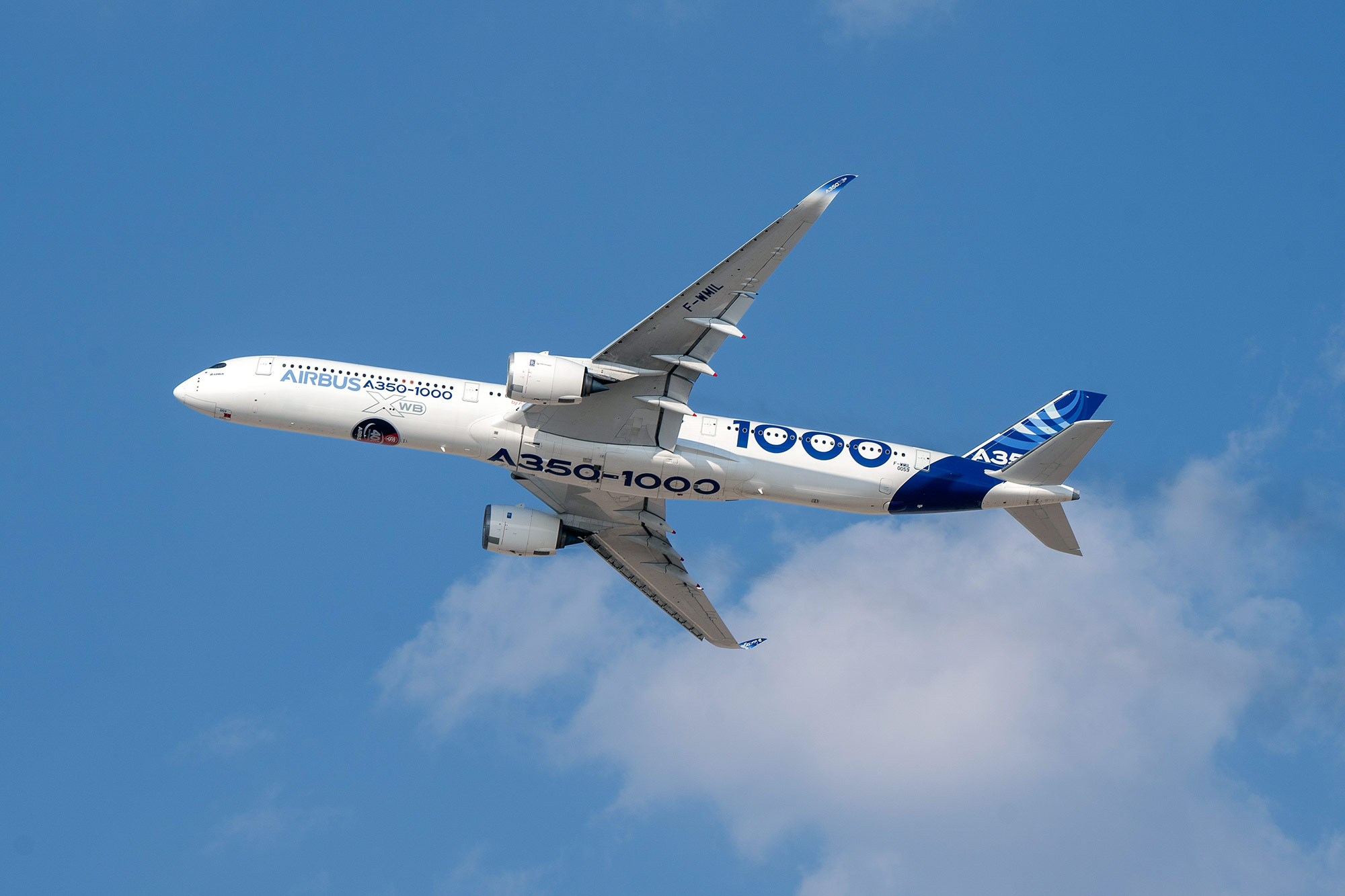
The A350-1000 would add a third passenger variant to SIA’s A350 family, alongside 65 A350-900s already in service across Long Haul, Medium Haul and ULR versions – currently the largest A350 fleet of any airline in the world.
A new variant, yes, but very far from a new type.
(Photo: Airbus)
Pilots, engineers, spares and ground handling are all substantially common with the -900, and here’s another benefit – SIA will already be operating the A350-1000’s more powerful Rolls-Royce Trent XWB-97 engines from the second half of 2027, because they’re fitted to its incoming A350 Freighters (which sit halfway between a -900 and -1000 in size).
Even the engines wouldn’t be new to the operation.

(Image: Airbus)
For balance though, the XWB-97 hasn’t been without its issues. Durability in harsh Gulf operating conditions was a factor in Emirates passing on the A350-1000, despite Rolls-Royce working through improvements, though the operating environment out of Singapore is considerably less punishing than Dubai’s heat and sand.
How they compare – and the A380 problem
Here’s how the contenders stack up on paper, with one crucial extra line you won’t find in the manufacturers’ brochures: what these aircraft would actually seat in a typical Singapore Airlines long-haul four-class configuration.
| Potential Aircraft | |||
| Aircraft | Boeing 777-9 |
Airbus A350-1000 |
Boeing 777-8 |
| Length | 76.7 m | 73.8 m | 70.9 m |
| Engines | GE9X | RR XWB-97 | GE9X |
| Range | 8,000 nm* | 8,700 nm | 9,500 nm* |
| Seats (2-class) |
375 – 450 | Up to 440 | 350 – 425 |
| Realistic Seats (SIA 4-class) |
~300 | ~290 | ~250 |
| Status | First delivery 2027 | In service since 2018 | First delivery 2030 |
* Boeing raised its published 777X range figures only this month, up from 7,285nm (777-9) and 8,745nm (777-8) previously.
Those manufacturer seat counts assume two-class layouts in a much denser fit than Singapore Airlines would ever operate. In SIA’s premium-heavy configurations (for reference, the A350-900 LH seats just 253, not the ‘typical’ 332-352 Airbus quotes for three-class), expect around 300 seats on a 777-9 and roughly 290 on an A350-1000 in a four-class fit.
And that exposes perhaps SIA’s biggest issue in the coming years: there is no aircraft in production, or even formally launched, that can replace the Airbus A380 in terms of capacity.
SIA’s A380s seat 471 passengers in their current four-class configuration (6 Suites, 78 Business, 44 Premium Economy, 343 Economy).
Whichever way the airline jumps, its A380 successors will carry around 300 passengers at most, a cut of more than a third per departure. Maintaining capacity on A380 routes like London Heathrow and Sydney would require roughly three of the new jets for every two superjumbos retired, at airports where additional slots are scarce and expensive.
The stretch wildcards: A350-2000 and 777-10
That capacity gap is exactly why both manufacturers still aren’t writing off their stretch studies, and why SIA’s current order negotiations could matter well beyond Singapore.
At the Dubai Airshow last November, Boeing agreed to study a further-stretched 777-10 at Emirates’ urging, though the manufacturer is said to be approaching the concept cautiously given its focus on industrial recovery.
Airbus, meanwhile, confirmed it is analysing a larger A350 – the long-rumoured ‘A350-2000’ – with CEO Guillaume Faury acknowledging the study in February whilst stressing no launch decision has been taken. Reports suggest a roughly four-metre stretch adding 40-45 seats over the A350-1000, powered by an uprated Trent XWB-97, with service entry possible in the early 2030s if launched.
Reuters’ sources noted that SIA’s talks could give the manufacturers a clearer read on demand for exactly these variants.
A 50-aircraft commitment from Singapore Airlines could, quite plausibly, be the launch order that turns one of these paper aeroplanes into a real one.
Don’t get too excited on the capacity front, though.
Even these (still somewhat hypothetical) stretches would likely top out at around 340 seats in a typical SIA four-class long-haul fit. Better, but still nearly 130 seats short of an A380. The days of 471-seat departures are ending, regardless of what SIA orders to replace them.
(Photo: Shutterstock)
In other words, the long-haul fleet must grow – just for capacity to stand still.
What about the ULRs?
SIA needs to make a slightly different consideration when it comes to its non-stop New York flights.
Very few aircraft can replace the carrier’s seven Airbus A350-900 ULRs on the world’s longest routes. Sustaining non-stop Singapore – New York services needs roughly 9,500 nautical miles of range, and only three candidates qualify here:
- New A350-900 ULRs (i.e. re-order the same type, with 9,700nm range)
- The A350-1000 ULR (also ~9,700nm range, currently exclusive to Qantas, who launch it on Sydney – London non-stops in October 2027)
- The Boeing 777-8 (9,500nm range)

(Photo: Maye-E Wong)
Interestingly, SIA’s US West Coast destinations no longer need ULRs at all.
Range growth in the baseline models – 8,100nm for SIA’s highest-weight A350-900s, and 8,700nm for the standard A350-1000 – puts Los Angeles, San Francisco and Seattle comfortably within reach of regular aircraft from Singapore.
Only the ULR could manage Los Angeles and San Francisco when SIA relaunched these routes non-stop in 2018, but that’s no longer the case with the “A350 LH+”, as we outline in our complete guide to the airline’s A350 fleet.
The ULR replacement question is a late-2030s problem, but it may influence which manufacturer wins the wider deal in the coming months.
An announcement at Farnborough Airshow?
Analysts at IBA list Singapore Airlines among the carriers that could feature in widebody commitments at this week’s show, alongside the likes of American, Etihad, Qantas, Air India and Cathay Pacific, as part of a forecast of up to 875 orders and commitments overall during the week.
We’d bet against it.
Singapore Airlines rarely uses airshows as order announcement platforms, though that particular record isn’t quite spotless, so let’s be honest about the exceptions.
The airline almost always breaks its own order news at a time of its choosing, via SGX filings and press releases. That was true of the original A380 order in September 2000, the 777-300ERs in August 2004, the SilkAir 737 order in August 2012, the A380 and A350 top-up in October 2012, the 787-10 and A350 order in May 2013, and the 20 777-9s and 19 787-10s in February 2017 – the latter firmed months later at a White House signing ceremony.
There are two exceptions in the last 25 years.
In July 2006, SIA’s launch commitment for 20 of the redesigned A350 XWBs, plus nine additional A380s, landed on the final trade day of the Farnborough Airshow. Then in February 2022, the A350 Freighter contract was formally signed on stage at the Singapore Airshow, though the substance of that deal had already been announced by SIA itself two months earlier, in December 2021.
In practice, the news usually breaks when SIA decides it breaks, with airshows occasionally hosting the ceremonial signing of a deal everyone already knows about. Notably, the carrier’s home Singapore Airshow came and went in February this year without a whisper of this one.
Add the fact that these talks were described as “early stage” only six weeks ago, and the realistic scenario is that a confirmation is still months away.
What Farnborough week does reliably produce is executive interviews and loose lips, so don’t be surprised if the story develops a little, even if there aren’t any signatures.
Whatever SIA picks, expect all-new cabin products (again)
Here’s the part frequent flyers probably care about most.
SIA’s upcoming First and Business Class products, debuting on retrofitted A350s and the 777-9s from 2027, were actually designed for a 2021 introduction, before 777-9 delivery delays repeatedly pushed them back.

(Image: Singapore Airlines)
The airline historically launches a new long-haul First and Business Class roughly every 4 – 7 years, and was originally planning on a four-year cycle for this generation. Thanks to Boeing, that’s become nine.
Now consider the delivery timeline for this new order – the early-to-mid 2030s onwards.
By SIA’s own product cadence, that lands squarely in the window for the next generation of cabin products – and yes, that means the ones after the 2027 seats we haven’t even seen yet.
So this order isn’t just about aircraft, it’s also likely to be the vehicle for a whole future generation of Suites / First and Business Class, even beyond the upcoming one we’re still patiently waiting for.
Summary
Singapore Airlines’ reported talks for at least 50 Boeing 777X or Airbus A350-1000 aircraft, first revealed by Reuters in June, might sound like an extravagant growth order.
The fleet maths says otherwise. With 75 long-haul aircraft – 22 777-300ERs, 12 A380s, 34 A350 LHs and 7 ULRs – needing replacement between now and around 2040, and only 31 777-9s on order, a 50-plus order with options attached is closer to the minimum viable plan.
Delivery lead times explain the urgency. With over 18,000 aircraft in the global backlog and fresh widebody slots stretching well into the 2030s, SIA needs to commit years before the first A380 bows out early next decade, soon followed by a wave of its older A350s.
Whichever aircraft wins, the era of the 471-seat departure is drawing to a close. Nothing on the market, or even on the drawing board, replaces the A380 like-for-like. More planes are needed, just to stand still on the capacity front.
Just don’t expect a surprise reveal at Farnborough this week. With rare exceptions, that’s not how Singapore Airlines does things.
(Cover Photo: Airbus)
The question is: have SIA been sufficiently put off by the constant delays and issues with Boeing?