

If you’re heading to Ho Chi Minh City, or arriving there prior to onward domestic travel to other parts of Vietnam, the Immigration Department now requires most foreign arrivals to complete a digital pre-arrival declaration before stepping up to the immigration counter.
This has been a rather short-notice change and appears to be part of a pilot scheme that could roll out in future to other entry points like Hanoi and Da Nang.
It makes Vietnam the latest country in the region to roll out a mandatory Digital Arrival Card, following similar moves by Thailand, Indonesia and Taiwan in the past 12 months.
The new requirement took effect on 15th April 2026, and for the time being only applies to travellers arriving at Tan Son Nhat International Airport (SGN) in Ho Chi Minh City, Vietnam’s busiest entry point, handling the majority of foreign arrivals into the country.
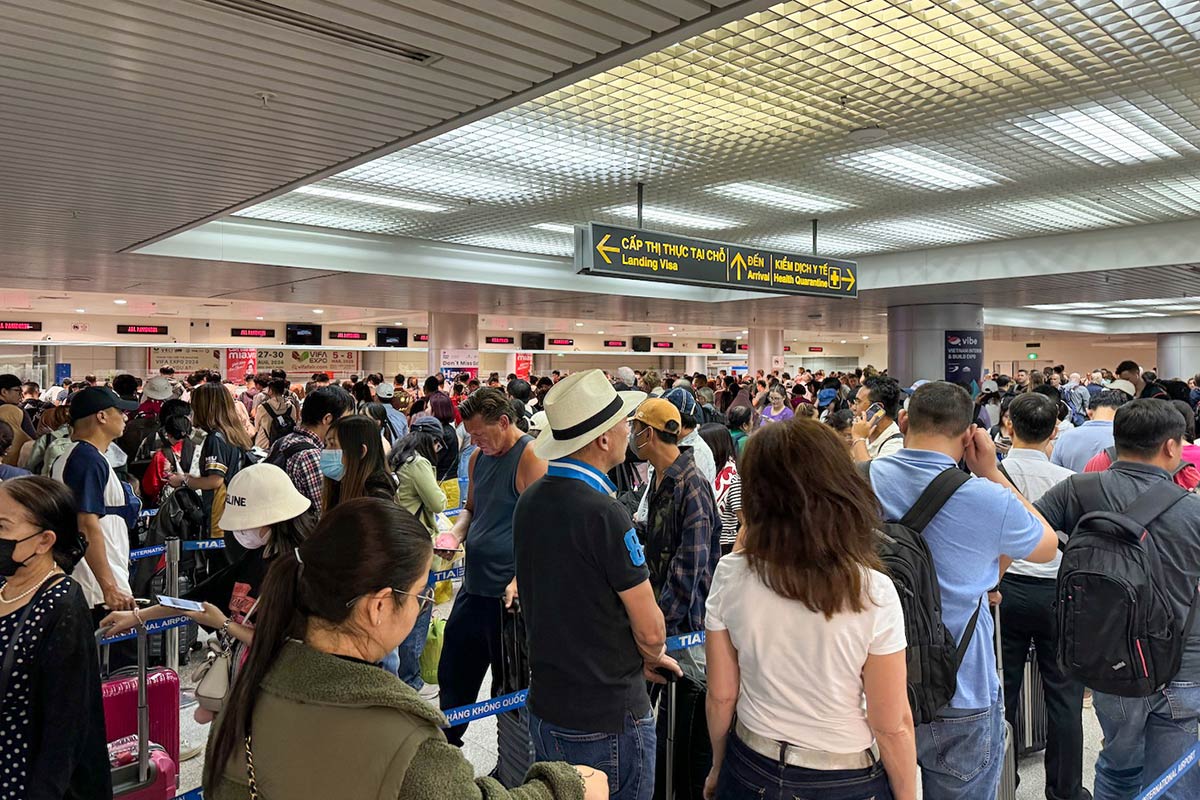
The authorities are pitching the scheme as a way to speed things up at the border, which will be welcome news, if it actually delivers! SGN in particular has developed a reputation in recent years for long, slow-moving immigration queues, sometimes stretching to 500+ people, with waits of one to two hours during evening peaks.
Vietnam Digital Arrival Card
The new Vietnam pre-arrival declaration is an online form introduced by the Vietnam Immigration Department, and is a requirement for most foreign visitors arriving at Tan Son Nhat International Airport effective from 15th April 2026.
It collects the kind of information you’d previously have written on a paper arrival card – passport details, flight number, address of stay in Vietnam, and purpose of visit – but submits it electronically in advance, generating a QR code that’s then scanned at immigration on arrival.
The form is free of charge, and is hosted on the official portal run by the Vietnam Immigration Department:
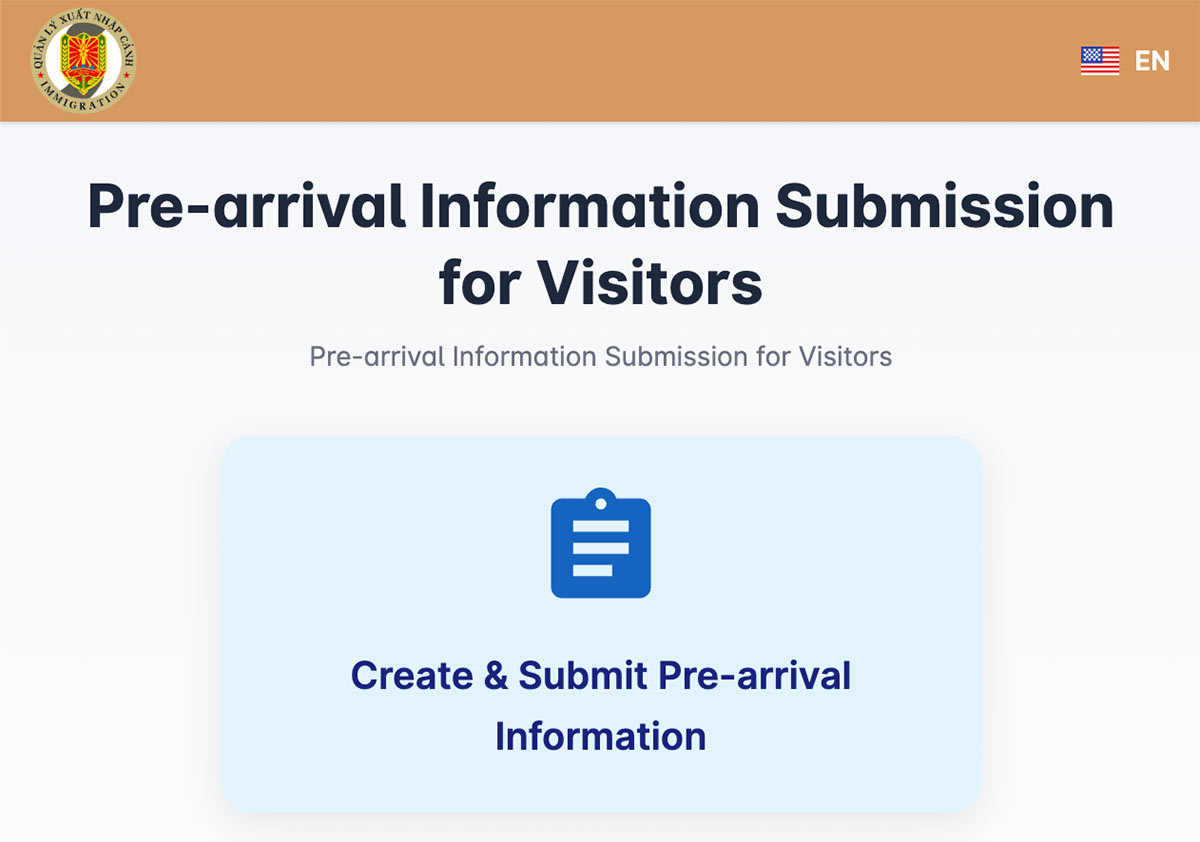
Importantly, the declaration does not replace any visa requirement.
Travellers who need an e-visa, visa exemption certificate or other entry permit must still obtain these separately. The pre-arrival form is purely an immigration registration step.
Who needs to complete it?
The pre-arrival declaration is mandatory at SGN for:
- Foreign nationals entering Vietnam (both visa-required and visa-exempt)
- Overseas Vietnamese citizens entering on a foreign passport with a valid visa
The following groups are exempt:
- Vietnamese citizens travelling on a Vietnamese passport
- Transit passengers who do not pass through immigration
(e.g. SIN-SGN-LHR on one ticket, both boarding cards issued, any luggage through-checked)
(Photo: Shutterstock)
As noted above, the requirement currently only applies to arrivals at Ho Chi Minh’s Tan Son Nhat (SGN).
Other international gateways including Hanoi (HAN) and Da Nang (DAD) are not yet covered, though the portal itself includes fields for other points of entry and multiple modes of transport (air, land and sea), suggesting the system has been designed with a nationwide rollout in mind.
No official timeline has been announced for extending the scheme beyond Ho Chi Minh City.
How to complete the form
The declaration is a four-step process on the official portal:
Step 1: Passenger information
- Expected arrival date (can only be selected for today and the next two days)
- Passport image upload (optional, to pre-fill certain fields)
- Passport number, expiry date, full name, gender, date of birth, nationality
- Phone number and email address
- Visa or entry document details (e.g. e-Visa, Visa Exemption Certificate, ABTC Card, Temporary Residence Card etc.), including document number, issue date, expiry and place of issue
Step 2: Travel information
- Country of departure
- Purpose of travel (tourism, business, study, work etc.)
- Mode of transport (air, land or sea)
- Flight number for air arrivals
- Point of entry
- Accommodation type, province/city, district and address
- Workplace information
- Planned departure date from Vietnam
Step 3: Review and validation
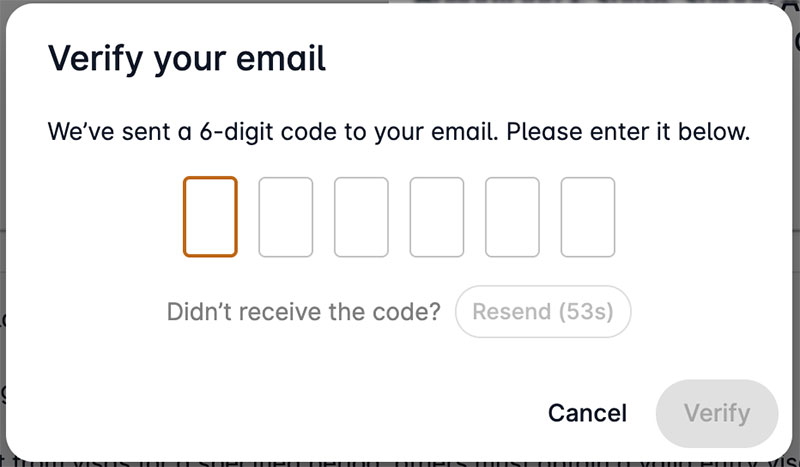
Review all your information, then enter a six-digit OTP code sent to your email address to confirm the declaration.
Step 4: Confirmation
Once validated, the system assigns a file number and generates a downloadable confirmation bearing a QR code, which you present to immigration officers on arrival.

When can you complete the form?
You can submit the pre-arrival declaration on the day of arrival, or up to two days before your scheduled arrival. The portal won’t let you select an arrival date any further ahead than that.
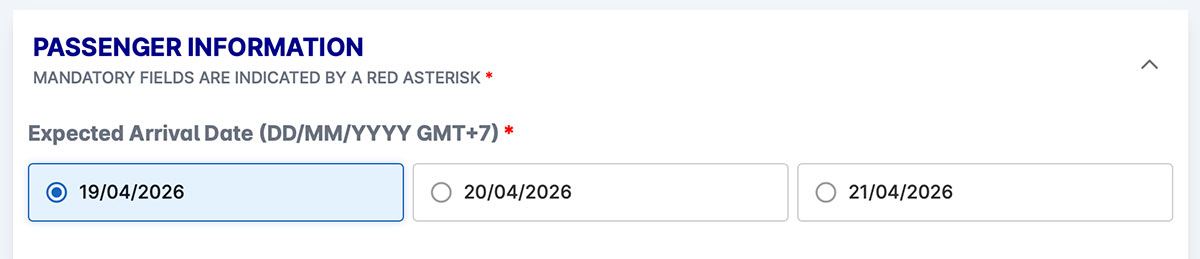
For example, if you’re touching down on 25th April, you’ll be able to submit for that date from just after midnight on 23rd April.
For those who miss the window before flying, a QR code linking to the form will also be displayed in the immigration arrival area at SGN, allowing last-minute submissions at the airport itself. That said, authorities strongly recommend completing the declaration in advance, noting that doing so at the airport may add to your processing time.
Airlines and travel agents are also being encouraged to actively inform passengers of the new requirement before departure, so you may see reminders from your carrier in the run-up to your flight.
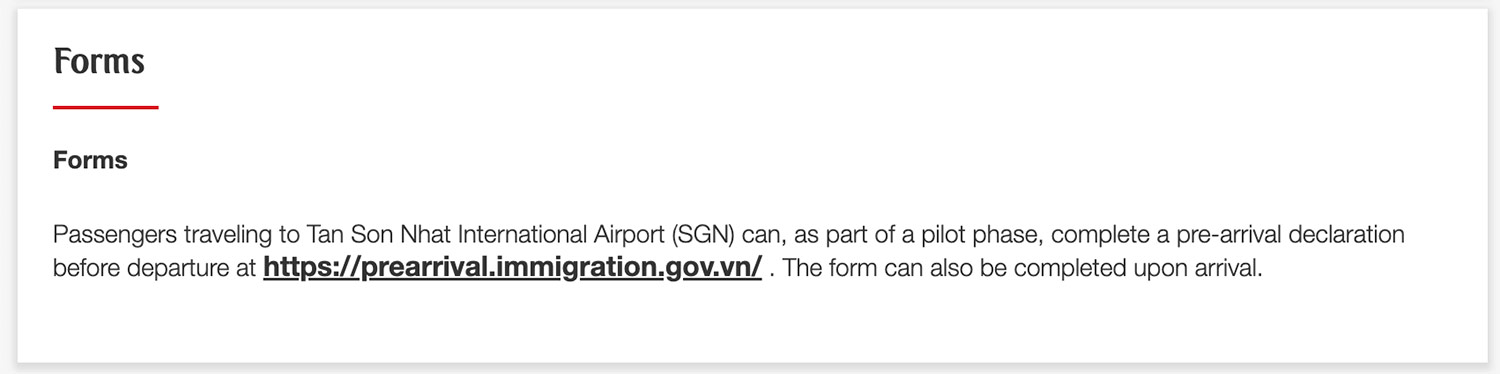
So far we’ve seen proactive advisories from Emirates and VietJet, but other carriers seem to have been caught off-guard by this change, including SIA, Scoot and Vietnam Airlines, who so far are silent on the requirement.
Will it actually speed things up?
This is the key question.
Immigration queues at Tan Son Nhat have been a sore point for arriving passengers in recent years, with average waits of 30 – 45 minutes not uncommon and peak-time queues regularly pushing past an hour, sometimes two.
Anecdotal reports of 500-person queues during late afternoon and evening arrivals have been common.
(Photo: Live and Let’s Fly)
The Vietnamese authorities have framed the new declaration as part of a wider drive to modernise immigration processing and cut congestion, with the QR code allowing officers to retrieve passenger information electronically rather than entering it manually at the desk.
If the rollout delivers on that promise, it would be a genuine improvement for a destination that’s struggled to keep pace with increasing traffic.
As always with new digital systems, expect some teething issues in the first few weeks as both staff and passengers get used to the process, but fingers crossed for some waiting time improvements.
Singapore – Ho Chi Minh City flights
For those flying from Singapore, Tan Son Nhat is the natural gateway to Vietnam, served by four airlines with a combined 84 weekly non-stop flights in each direction, based on July 2026 schedules:
- Scoot (21/wk)
- Singapore Airlines (21/wk)
- VietJet Air (21/wk)
- Vietnam Airlines (21/wk)
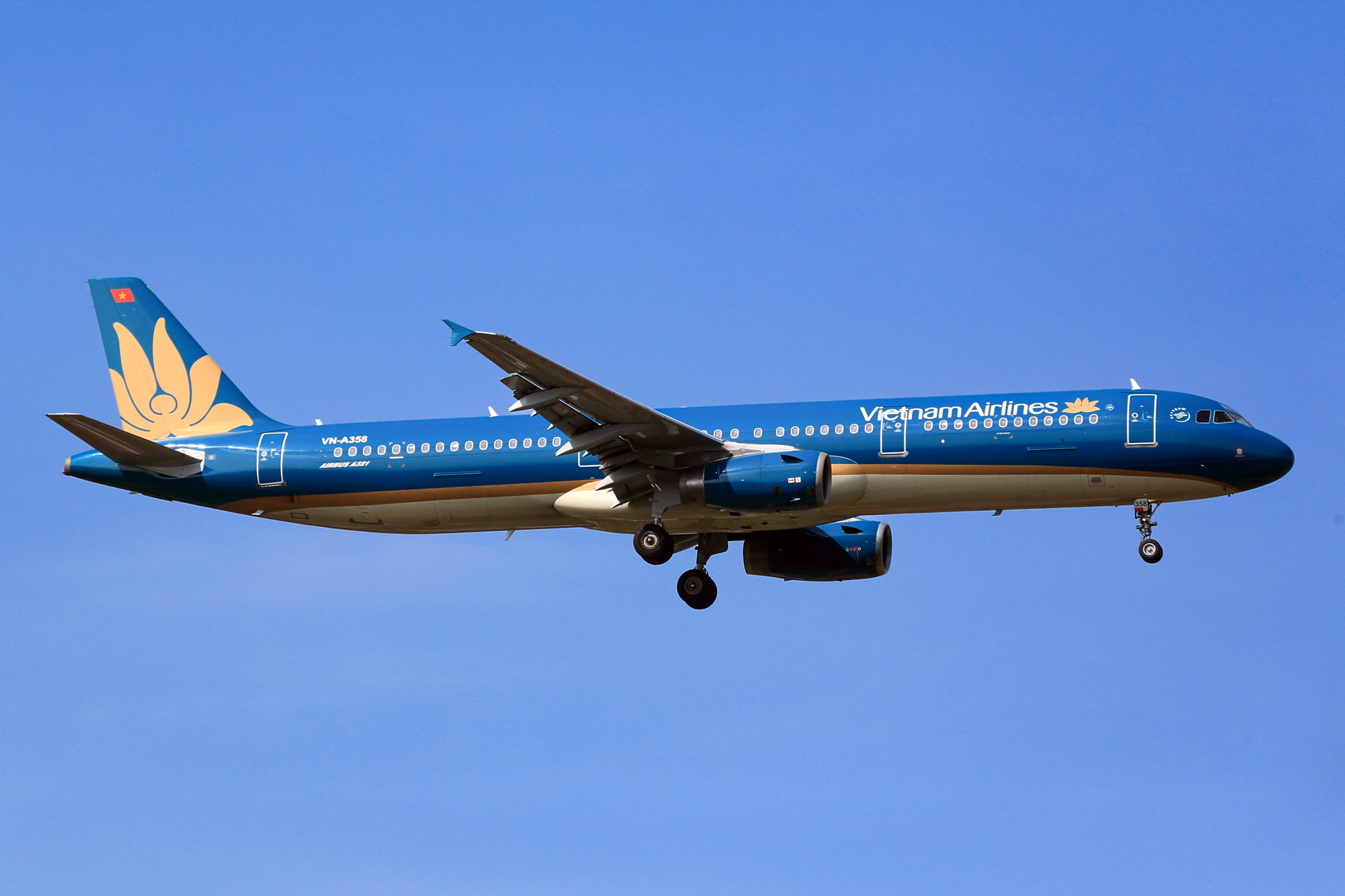
(Photo: Chu Gia Minh)
The SIN–SGN route is one of the busiest regional sectors out of Changi, with block times of just over two hours. Onward connections can then link you to almost anywhere in Vietnam, but you’ll still need to complete the arrival card if your final destination is domestic, since you’ll be clearing immigration in SGN.


Summary
Since 15th April 2026, most foreign nationals arriving at Ho Chi Minh City’s Tan Son Nhat International Airport must complete Vietnam’s new pre-arrival declaration online before presenting themselves at immigration.
The scheme mirrors similar systems introduced across the region over the past year, and if it works as promised, it should help ease the notoriously long immigration queues that SGN has become known for in recent years.
Key points to remember:
- Complete the form up to 72 hours before travel at prearrival.immigration.gov.vn
- Currently only required at Tan Son Nhat (SGN) – not Hanoi or Da Nang
- Save the QR code electronically and/or print a backup
- Vietnamese citizens and transit passengers are exempt
- The declaration does not replace your visa or visa-exemption requirement
Our advice for readers heading to Vietnam via Ho Chi Minh City: submit the declaration before you fly, save the QR code to your phone, and hope that the new system genuinely delivers the smoother arrival experience the authorities are promising.
Anything that shortens those SGN queues would be very welcome indeed.
(Cover Photo: Chansak Joe / Shutterstock)