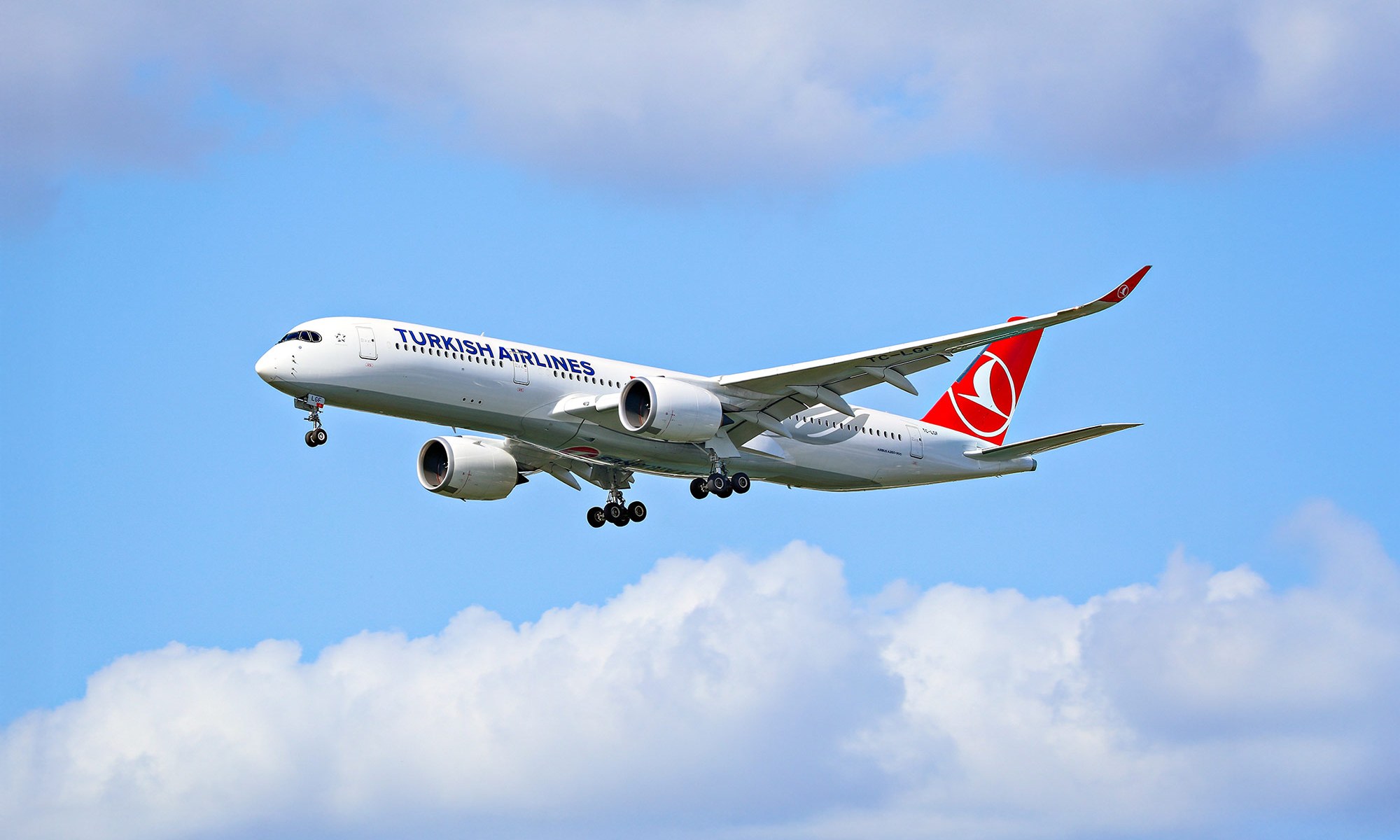

Star Alliance carrier Turkish Airlines is joining the popular Singapore – Sydney route from the start of the northern winter season in late October 2026, with five weekly flights operating as part of its Istanbul – Sydney service.
That will make Sydney the airline’s second “fifth freedom” route out of Changi, alongside its existing three times weekly Singapore – Melbourne link, and secures the Lion City as Turkish’s sole staging post for services between Turkey and Australia.
Crucially the airline has secured the traffic rights it needs to sell the Singapore – Sydney and Sydney – Singapore sectors independently, so you don’t have to be flying all the way to or from Istanbul to be on board. Tickets are already on sale, including return trips in both directions.
It’s a re-route, not a new flight
The interesting aspect of this one is that Turkish Airlines isn’t actually adding an Istanbul – Sydney service – it already has one. What’s changing is where it stops.
Since launching Australian flights in 2024, the carrier has routed Sydney services via Kuala Lumpur, and it’s that leg which is being swapped out for Singapore.
The reason is almost certainly a commercial one.
Turkish holds no “fifth freedom” rights between Kuala Lumpur and Sydney, which means only passengers who boarded in Istanbul and are travelling all the way through to Australia can occupy a seat on the second leg of the journey – and the same applies to the first leg coming back.
That typically means flying a half-full aircraft for a significant chunk of a very long rotation, which is no way to make good money out of an Airbus A350.
There’s no such problem out of Changi, where the airline already sells Singapore – Melbourne tickets on a standalone basis, and will now do the same for Sydney.
Traffic rights of this kind are a contentious matter in some countries, which may (quite legally) decline them in order to protect market share for their national carriers. Singapore takes a different view, on the basis that more foreign airlines flying more routes makes Changi a better-connected hub, which is worth more to the wider economy than shielding any single airline.
It’s a policy that works both ways, of course. Singapore’s own carriers rely on “fifth freedom” rights elsewhere – Singapore Airlines between Frankfurt and New York, Tokyo and Los Angeles, Milan and Barcelona – Scoot between Taiwan and Japan – and you can’t very well demand them abroad while refusing them at home.
The schedule
Flights will operate five times weekly, using two-class Airbus A350-900s, and are renumbered from TK174/175 in their current ‘via-KL’ era to TK22/23, as part of the change.
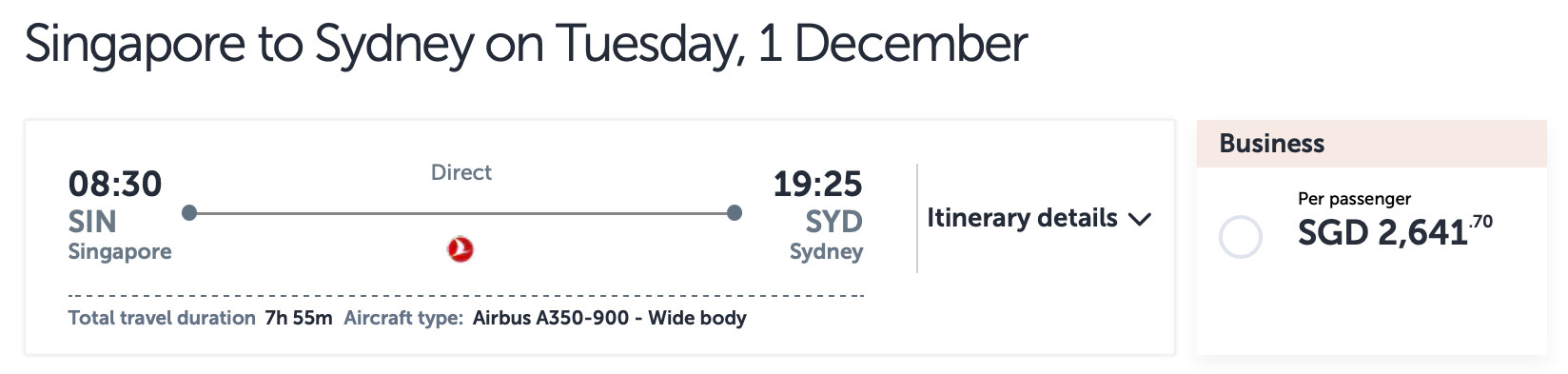
For the northern winter 2026/27 season, TK22 leaves Istanbul on Mondays, Wednesdays, Thursdays, Fridays and Saturdays, which means these ‘tag on’ Singapore – Sydney – Singapore flights operate on Tuesdays, Thursdays, Fridays, Saturdays and Sundays.
Here’s how it looks.
Istanbul Singapore Sydney
26 Oct 2026 – 27 Mar 2027
| Days | |||||||||
| M | T | W | T | F | S | S | |||
 |
TK22 A350-900 |
||||||||
| IST 15:20 |
SIN 06:50* |
||||||||
| Duration: 10:30 | |||||||||
|
TK22 A350-900 |
||||||||
| SIN 08:30 |
SYD 19:25 |
||||||||
| Duration: 07:55 | |||||||||
|
TK23 A350-900 |
||||||||
| SYD 21:35 |
SIN 02:50* |
||||||||
| Duration: 08:15 | |||||||||
|
TK23 A350-900 |
||||||||
| SIN 04:35 |
IST 11:10 |
||||||||
| Duration: 11:35 | |||||||||
* Next day
– “Fifth freedom” flights
From the start of the northern summer 2027 season, the routing is unchanged but the days shift, with TK22 leaving Istanbul on Mondays, Tuesdays, Wednesdays, Thursdays and Saturdays, meaning Singapore – Sydney – Singapore operation on Tuesdays, Wednesdays, Thursdays, Fridays and Sundays.
Istanbul Singapore Sydney
From 28 Mar 2027
| Days | |||||||||
| M | T | W | T | F | S | S | |||
|
TK22 A350-900 |
||||||||
| IST 15:50 |
SIN 07:40* |
||||||||
| Duration: 10:50 | |||||||||
|
TK22 A350-900 |
||||||||
| SIN 09:20 |
SYD 19:05 |
||||||||
| Duration: 07:45 | |||||||||
|
TK23 A350-900 |
||||||||
| SYD 21:00 |
SIN 03:20* |
||||||||
| Duration: 08:20 | |||||||||
|
TK23 A350-900 |
||||||||
| SIN 05:05 |
IST 11:20 |
||||||||
| Duration: 11:15 | |||||||||
* Next day
– “Fifth freedom” flights
End to end, it’s around 20 hours from Istanbul to Sydney and a little under 21 hours 40 minutes coming back, with the aircraft on the ground at Changi for only 1 hour 40 minutes in each direction, and barely two hours in Sydney.
The carrier’s Singapore – Melbourne route is unaffected, continuing three times weekly as TK168/169, also using the Airbus A350-900.
Ouch: That Sydney – Singapore arrival time
There’s no way to look through the schedule and ignore this one – TK23 lands at Changi from Sydney at 2.50am, moving to an even less appealing 3.20am from the summer 2027 season.
While this certainly maximises your last day in Sydney, with no need to be at the airport until around 7pm ahead of a 9pm+ departure, it’s a horrible arrival time in Singapore for those disembarking there and heading home or to a hotel (the latter would need to be booked from the previous night, which is a bit of a waste).
It’s the same story as Turkish’s existing Melbourne – Singapore service, which arrives at 2.50am.
For Turkish, keeping the aircraft moving seems to be the point, with short stops at all airports on this flight from the moment it leaves Turkey, and Singapore gets the antisocial timings that fall out of it in the Sydney – Singapore – Istanbul direction.
The Sydney-bound sector fares better of course. TK22 leaves Changi at 8.30am and arrives at 7.25pm, which is a perfectly reasonable daytime hop and gets you to Sydney in time for a late dinner, provided you don’t mind a 6am start at the airport.
Turkish’s growing Changi presence
The re-route on this service lifts Turkish Airlines’ overall Singapore operation from 17 to 22 weekly flights, while Kuala Lumpur drops from 19 to 14 services per week.

(Photo: Minh K Tran)
That includes the carrier’s standalone Istanbul – Singapore – Istanbul services in their own right, which continue alongside the two Australia-bound rotations.
For those interested, including the TK22/23 services listed above between Singapore and Istanbul, here’s how the carrier’s overall 22 times weekly flights look on the route for the northern winter 2026/27 season (click to expand).
Turkish Airlines SIN-IST-SIN Schedule NW26/27
Singapore Istanbul
26 Oct 2026 - 27 Mar 2027
| Days | |||||||||
| M | T | W | T | F | S | S | |||
|
TK23 A350-900 |
||||||||
| SIN 04:35 |
IST 11:10 |
||||||||
| Duration: 11:35 | |||||||||
|
TK169 A350-900 |
||||||||
| SIN 05:10 |
IST 11:45 |
||||||||
| Duration: 11:35 | |||||||||
|
TK209 A350-900 |
||||||||
| SIN 10:25 |
IST 17:15 |
||||||||
| Duration: 11:50 | |||||||||
|
TK209 A350-900 |
||||||||
| SIN 11:35 |
IST 18:25 |
||||||||
| Duration: 11:50 | |||||||||
|
TK55 A350-900 |
||||||||
| SIN 23:15 |
IST 05:50* |
||||||||
| Duration: 11:35 | |||||||||
|
TK54 A350-900 |
||||||||
| IST 01:50 |
SIN 17:40 |
||||||||
| Duration: 10:50 | |||||||||
|
TK22 A350-900 |
||||||||
| IST 15:20 |
SIN 06:50* |
||||||||
| Duration: 10:30 | |||||||||
|
TK168 A350-900 |
||||||||
| IST 17:05 |
SIN 08:35* |
||||||||
| Duration: 10:30 | |||||||||
|
TK208 A350-900 |
||||||||
| IST 17:15 |
SIN 08:45* |
||||||||
| Duration: 10:30 | |||||||||
|
TK208 A350-900 |
||||||||
| IST 18:30 |
SIN 09:55* |
||||||||
| Duration: 10:25 | |||||||||
* Next day
Singapore Airlines is the only other operator on the Istanbul route, with four times weekly Airbus A350 Long Haul service, a fraction of what Turkish Airlines now offers.
The Sydney route gets busier
Turkish will be the fifth airline flying non-stop between Changi and Sydney, joining Singapore Airlines, Qantas, Scoot and British Airways, the latter also operating on longstanding “fifth freedom” rights, as a continuation of one of its two daily London Heathrow – Singapore services.
Based on November 2026 schedules that’s 67 weekly flights between the two cities, with Star Alliance carriers accounting for 33 of them (28 Singapore Airlines + 5 Turkish Airlines).
Business Class
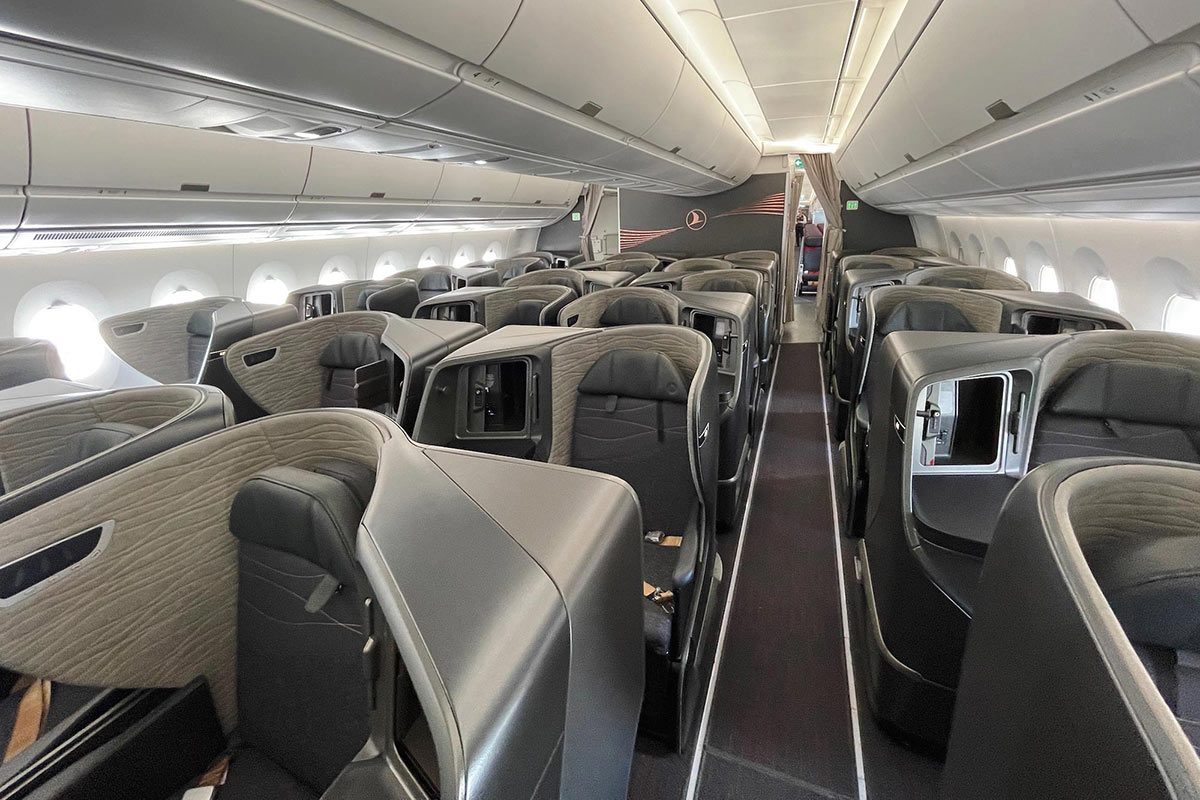
Turkish Airlines operates a two-class A350-900 on this route, with no Premium Economy cabin, so it’s Business or Economy only.
(Photo: Live and Let’s Fly)
Business Class is a 1-2-1 staggered layout offering direct aisle access from every seat, which is a considerable step up from the dated 2-3-2 arrangement you’ll still find on the carrier’s Boeing 777-300ERs.
The seats are Stelia Symphony products, first introduced by Singapore Airlines as its 2018 Regional Business Class product, so they’ll be a familiar sight for many of our readers.
There’s an exception though, because Turkish now flies three different A350-900 configurations, and one of them in particular is quite different to the others.

| Turkish Airlines Airbus A350 Configurations | ||||
| Config. | Business | Economy | Total | Notes |
| Standard | 32 | 297 | 329 | The airline’s original layout (26 aircraft) |
| New | 32 | 308 | 340 | TC-LHH onwards (five aircraft as of Aug ’26) 11 extra Economy seats from galley and lavatory optimisation |
| Ex-Aeroflot | 28 | 288 | 316 | Six aircraft retaining their original Aeroflot interiors |
The six ex-Aeroflot jets are the interesting ones. They kept the interiors Airbus originally built for the Russian carrier before sanctions blocked delivery, which means Collins suites with privacy doors rather than the Stelia seats, and a former Premium Economy cabin that Turkish simply sells as Economy.
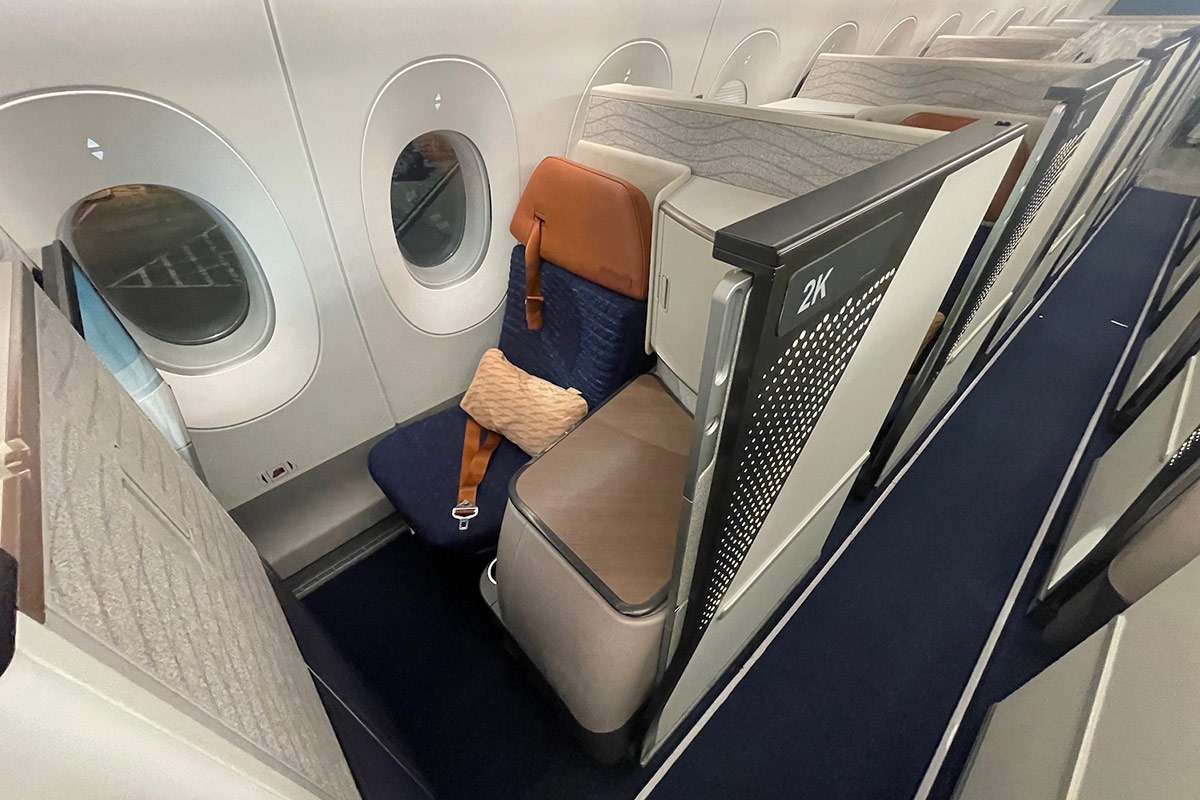
(Photo: Live and Let’s Fly)
If you land one of those, the front rows of the Economy cabin in a 2-4-2 configuration are a significantly better seat than those further back (3-3-3).
At the time of writing, Turkish is deploying its own standard A350 configuration with the Stelia Business Class seats on these Sydney flights, but that’s always subject to operational changes, so watch out for the ex-Aeroflot config popping up here and there.
Whichever aircraft you’re on, you’ll get free Wi-Fi in Business Class, an 18-inch entertainment screen, and the airline’s well-regarded catering, with an onboard chef looking after the Business Class cabin.

(Photo: Turkish Airlines)
Which lounge?
Turkish Airlines uses Terminal 1 at Changi, and these Sydney flights are no exception.
Eligible passengers are directed to the SATS Premier Lounge, a relatively basic third-party facility but importantly it’s open 24 hours a day, essential on a route with these kind of timings.
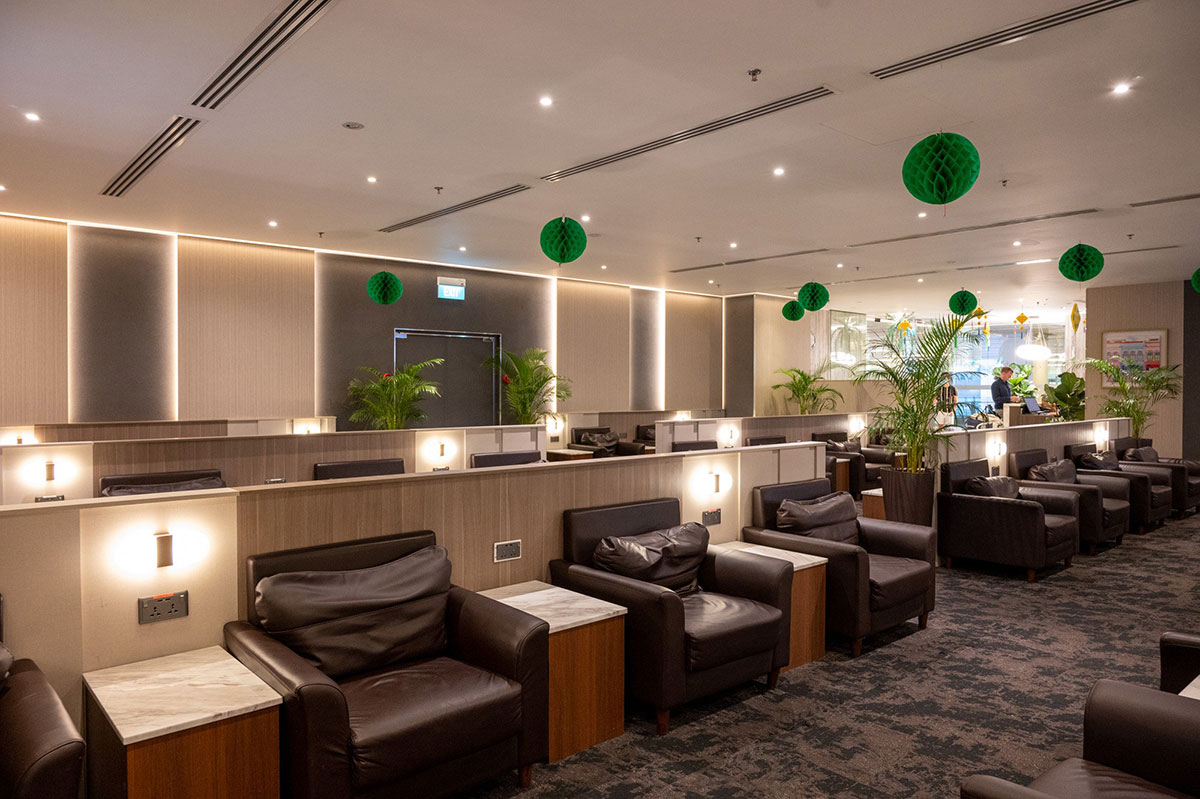
(Photo: The Shutterwhale)
There are no Star Alliance lounges in Changi T1 following the permanent closure of the Thai Airways Royal Orchid Lounge, but there’s nothing stopping eligible Turkish Airlines passengers hopping on the SkyTrain to T2 or T3, and the Singapore Airlines facilities over there are a clear step up.
Business Class passengers can use the SilverKris Lounge in either terminal, with the flagship T3 facility the pick of the two (for now at least), while Star Alliance Gold members travelling in Economy have the KrisFlyer Gold Lounge in T3 or T2 (again, the former being the current pick).
It’s a tricky call for those flying all the way between Turkey and Australia though, who have only 1 hour 40 minutes on the ground in each direction – enough to make the trans-terminal trip worthwhile in principle, but not enough to settle in without watching the clock.

(Photo: MainlyMiles)
At the Sydney end, Turkish directs eligible passengers to the Air New Zealand lounge, but they also have access to the Singapore Airlines SilverKris lounge until 7pm.
Booking and awards
Here are the award redemption rates using Singapore Airlines KrisFlyer miles to redeem on Turkish Airlines flights (Star Award) compared to SIA flights on the Singapore – Sydney route.

| KrisFlyer Saver Redemption Rates SIN to/from SYD (one-way) |
|||
 |
 |
||
| Saver | Advantage | ||
| Economy | 37,000 |
29,000 |
60,500 |
| Premium Economy | n/a |
53,500 |
n/a |
| Business | 90,000 |
72,000 |
103,500 |
| First | n/a | 98,000 |
178,500 |
As you can see, for KrisFlyer members redeeming miles on Turkish Airlines isn’t a particularly good deal on this route if Saver award space is available on Singapore Airlines flights, but if SIA is only offering Advantage rates for your proposed dates, there’s a decent saving to be had.

Nonetheless, don’t forget that Turkish Airlines levies a significant fuel surcharge on its award bookings, so the cash component for a Singapore – Sydney award is around S$310 one-way in Economy Class and S$400 in Business Class, compared to a much more palatable S$107 on Singapore Airlines, regardless of your cabin.
If you’re a Turkish Airlines Miles&Smiles member, you can redeem on this route for a more competitive 34,000 miles in Economy Class and 66,000 miles in Business Class.

Turkish also offers Miles&Smiles members slightly discounted fees, totalling around S$270 in Economy and S$360 in Business on this route, but that’s still a bit of a sting.
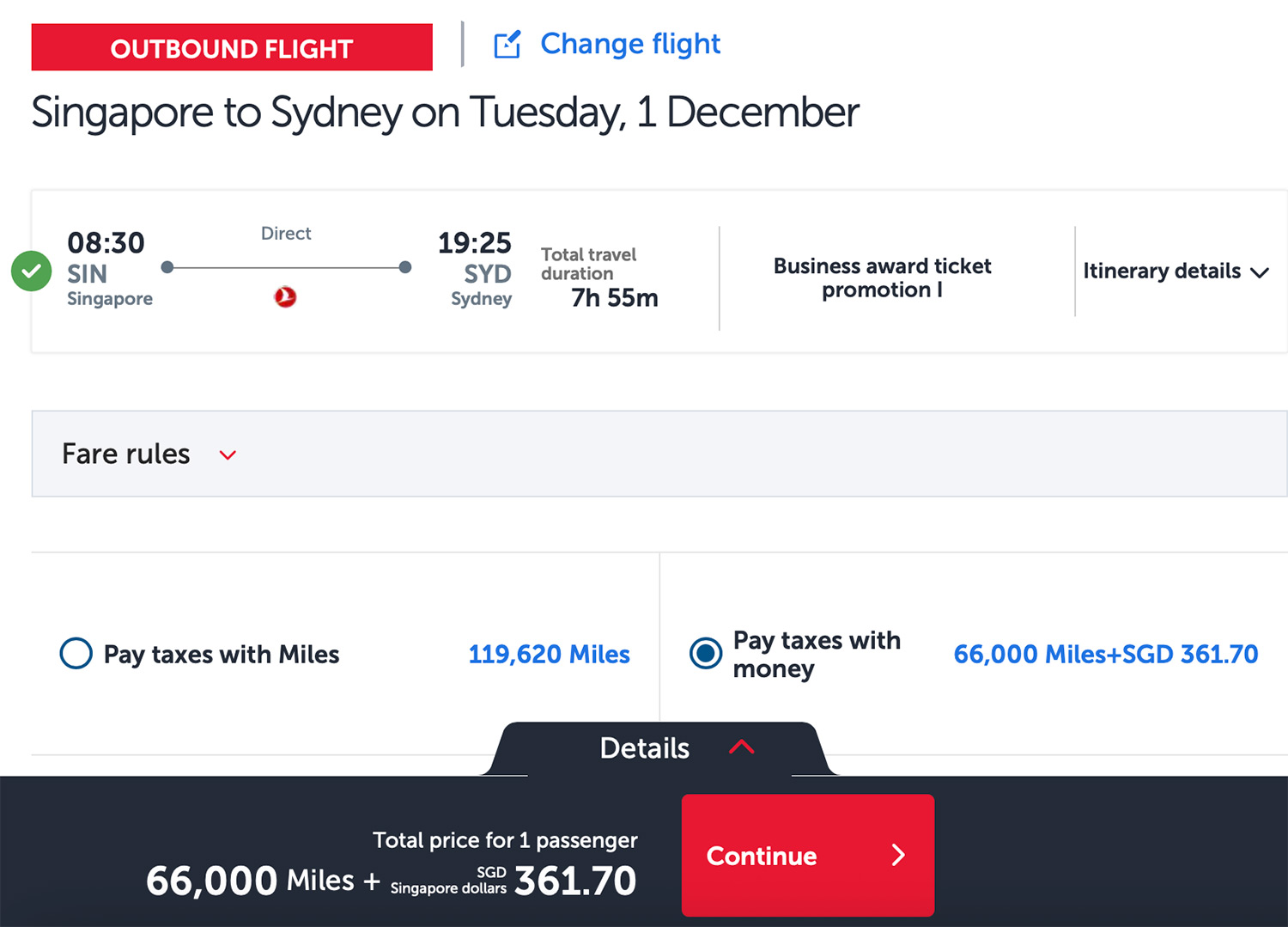
You can transfer into Miles&Smiles from Citi and HSBC credit card points in Singapore.
How long will it last?
As with Turkish’s Melbourne route, the Singapore stopover is a stepping stone rather than the airline’s final plan.
Turkish has been open about wanting to fly non-stop between Istanbul and Australia, and the aircraft to do it is on order in the form of the Airbus A350-1000, which the carrier plans to configure with 66 of its new Crystal Business Class suites in a premium-heavy layout.
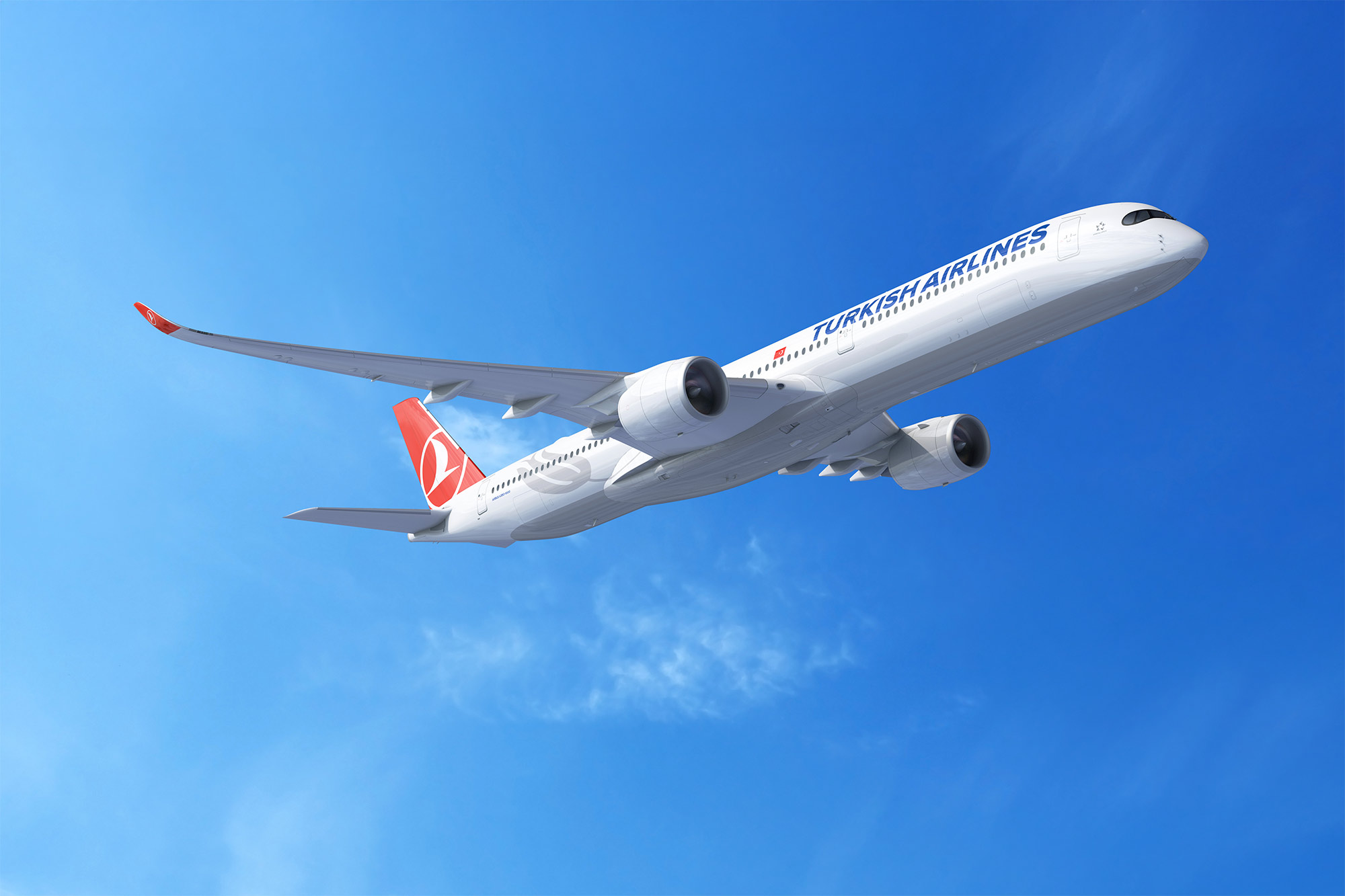
(Image: Airbus)
Those non-stop flights were originally pencilled in for late 2026, but have since slipped to the end of 2027 for Sydney, with Melbourne not expected to follow until some point in 2028.
Turkish has good options to grow in Australia when the aircraft does arrive though. The bilateral arrangement between Australia and Turkey permits up to 35 weekly flights, which is considerably more than the airline is using today, and it has flagged interest in adding Perth and Brisbane in due course.
Auckland has also been mentioned, initially via Singapore, though no news on that front yet.
There’s no doubt though that for Turkish to be competitive in the Europe – Australia market, a single stop in Istanbul is the ultimate goal, not the current two-stop setup, so enjoy this one while it lasts.
Summary
Turkish Airlines is re-routing its five times weekly Istanbul – Sydney service via Singapore instead of Kuala Lumpur from 26th October 2026, using two-class Airbus A350-900s.
The important point for our readers is that the airline holds “fifth freedom” traffic rights on the Singapore – Sydney sector, so tickets can be booked on that leg alone, in either direction, without you having to be travelling to or from Istanbul.
That makes Turkish the fifth carrier on the route and the second operating it under “fifth freedom” rights, after British Airways, though the 2.50am arrival back into Changi means it’s a proposition better suited to Lion City residents heading out to Sydney, rather than returning home.
(Cover Photo: Abdul Quraishi / Shutterstock)
Fantastic news.