
The Civil Aviation Authority of Singapore (CAAS) has confirmed that its Sustainable Aviation Fuel (SAF) Levy will apply to tickets sold from 1st October 2026, for flights departing Singapore from 1st January 2027.
That’s the revised timeline CAAS set back in March, when it postponed the levy by six months, as jet fuel prices more than doubled following the outbreak of the Middle East conflict.
This time there’s no reprieve, which means anyone planning to fly from Singapore next year has just 10 days left to lock in their tickets – including award redemptions – without paying it.
No second postponement
CAAS called March’s six-month delay a “pragmatic pause” – but six months on, that pause is over.
That’s despite jet fuel still being far more expensive than it was before the conflict. According to IATA data, jet fuel in Asia averaged US$169 per barrel in the week ending 11th September 2026.
That’s around 19% lower than the US$209 per barrel recorded in late March, when CAAS announced the deferral, but it’s still almost double the roughly US$88 per barrel airlines were paying in mid-February, before the conflict began.
In other words, prices have eased from their peak but remain very high – and this time CAAS has pressed ahead regardless.
As we explained in March, expensive jet fuel doesn’t actually threaten the levy itself, because CAAS designed it around a fixed revenue pot. The levy passengers pay stays the same, and it’s the volume of SAF bought that flexes if prices move.
Because the levy only covers SAF’s premium over conventional jet fuel, a fossil fuel spike can even work in its favour. When the conflict began, jet fuel prices rose faster than SAF’s, narrowing that premium and theoretically allowing more SAF to be purchased.
What really counts is the premium when SAFCo goes shopping. It plans to seek bids by the end of 2026, with the first levy-funded SAF only due in mid-2027.
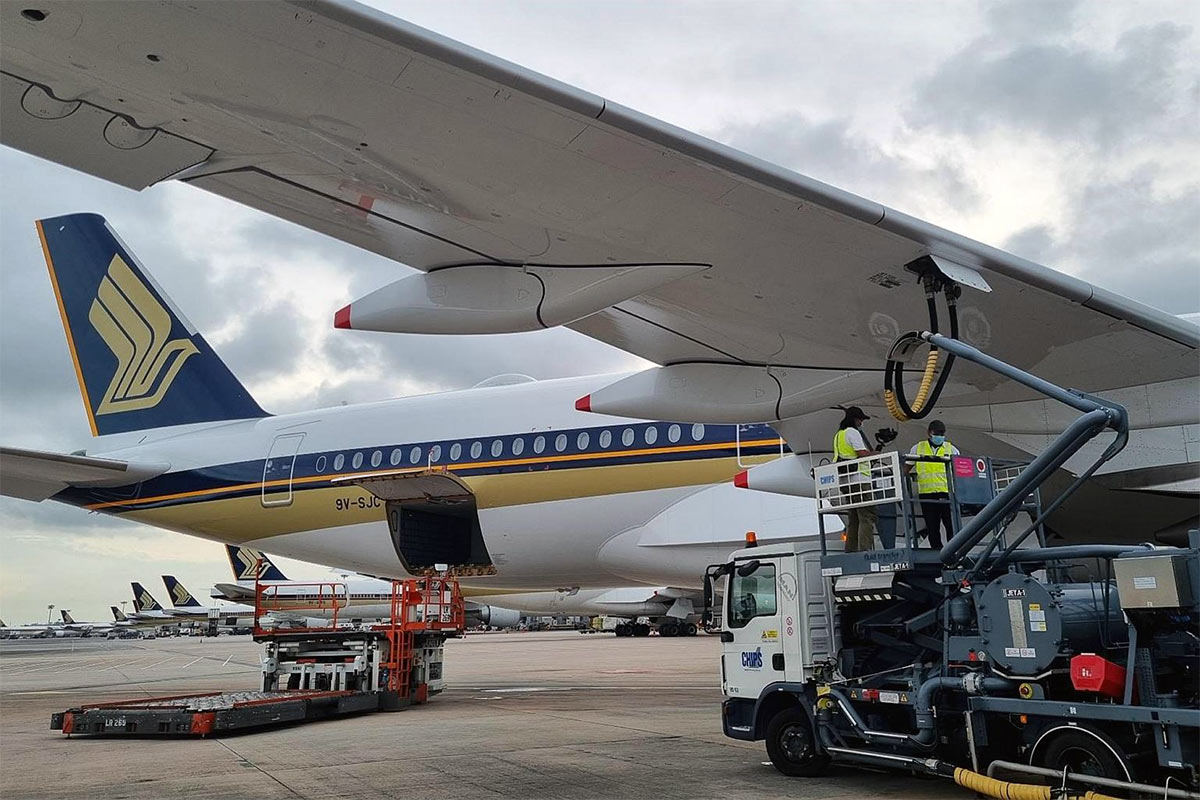
(Photo: Exxon Mobil)
The 3rd September statement confirms that the SAF Levy must be shown as its own line item in your fare breakdown, alongside airport taxes and any carrier surcharges. It also sets out how the environmental benefits of the fuel bought with levy funds will be allocated.
Separately, SAFCo – the CAAS-owned company that buys SAF using levy funds – has completed its first voluntary SAF procurement trial. Nine companies took part, including Singapore Airlines and Scoot.
The levy amounts and structure are unchanged from those announced last November.
The key dates
What matters is when your ticket is sold, and when your flight departs Singapore.
| When does the SAF Levy apply? | ||
| Ticket sold | Flight departs Singapore |
SAF Levy |
| Now to 30 Sep ’26 |
Now to 31 Dec ’26 |
None |
| 1 Jan ’27 onwards |
None | |
| 1 Oct ’26 onwards |
Now to 31 Dec ’26 |
None |
| 1 Oct ’26 onwards |
1 Jan ’27 onwards |
Applied |
So if you’re planning to fly from Singapore at any point up to late September 2027, booking by the end of this month will keep your ticket levy-free.
SAF Levy rates (from 1st January 2027)
Here are the SAF Levy rates, applicable on a per-passenger basis for air tickets departing from Singapore sold on or after 1st October 2026, for departures from Singapore from 1st January 2027 onwards.
| Singapore SAF Levy (per passenger) |
|||
| Geographical Band | Economy Class Premium Economy |
Business Class First Class |
|
| Band 1 | Southeast Asia | S$1.00 | S$4.00 |
| Band 2 | NE Asia, South Asia, Australia, PNG | S$2.80 | S$11.20 |
| Band 3 | Africa, Central/West Asia, Europe, Middle East, Pacific Islands, NZ | S$6.40 | S$25.60 |
| Band 4 | Americas | S$10.40 | S$41.60 |
These amounts are added to the cash element of award tickets too, on top of the current S$65.20 in Changi departure charges.
The levy is charged based on your flight’s next destination from Singapore, and only on departures – your return flight into Singapore isn’t affected. Transit passengers connecting through Changi also don’t pay it at all.
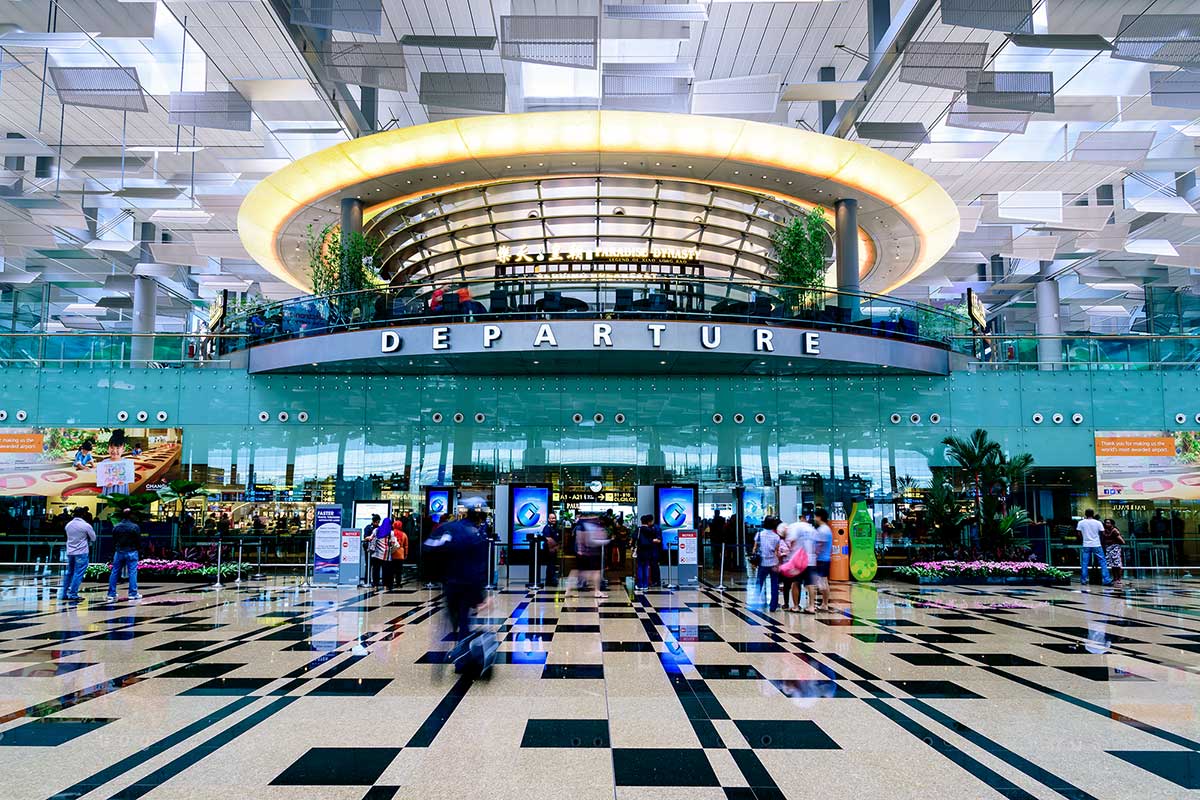
(Photo: Shutterstock)
How much can you save?
On a short Economy hop to Bangkok, the S$1 saving is hardly worth booking early for.
However, for premium cabin long-haul trips, and especially for couples and families, the numbers start to add up when you book now rather than from 1st October 2026.
| SAF Levy saved when booking by 30th September 2026 |
|||
| Destination (example) |
Cabin | Per person |
Family of 4 |
| Band 1 Bangkok |
Economy / PY | S$1.00 | S$4.00 |
| Business / First | S$4.00 | S$16.00 | |
| Band 2 Tokyo / Sydney |
Economy / PY | S$2.80 | S$11.20 |
| Business / First | S$11.20 | S$44.80 | |
| Band 3 London / Auckland |
Economy / PY | S$6.40 | S$25.60 |
| Business / First | S$25.60 | S$102.40 | |
| Band 4 New York / LA |
Economy / PY | S$10.40 | S$41.60 |
| Business / First | S$41.60 | S$166.40 | |
A family of four flying Business Class to the USA, for example, would pay S$166.40 more in SAF Levy alone if they book from 1st October 2026 onwards.

(Photo: MainlyMiles)
Impact on KrisFlyer redemptions
Ironically it’s KrisFlyer members who feel the levy most, in relative terms, because Singapore Airlines doesn’t add carrier surcharges to its award tickets.
Where you’re currently paying S$65.20 in taxes on a Business Class award to Europe, the SAF Levy adds almost 40% to that.
| SIA Business Class Saver awards (departing Jan – Mar 2027) |
|||
| Route | Booked by 30 Sep 2026 |
Booked from 1 Oct 2026 |
Cash increase |
| Tokyo 54,500 miles |
S$65.20 | S$76.40 | 17% |
| London 108,500 miles |
S$65.20 | S$90.80 | 39% |
| Los Angeles 112,500 miles |
S$88.20* | S$129.80* | 47% |
* Includes USA arrival taxes of around S$23
For programmes that add hefty carrier surcharges, like Qatar Airways, British Airways or Cathay Pacific, the levy makes up a smaller share of the existing total, so the proportional impact is less – though it’s still money you don’t need to spend.
How far ahead can you book?
Singapore Airlines opens its award seats around 355 days before departure, so a KrisFlyer redemption booked on 30th September 2026 can be for travel as late as 20th September 2027.
You can check exactly when seats open for any date using our calculator below, or see our full guide on when SIA releases award seats.

Singapore Airlines KrisFlyer Awards
Check when award space opens for your flight
Award seats bookable from
—
Singapore Airlines loads its first release of award space 355 days before departure, at 8am Singapore time. Flights leaving New York open at 12pm SGT, and the US West Coast at 3pm SGT, on the same day. Tool by mainlymiles.com

Other airlines vary, with many selling tickets around 330 to 360 days in advance.
That means a good chunk of your 2027 travel from Singapore can still be booked levy-free, provided your plans are firm enough.
Things to watch out for
Your ticket needs to be issued, not just held
A waitlisted award that clears after 1st October, or a fare hold you only pay for after the deadline, will be ticketed after the levy kicks in, so the levy will apply.
Changes after 1st October could add the levy
A straightforward date change on a KrisFlyer award, within the ticket’s validity, doesn’t normally require the ticket to be reissued, so it keeps its original issue date and, in principle at least, stays exempt from the levy. Changing your routing, cabin or award type is a different matter – the ticket is reissued with a new issue date, which would bring the levy into play.
Cancellation fees can wipe out the saving
Speculative bookings aren’t worth it just to save the levy alone. KrisFlyer charges US$75 to cancel a Saver award, and US$50 for Advantage and Access awards – more than the SAF Levy on any route, in any cabin. Cancel and rebook after 1st October and you’ll pay the fee and the levy, so only book trips you’re reasonably confident you’ll take.
It’s per departure from Singapore
A round trip only incurs the levy once, on your outbound flight. For stopover itineraries, where the levy is based on your first stop rather than your final destination, see our original coverage for details – in most cases the extra transit taxes unfortunately cancel out any saving.
More increases on the way
The SAF Levy isn’t the only cost increase for departing passengers. Changi’s passenger fees will rise by 21% in stages from April 2027 to April 2030, as we first reported in 2024, taking the current S$65.20 departure charge up to S$79.20.
This is designed to fund S$3 billion in projects like existing terminal upgrades and new Skytrain systems, ahead of the eventual Terminal 5.

(Image: Changi Airport Group)
Unlike the SAF Levy, there’s no dodging these rates by booking early. The increases are based purely on your departure date, so a ticket bought today for a flight on 31st March 2027 carries S$65.20 in Changi charges, while the same ticket for 1st April 2027 carries S$70.20, after the first S$5 hike kicks in.
| Changi departure fees (per departing passenger) |
||
| Departure date | Fee | Increase |
| Until 31 Mar 2027 | S$65.20 | – |
| From 1 Apr 2027 | S$70.20 | S$5.00 |
| From 1 Apr 2028 | S$73.20 | S$3.00 |
| From 1 Apr 2029 | S$76.20 | S$3.00 |
| From 1 Apr 2030 | S$79.20 | S$3.00 |
Combined with the SAF Levy, a Business Class award to the USA is on track to attract around S$145 in taxes and fees by 2030 – over 60% more than today.
That may well be an underestimate.
CAAS sized the levy to fund a 1% SAF target, which it still intends to lift to 3-5% by 2030 if the global SAF market allows – and unless SAF gets much cheaper relative to jet fuel, a bigger target will need a bigger levy.
Cargo levy deferred, business aviation still included
The same CAAS statement confirmed that the levy on air cargo has been deferred by a further year, to shipments sold from 1st October 2027 for flights departing from 1st January 2028, to give the industry more time to set up a collection system.
General and business aviation flights, however, will be charged from the same dates as passenger tickets, with the levy assessed per departure based on aircraft size and destination band.
Summary
After March’s six-month delay, Singapore’s SAF Levy is now confirmed for tickets sold from 1st October 2026, for departures from 1st January 2027 – and despite jet fuel prices remaining high, there’s no sign of a further reprieve.
For short Economy trips, the S$1 to S$2.80 levy isn’t worth losing sleep over, but if you’re planning a premium cabin redemption from Singapore to Europe, the Americas or New Zealand next year, especially as a family, getting your tickets issued in the next 10 days could save you S$25.60 to S$41.60 per person.
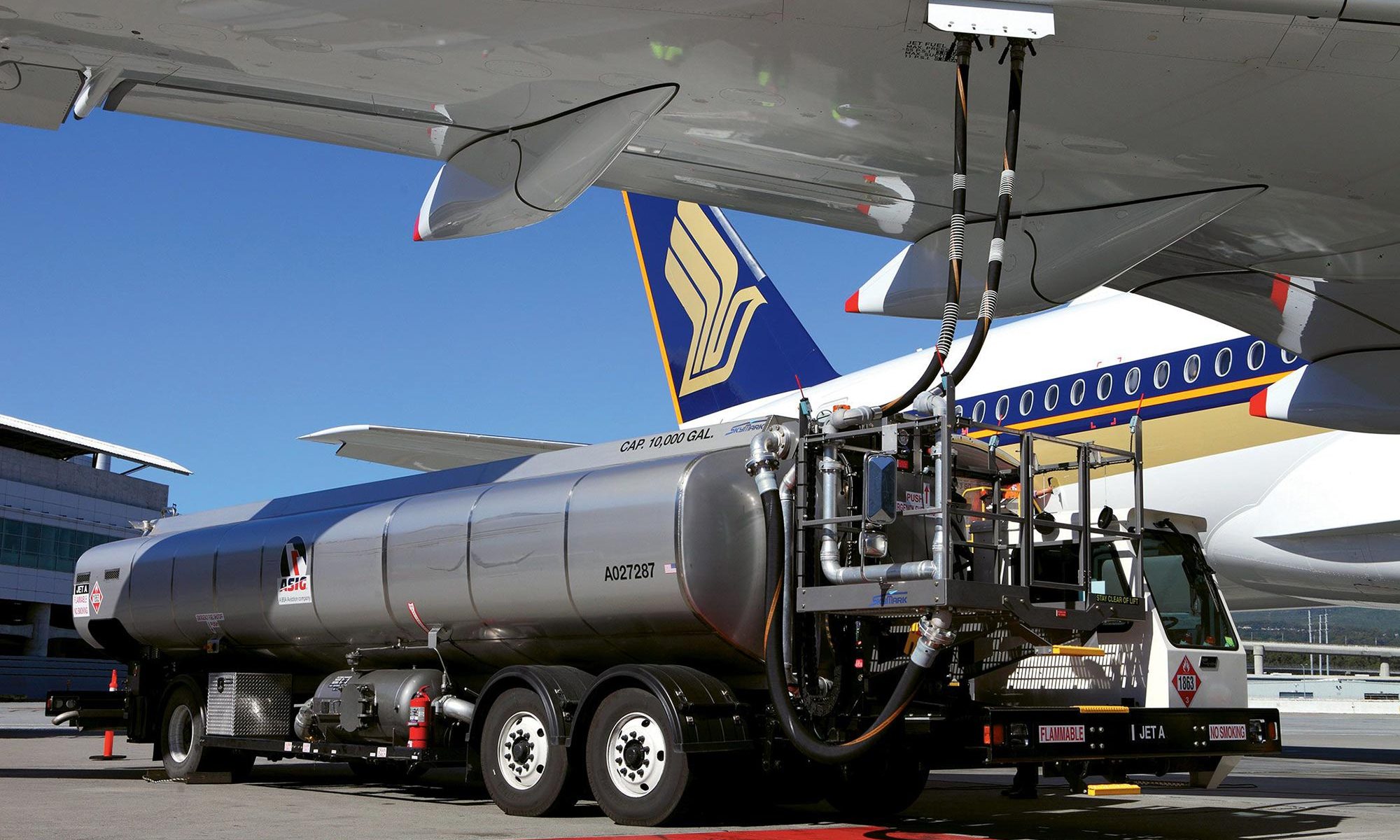
(Cover Photo: Singapore Airlines)