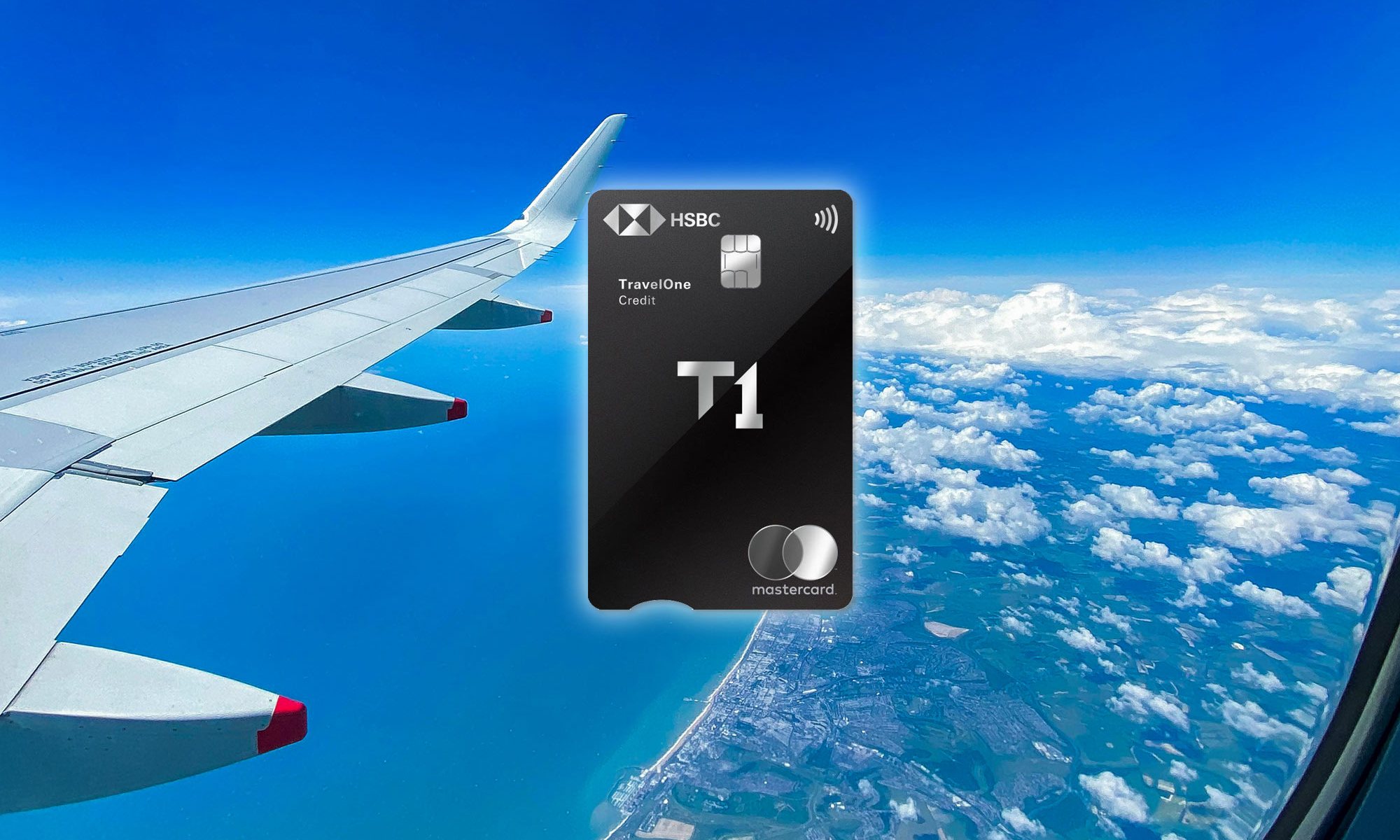

Here’s our review of the HSBC TravelOne credit card issued in Singapore. It forms part of our series of credit card reviews, which are all summarised on our dedicated Credit Cards page.
Dollar amounts refer to SGD, and ‘miles’ assume HSBC’s 2.5:1 airline transfer partners, except where stated. This review was updated on 21st October 2026.
| HSBC TravelOne Card | |||
 |
1.2 mpd local |
2.4 mpd FCY |
20 transfer partners |
| APPLY HERE | |||
| HSBC TravelOne Card | ||
|
||
|
1.2 mpd local |
2.4 mpd FCY |
20 transfer partners |
| APPLY HERE | ||
Mainly Miles Says
The HSBC TravelOne earns a decent but unspectacular 1.2 mpd on local spend and 2.4 mpd overseas, but its real strength is points flexibility, with 20 airline and hotel transfer partners, free and instant conversions, and 2-mile increments that allow flexible blocks with almost nothing left over.
KrisFlyer addicts should look elsewhere though. A 3:1 transfer ratio drops the card’s earn rates to a poor 1 mpd locally and 2 mpd overseas for those crediting to SIA. The annual fee is also payable from day one, and most new applicants now need to earn S$65,000 a year to be eligible.
Four DragonPass lounge visits a year, which you can share with guests, and 12,000 miles for paying the fee from year two onwards, go some way to boosting the card’s long-term appeal.
| Pros | Cons |
|
|
If your redemptions go beyond KrisFlyer, including the likes of Avios and Asia Miles, this is one of the most versatile general spend cards in Singapore. Let’s take a look.
Eligibility
- Minimum Age: 21
| Minimum Income | ||
| Applicant | With HSBC TRB S$50,000+ |
Everyone else |
| Singaporean / PR (salaried) |
S$30,000 | S$65,000 |
| Singaporean / PR (self-employed / on commission) |
S$40,000 | S$65,000 |
| Foreigner | S$65,000 | S$65,000 |
The S$30,000 income figure quoted when this card launched in 2023 still exists, but only for applicants who already hold a Total Relationship Balance (TRB) of at least S$50,000 with HSBC. Since October 2025, everyone else needs S$65,000 a year, and foreigners need S$65,000 regardless.
Your TRB doesn’t have to be cash. Investments and insurance policies held with HSBC count towards it too.
Fixed deposit alternative
A secured version of the card is available if you can’t meet the income requirement. You’ll need a TRB of at least S$50,000, of which a minimum of S$10,000 must be a fixed deposit committed against the card, so it’s not too appealing.
Annual Fees & Interest Rates
- Annual Fee (principal): S$196.20 (payable from the first year)
- Annual Fee (supplementary): Free (up to five cards)
- Fee waiver: automatic at S$25,000 spend (from year two), on request otherwise
Unlike most entry-level miles cards, the TravelOne doesn’t have a first-year fee waiver. The fee is charged from card issue, and HSBC’s sign-up promotions make paying it a condition of the welcome bonus.
That puts it behind the UOB PRVI Miles and Citi PremierMiles, which both either waive year one or have the option to.
Up to five supplementary cards are free for life, for anyone aged 18 or over, and their spend earns points into your rewards account.
Other fees and interest rates for the HSBC TravelOne card include:
- EIR: 27.8%
- Interest-free period: 20 days from statement date
- Minimum payment: 3% (min. S$50, or balance if less)
- Late payment fee: S$100
- Cash advance fee: 8% (min. S$15)
- Overlimit fee: S$40
Annual fee waivers: what cardholders report
From the second year, HSBC says it will waive the annual fee automatically if you spent more than S$25,000 in the previous membership year. That’s a lot of general spend to put through a 1.2 mpd card, so many cardholders will fall short and need to request a waiver.
Below that, you’ll need to request one, and outcomes vary widely. As we noted in January, many cardholders have reported success on spend well short of S$25,000, while others have been told the threshold is firm, or have simply been offered the renewal points instead.
Waiver requests go through the HSBC hotline – there’s no app or online option.
If the renewal points have already been credited by the time a waiver is granted, do note that they will be reversed, so leave them untouched until you know the outcome.
Our advice is to decide before the fee arrives whether you want the 12,000 miles that come with paying it, because you can’t have both. A waiver, or a refund when you cancel, means the renewal points go too.
If you want the miles, pay up and skip the call. If you don’t, request the waiver. If HSBC says no, transfer out the points you’ve already earned and cancel promptly for a refund, before the renewal points arrive.
12,000 miles for paying the fee
Since January 2026, paying the annual fee from your second year onwards earns 30,000 Reward points, up from 25,000 previously. These credit two to three months after the fee is charged.
| What the annual fee buys you (from year two) |
||
| Transfer ratio | Miles | Cost per mile |
| 2.5:1 Asia Miles, Avios, Flying Blue and others |
12,000 | 1.64¢ |
| 3:1 KrisFlyer, Royal Orchid Plus |
10,000 | 1.96¢ |
| 3.5:1 Aeroplan, Qatar, Turkish, United and Hainan |
8,571 | 2.29¢ |
With a 2.5:1 partner, it’s a sensible price in our book, below the 1.8 cents we typically value a mile at. KrisFlyer collectors get 10,000 miles instead at 1.96 cents each, the same deal the Citi PremierMiles and DBS Altitude offer for an identical S$196.20 fee – not the best value if that’s the only reason you’re renewing.
If you clear S$25,000 and the fee is waived automatically, remember that no points are awarded at all.
HSBC hasn’t said whether you can decline the waiver to keep the points, and we’ve yet to see a cardholder test it.
Whether you pay the fee or not, the four lounge visits renew every 1st January for as long as the card is active.
Sign-up bonus
HSBC has run a welcome offer on the TravelOne almost continuously since launch. Existing HSBC cardholders are typically included too, albeit with a smaller bonus.
The current offer, for applications submitted by 31st October 2026, is:
- New to HSBC: 20,000 miles (50,000 Reward points), plus a Samsonite ZELTUS 69cm Spinner Exp case
- Existing HSBC cardholders: 10,000 miles (25,000 Reward points), plus the same case
Both require S$1,000 of qualifying spend from your card account opening date to the end of the following month. You’ll also need to pay the S$196.20 annual fee and give marketing consent during your application.
The terms come with a few gotchas. One is a definition of ‘existing cardholder’ that leaves anyone who has opened a principal HSBC card in the past year eligible for neither the existing nor new customer bonus. Another is a clause letting the bank recover the value of the gift if you cancel within 12 months.
We’ve covered the offer in full, including what the suitcase is really worth, here.
Offers change regularly, so check our Sign-Up Bonuses page for the latest rundown across miles-earning cards.
Regular earn rates
The HSBC TravelOne card earns:
- 1.2 mpd on local spend in SGD (3 Reward points per S$1)
- 2.4 mpd on spend in foreign currency (6 Reward points per S$1)
There’s no minimum spend and no cap. Those points are made up of a 1x base award plus a 2x (local) or 5x (FCY) bonus, which affects rounding, as we’ll examine later.
Transfer to KrisFlyer, which HSBC devalued to 3:1 in January 2025, and those rates drop to 1 mpd and 2 mpd, putting the card at the very bottom of this table for local spend, if KrisFlyer is all you are interested in.
Earn rates (general spend cards)
(Best to worst, October 2026)
| Card | Local Spend | FCY Spend |
 BOC EM |
1.4 mpd | 2.8 mpd |
 UOB PRVI Miles |
1.4 mpd | 2.4 mpd |
 DBS Altitude |
1.3 mpd | 2.2 mpd |
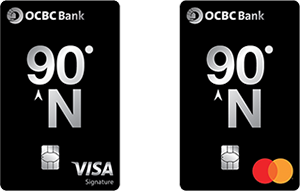 OCBC 90oN |
1.3 mpd | 2.1 mpd |
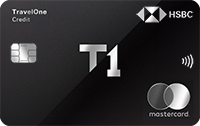 HSBC T1 (2.5:1 partners) |
1.2 mpd | 2.4 mpd |
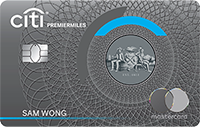 Citi PM |
1.2 mpd | 2.2 mpd |
 SC Journey |
1.2 mpd | 2 mpd |
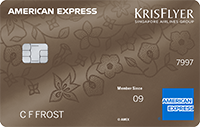 KF Ascend |
1.2 mpd | 1.2 mpd |
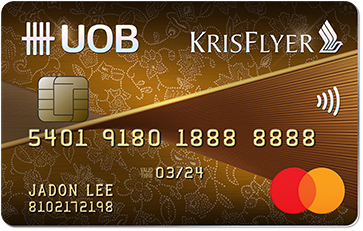 KF UOB |
1.2 mpd | 1.2 mpd |
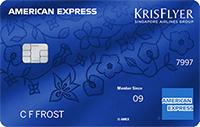 KF Blue |
1.1 mpd | 1.1 mpd |
| HSBC T1 (KrisFlyer) |
1 mpd | 2 mpd |
If you spend S$1,500 in SGD and S$500 in foreign currency each month, you’ll earn 36,000 miles a year on the TravelOne (at 2.5:1 partners), but only 30,000 KrisFlyer miles. The PRVI Miles card earns 39,600 KrisFlyer miles on the same spend, the DBS Altitude 36,600 miles and the Citi PremierMiles 34,800 miles.
What counts as overseas spend?
The 2.4 mpd rate applies to any qualifying transaction charged in a currency other than SGD. Where the merchant or its payment gateway is located isn’t relevant for this card, like it is for some others.
That’s a nice difference from the UOB PRVI Miles, which only pays its FCY rate when a transaction is also processed overseas, so an online merchant billing in USD through a Singapore gateway earns the local rate. With the TravelOne, the currency is all that matters.
Do note though that anything charged in SGD earns only 1.2 mpd, even if you’re overseas when you pay. Dynamic currency conversion, where a merchant offers to bill you in SGD, costs you a worse exchange rate and half the miles. Always pay in the local currency when this option appears.
Pairing with the HSBC Revolution
With every transaction earning the same flat rate, the TravelOne works best as the general spend half of an HSBC pairing, alongside the HSBC Revolution. The Revolution is fee-free, and earns 4 mpd on eligible online and contactless spend, or 8 mpd if you keep S$50,000 in an HSBC Everyday Global Account.
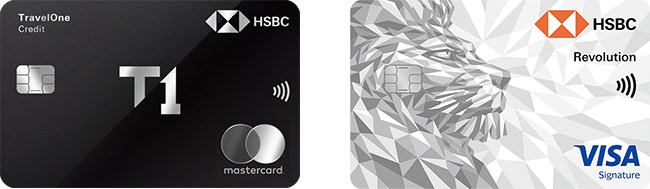
Because HSBC points pool, the two cards feed a single balance with the same 20 transfer partners. That makes the ideal split simple:
- Revolution for dining, retail, ride-hailing and direct airline and hotel bookings, paid online or by tapping the card, up to its S$1,000 monthly bonus cap (S$1,200 with the EGA)
- TravelOne for everything else, especially foreign currency spend outside the Revolution’s categories or beyond its cap
The Revolution earns just 0.4 mpd outside its bonus categories, so it should never be your fallback card.
Eligible transactions
Reward points are awarded on posted retail purchases. The TravelOne’s terms exclude the same 48 merchant category codes as the HSBC Revolution, and these earn nothing at all. The main categories are:
- Bills and top-ups: utilities, payment service providers, money transfers, and stored-value or e-wallet top-ups such as GrabPay and YouTrip
- Insurance: premiums, underwriting and direct-marketed insurance
- Healthcare and education: hospitals, schools, universities and other educational services
- Government: tax, court costs, fines, bail and other government services
- Property and parking: rent paid through real estate agents, cleaning and maintenance (including property management fees), and car parks
- Financial: cash disbursements, brokerages, forex, crypto and other quasi-cash transactions
- Organisations: charities, plus religious and political organisations
- Catch-alls: professional services, business services and ‘other services’ not classified elsewhere, plus nondurable goods wholesalers
- Gambling: betting, lotteries and online casinos
HSBC’s wider Rewards Programme terms also exclude payment platforms like CardUp, ipaymy and SmoovPay.
That rules out using a payment platform to put rent or tax on the card for miles, something other general spend cards from Citi, UOB and DBS typically still allow.
Watch out for the ‘catch-all’ codes in particular, MCC 7299 and 7399, which cover a surprisingly wide range of merchants. If a regular payment seems to be earning nothing, check its MCC first, which the HSBC Singapore app shows against completed transactions.
The full list of exclusions is in clause 3 of the card’s Reward Points terms.
Posting date, not transaction date
HSBC counts your spend by the date it posts to your account, usually a day or two after you make the purchase.
That really only matters for a sign-up bonus. A purchase on the last day of your qualifying spend period can easily post outside it and miss out entirely, so leave yourself a few days’ margin.
When do points credit?
Both base and bonus points are credited as each transaction posts, usually within a few days. There’s no waiting for a monthly lump sum for any bonus, unlike with the Revolution card.
Points rounding
Based on cardholder-reported data, HSBC works out the base and bonus points separately for each transaction, rounding each to the nearest whole point before adding them together:
- Local: 1x the amount, rounded, plus 2x the amount, rounded
- FCY: 1x the amount, rounded, plus 5x the amount, rounded
A S$7.80 coffee and cake, for example, earns 8 base points plus 16 bonus points (15.6, rounded up), for 24 points or 9.6 miles.
That means nothing is lost to fixed spending blocks, and because both parts round to the nearest point rather than always down, small transactions often earn slightly more than 1.2 mpd.
Here’s how that compares with the PRVI Miles’ S$5 blocks and the Citi PremierMiles’ round-down-to-the-dollar approach, on some typical local transactions.
| Miles earned on local transactions | |||
| Charge | HSBC T1 (1.2 mpd) |
UOB PRVI Miles (1.4 mpd) |
Citi PM (1.2 mpd) |
| S$3.50 | 4.4 (1.26 mpd) |
0 (0 mpd) |
4 (1.14 mpd) |
| S$7.80 | 9.6 (1.23 mpd) |
6 (0.77 mpd) |
8 (1.03 mpd) |
| S$12.40 | 14.8 (1.19 mpd) |
14 (1.13 mpd) |
14 (1.13 mpd) |
| S$18.60 | 22.4 (1.20 mpd) |
20 (1.08 mpd) |
22 (1.18 mpd) |
| S$46.90 | 56.4 (1.20 mpd) |
62 (1.32 mpd) |
55 (1.17 mpd) |
| S$128.50 | 154.4 (1.20 mpd) |
174 (1.35 mpd) |
154 (1.20 mpd) |
TravelOne figures assume a 2.5:1 transfer partner; for KrisFlyer, multiply by 0.83. PRVI Miles and Citi PremierMiles figures include KrisFlyer miles, among others.
Despite its lower headline rate, the TravelOne out-earns these competitors on all four of the smaller transactions. The PRVI Miles then pulls ahead on larger spend and on round amounts from S$10 upwards, where its S$5 blocks lose nothing.
↥ Minimum spend to earn points
With both parts rounded to the nearest point, the smallest local charge that earns anything on the TravelOne card is S$0.25, where the 2x bonus rounds up to a single point. In foreign currency it’s the equivalent of just S$0.10.
For comparison, the Citi PremierMiles earns from S$1.00, the DBS Altitude from S$1.54 and the UOB PRVI Miles from S$5.00.
FCY fee / cpm overseas
HSBC charges 3.25% on foreign currency transactions, in line with most of the market in Singapore these days.
At 2.4 mpd, that means buying at 1.43 cents per mile on overseas spend, for 2.5:1 partners. Transfer to KrisFlyer though, and it rises to 1.71 cents per mile.
| Cost per mile on overseas transactions (general spend cards) (Best to worst, October 2026) |
|||
| Card | Fee | Mpd | Cost per mile |
| BOC EM |
3% | 2.8 | 1.14¢ |
| UOB PRVI Miles (IDR, MYR, THB, VND) |
3.25% | 3.0 | 1.14¢ |
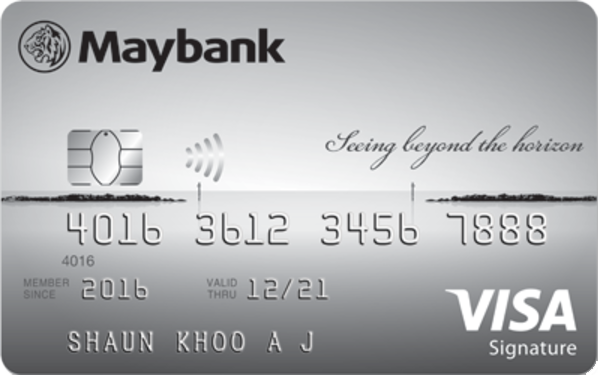 Maybank HVS |
3.25% | 2.8* | 1.22¢* |
 SCVI |
3.5% | 3.0** | 1.22¢** |
| HSBC T1 (2.5:1 partners) |
3.25% | 2.4 | 1.43¢ |
| UOB PRVI Miles (other currencies) |
3.25% | 2.4 | 1.43¢ |
| Citi PM |
3.25% | 2.2 | 1.56¢ |
| DBS Altitude |
3.25% | 2.2 | 1.56¢ |
 OCBC Voyage |
3.25% | 2.2 | 1.56¢ |
 OCBC 90oN |
3.25% | 2.1 | 1.63¢ |
| HSBC T1 (KrisFlyer) |
3.25% | 2.0 | 1.71¢ |
 HSBC VI |
3.25% | 2.0 | 1.71¢ |
| SC Journey |
3.5% | 2.0 | 1.83¢ |
| KF UOB |
3.25% | 1.2 | 2.86¢ |
| KF Ascend |
3.25% | 1.2 | 2.86¢ |
| KF Blue |
3.25% | 1.1 | 3.12¢ |
* Maybank Horizon Visa Signature: minimum S$800 spend per calendar month required.
** Standard Chartered Visa Infinite: minimum S$2,000 spend per statement period required.
Cost per mile accounts for an additional 0.30% ‘spread’ over money changer currency rates. This doesn’t apply to all banks and all foreign currencies, so it’s a worst-case scenario.
At least four cards beat the TravelOne on overseas spend, but two of those require a monthly minimum spend. Among cards with no strings attached, only the BOC Elite Miles and the PRVI Miles’ regional rate come in cheaper.
What does it cost to transfer?
Nothing. Conversions are made in the HSBC Singapore app, free of charge “until such time as may be determined by HSBC”.
It hasn’t always been that way. Free transfers were originally a launch promotion, and HSBC later announced a 10,000-point fee per conversion, worth 4,000 miles, before shelving it.
Conversions have been free ever since, and while they are now one of the card’s strengths, that dalliance with charging points still sits very uncomfortably with us – HSBC needs to be watched closely here.
Which loyalty schemes can I transfer into?
The HSBC TravelOne card launched with 12 transfer partners in May 2023, but that list has since been expanded to 16 airline programmes and four hotel loyalty schemes, the widest choice of any Singapore bank.
Unfortunately, transfers to many of the partners mean accepting worse conversion ratios. Here’s how each partner affects the card’s effective earn rates – a simpler way of seeing how the ratio affects your miles-earning capacity.
| HSBC Points to Airline Miles |
||||
| FFP |
Ratio | Effective Earn Rate | ||
| Local | FCY | |||
 |
Air France / KLM Flying Blue |
2.5:1 | 1.2 mpd | 2.4 mpd |
 |
British Airways Club |
2.5:1 | 1.2 mpd | 2.4 mpd |
 |
Cathay Pacific Asia Miles |
2.5:1 | 1.2 mpd | 2.4 mpd |
 |
Etihad Guest |
2.5:1 | 1.2 mpd | 2.4 mpd |
 |
EVA Air MileageLands |
2.5:1 | 1.2 mpd | 2.4 mpd |
 |
Qantas Points |
2.5:1 | 1.2 mpd | 2.4 mpd |
 |
Vietnam Airlines Lotusmiles |
2.5:1 | 1.2 mpd | 2.4 mpd |
 |
Singapore Airlines KrisFlyer |
3:1 | 1 mpd | 2 mpd |
 |
Thai Airways Royal Orchid |
3:1 | 1 mpd | 2 mpd |
 |
Air Canada Aeroplan |
3.5:1 | 0.86 mpd | 1.71 mpd |
 |
Hainan Airlines Fortune Wings |
3.5:1 | 0.86 mpd | 1.71 mpd |
 |
Qatar Airways Privilege Club |
3.5:1 | 0.86 mpd | 1.71 mpd |
 |
Turkish Airlines Miles&Smiles |
3.5:1 | 0.86 mpd | 1.71 mpd |
 |
United Airlines MileagePlus |
3.5:1 | 0.86 mpd | 1.71 mpd |
 |
Japan Airlines Mileage Bank |
5:1 | 0.6 mpd | 1.2 mpd |
 |
AirAsia Rewards |
1.25:1 | 2.4 ppd* | 4.8 ppd* |
* AirAsia rewards points aren’t miles, they are worth considerably less. The favourable-looking ratio and ppd rates sadly don’t translate into good value.
The seven 2.5:1 airline partners are the ones the TravelOne card earns “as advertised”, and between them they cover all three alliances:
- Asia Miles and British Airways Avios for oneworld, including Cathay Pacific, Qantas, Japan Airlines and Finnair awards
- Flying Blue for SkyTeam, including Garuda Indonesia and Vietnam Airlines awards
- EVA Air Infinity MileageLands, the only 2.5:1 option in Star Alliance
- Qantas, Etihad and Vietnam Airlines for more specific redemptions
Avios also opens up British Airways’ Balance Boost, which can stretch a transferred balance further for a reasonable fee.
Don’t transfer directly to Qatar Airways Privilege Club. At 35,000 points per 10,000 Avios, you’d need 40% more points than just transferring to British Airways at 25,000:10,000, then moving the Avios across 1:1, instantly and free.
Unfortunately for Star Alliance flyers, the options are poorer. KrisFlyer and Thai Royal Orchid Plus convert at 3:1. Aeroplan, United MileagePlus and Turkish Miles&Smiles are all 3.5:1, which cuts the card to 0.86 mpd locally. Each has its sweet spots, but you’ll want a specific redemption in mind before accepting such awful haircuts.
JAL Mileage Bank, at 5:1, is best ignored. Finally AirAsia points aren’t miles at all, and they’re worth far less than the generous-looking ratio suggests – avoid!
Hotel points aren’t miles either, so we’ve shown these as points per dollar. IHG and Marriott at 2.5:1 are the pick on ratio, but value varies wildly here and is generally poorer than airline transfers.
| HSBC Points to Hotel Points |
||||
| Programme |
Ratio | Effective Earn Rate | ||
| Local | FCY | |||
 |
IHG One Rewards |
2.5:1 | 1.2 ppd | 2.4 ppd |
 |
Marriott Bonvoy |
2.5:1 | 1.2 ppd | 2.4 ppd |
 |
Wyndham Rewards |
3:1 | 1 ppd | 2 ppd |
 |
Accor ALL |
5:1 | 0.6 ppd | 1.2 ppd |
Accor’s 5:1 looks poor, but ALL points have a fixed value. 25,000 HSBC points become 5,000 ALL points, worth EUR100 (~S$147) towards a stay, or around 0.59 cents per HSBC point. That’s short of the 0.72 cents the same points are worth at a 2.5:1 airline partner at a typical 1.8 cent per mile valuation, but it’s a useful floor value at least (though still poor).


↥ Is there a minimum transfer amount?
Each transfer must be at least 10,000 miles. That’s 25,000 points at 2.5:1, or 30,000 for KrisFlyer. For Accor the minimum is 5,000 ALL points, which also costs 25,000 points.
Above that minimum you can transfer in increments of just 2 miles, which is ideal for clearing out awkward balances.
Meet a S$1,000 welcome bonus target with local spend, for example, and you’d hold 53,000 points – 50,000 bonus plus 3,000 earned. That converts to exactly 21,200 Asia Miles or Avios, with nothing left over.
The only trap is a balance below the minimum for your chosen partner, which can’t be transferred at all.
How long do transfers take?
Instantly, for all but two partners. Hainan Fortune Wings Club takes up to five working days, and JAL Mileage Bank up to ten.
For all other partners, you can spot an award seat and secure it with points in the same sitting, something most Singapore credit cards still can’t offer – yes, even in 2026!
Instant transfers to KrisFlyer
KrisFlyer transfers are instant too, which (again, in 2026!) is rarer than it should be. UOB and Citi cardholders, for example, can only get KrisFlyer miles immediately by routing their points through Kris+, at a 15% haircut.
The irony is that the TravelOne’s standard 3:1 ratio carries a similar penalty, 17% against a 2.5:1 transfer. For KrisFlyer collectors, every conversion is effectively priced like an emergency one is from UOB or Citi.

Do HSBC Reward points expire?
Yes, at the end of a 37-month period beginning the month after they are earned. That’s three years and one month of validity, so for example points earned in October 2026 expire on 30th November 2029.
That’s a year longer than UOB’s UNI$, but nowhere near as relaxed as Citi Miles on the PremierMiles card or DBS Points from the Altitude card, both of which never expire.
Once transferred, KrisFlyer miles last three years. Asia Miles stay alive as long as your account has qualifying activity at least once every 18 months, while the expiry rules for HSBC’s other partners differ (BA Avios are good for 36 months with no other activity, for example).
HSBC Reward points pool
Since May 2024, points from all your HSBC credit cards accumulate in a single balance, so TravelOne and Revolution points, for example, can be combined in one transfer.
There’s a catch if you later cancel one of the cards. HSBC redeems points on a first-in-first-out basis, and you’ll forfeit points earned on a card that’s been closed.
For example, say you’ve held the Revolution for years and want to drop the TravelOne after its first year. You can’t transfer out ‘just’ the TravelOne’s points, because your oldest Revolution points are redeemed first. Unless you convert enough to reach them, the TravelOne’s share is lost.
What else can HSBC points be used for?
Plenty, but none of it comes close to converting to frequent flyer miles.
At 2.5:1, and valuing a mile at 1.8 cents, an HSBC Reward point is worth around 0.72 cents. Compare that with:
- Travel with Points, HSBC’s portal for flights, hotels and car rental, currently at a promotional 250 points per S$1, or 0.4 cents per point
- Pay with Points, to offset card spend, at 4,000 points for the first S$10 and 400 points per S$1 after that, or 0.25 cents per point
- Vouchers and merchandise in the rewards catalogue, which typically price below that
The exception, as with any card, is a balance you’d otherwise forfeit. If you’re closing the card with fewer points than the minimum transfer, spending them probably beats losing them.
Airport lounge access
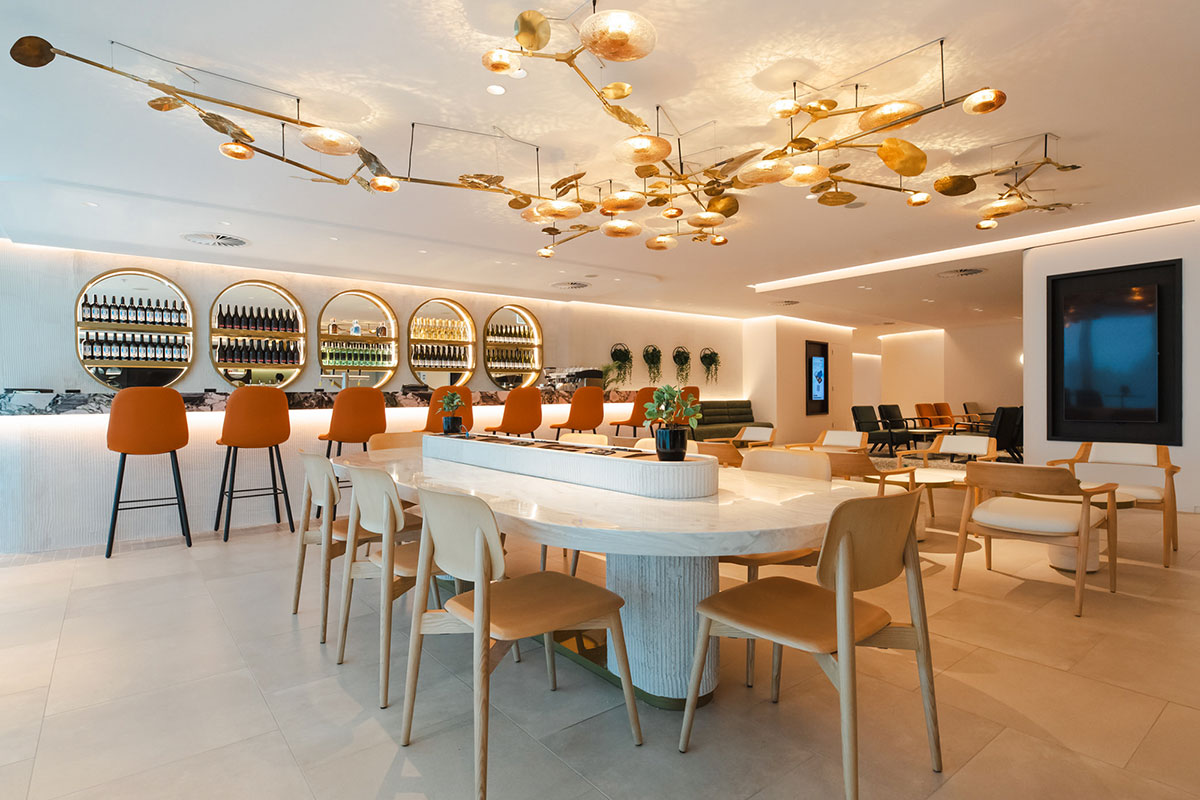
Principal cardholders receive four complimentary lounge visits per calendar year through Mastercard Travel Pass by DragonPass, covering over 1,300 lounges worldwide. At Changi, DragonPass covers most of the same independent lounges as Priority Pass across all four terminals.
The terms are as follows:
- Since 17th October 2024, visits can be shared with guests, so four visits could be used on two trips for a couple, or one for a family of four
- Allowances reset every 1st January, and unused visits don’t carry over
- Visits beyond the allowance cost US$32 per person
- Supplementary cardholders get no visits of their own, and are charged US$32 each unless accompanied by the principal cardholder using the allowance
- Your DragonPass membership ends the day your card is cancelled, so use any remaining visits first if you are planning to axe the card
To get started, download the Mastercard Travel Pass app and register using your name as it appears in your passport. You then verify your TravelOne card details and present the membership in the app at the lounge.
Visits can also be redeemed for set meals at selected airport restaurants.
Here’s how the benefit compares with other entry-level general spend cards:
- HSBC TravelOne: 4 DragonPass visits per year (guests can share)
- UOB PRVI Miles: 4 Priority Pass visits per year (no guests)
- Citi PremierMiles: 2 Priority Pass visits per year
- DBS Altitude Visa: 2 Priority Pass visits per year
- Standard Chartered Journey: 2 Priority Pass visits per year
The TravelOne is joint top on numbers, and the most flexible of the lot for couples and families, thanks to guest sharing.
Travel insurance
Charge your full travel fare to the card and you, your supplementary cardholders, and family members travelling with you are covered by complimentary MSIG travel insurance. There’s no registration required.
The ‘full fare’ requirement is more flexible than it sounds, because award tickets also count, provided you pay the taxes and surcharges with the card.
Since 1st September 2025, the definition also includes prepaid accommodation and car rental charged to the card. These can now be claimed under trip cancellation if a covered event forces you to call off the trip.
| HSBC TravelOne complimentary travel insurance | |
| Benefit | Maximum |
| Accidental death / permanent disablement | S$75,000 per person |
| Overseas medical expenses | S$150,000 per person |
| Overseas hospitalisation allowance | S$150 per day (max. 14 days) |
| Emergency medical evacuation and repatriation | S$1,000,000 per person |
| Trip cancellation | S$1,500 per person (S$3,000 per family) |
| Trip curtailment | S$1,500 per person (S$3,000 per family) |
| Travel delay | S$150 per person after 8 hours (S$300 per family) |
| Missed flight connection | S$150 per person (S$300 per family) |
| Luggage delay | S$1,500 per person (S$50 per essential item) |
| Loss of luggage | S$1,500 per person (S$50 per essential item) |
Unlike the HSBC Revolution’s policy, this one includes overseas medical cover, at S$150,000 per person, and that’s the protection travellers need most.
It’s still not a full policy. There’s no personal liability cover and nothing for rental car excess, plus trips must start in Singapore. Even so, it’s one of the more useful complimentary policies on an entry-level card.
Full policy wording is available here.
Other benefits
- Mastercard Travel Rewards: cashback offers at over 500 merchants in 26 destinations, valid until 30th April 2027. Each card, including supplementary cards, must be registered separately.
- Mastercard Priceless Specials: offers and experiences for Mastercard holders
- HSBC dining privileges and card promotions, refreshed regularly. The complimentary ENTERTAINER with HSBC membership was discontinued on 1st July 2026.
Terms and conditions
Here are links to the full terms and conditions applicable to the HSBC TravelOne card and the HSBC Rewards programme.
- HSBC TravelOne Reward Points Programme T&C
- HSBC TravelOne Sign-Up Promotion T&C
- HSBC TravelOne Mastercard Travel Pass T&C
- HSBC TravelOne Travel Insurance Policy
- HSBC Rewards Programme T&C
- HSBC Cardholder Agreement
Our Summary
When it launched in 2023, the TravelOne brought something new to Singapore – a wide spread of transfer partners with free, instant conversions.
Three years on, no other local bank matches it on that front, and points pooling with the reinvigorated Revolution card has made HSBC Reward points one of the most useful currencies on the market.
The earn rates are less remarkable.
At 1.2 mpd, local spend trails the best general spend cards, and while 2.4 mpd overseas is competitive, there are no bonus categories to speed things up. The card does claw some of that back in rounding, with small transactions earning at or above the headline rate, where block-based cards often earn little or nothing.
The KrisFlyer ratio is the biggest problem for Singapore-based readers. At 3:1, this is a 1 mpd / 2 mpd card for SIA’s popular programme, and every welcome bonus and renewal award shrinks by a sixth as a result. If KrisFlyer is all you collect, you’ll do better elsewhere.
Otherwise, the annual fee is payable from day one, the income bar has more than doubled for newcomers, and fee waivers are a bit of a lottery.
In return, paying the fee earns 12,000 miles from year two, plus four lounge visits a year and travel insurance that actually covers medical treatment abroad
For anyone redeeming with Asia Miles, Avios or Flying Blue miles, especially those who already hold the HSBC Revolution, the TravelOne is a strong general spend partner and comfortably worth its fee.
For KrisFlyer collectors, it’s a card for the welcome bonus alone.
| Our Rating | ||||||||||||||||||||
| 3.5 / 5 among general spend cards |
||||||||||||||||||||
|
HSBC TravelOne |
||||||||||||||||||||
How we rate credit cards
|
||||||||||||||||||||
(Cover Photo: Antoine Callebaut)