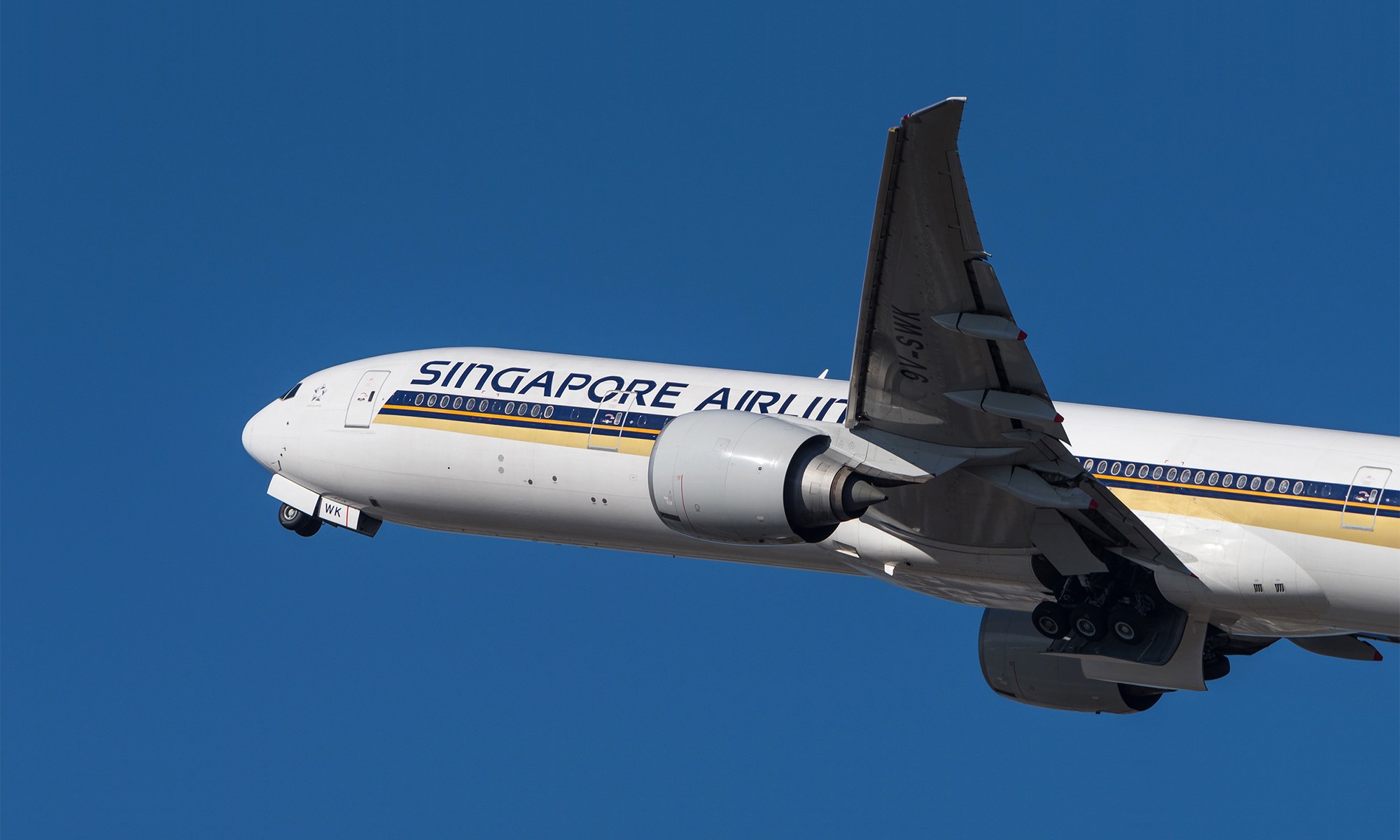

Back in May, as part of its full-year results, Singapore Airlines published a fleet development plan showing that one of its Boeing 777-300ERs would be leaving the carrier’s operating fleet during the current financial year, which runs to 31st March 2027.
As we reported at the time, that would have shrunk the carrier’s long-haul fleet for the first time since the pandemic, from 75 aircraft to 74.
Six months on, SIA has published an updated version of the plan alongside its half-year results this week, and that 777-300ER retirement is no longer there.
All 22 of the airline’s Boeing 777-300ERs are now set to remain in the operating fleet through to 31st March 2027.

(Photo: Julian Herzog)
SIA’s updated fleet plan
Here’s how SIA’s mainline passenger fleet plan for FY26/27 now compares with the version published in May, excluding the carrier’s seven dedicated Boeing 747-400 freighters.

| Singapore Airlines Passenger Fleet Plan FY26/27 |
||||
| Aircraft Type | 31 Mar ’26 | 30 Sep ’26 | 31 Mar ’27 (May plan) |
31 Mar ’27 (Nov plan) |
| A350-900 MH | 24 | 24 | 24 | 24 |
| A350-900 LH | 34 | 34 | 34 | 34 |
| A350-900 ULR | 7 | 7 | 7 | 7 |
| A380-800 | 12 | 12 | 12 | 12 |
| 737-8 MAX | 21 | 25 | 26 | 26 |
| 777-300ER | 22 | 22 | 22 | |
| 787-10 | 28 | 28 | 28 | 28 |
| All Types | 148 | 152 | 152 | 153 |
For other types, the plan is exactly the same as it was in May. Four of the five Boeing 737-8 MAXs due this financial year have already arrived, with the fifth expected before the end of March, while there are still no Boeing 787-10, Airbus A350 Freighter or Boeing 777-9 deliveries scheduled in FY26/27.
The only change is for the 777-300ER, but that’s a significant one, because it means SIA’s long-haul fleet will now hold steady at 75 aircraft all year, rather than dipping to 74:
- 34 Airbus A350 LH
- 7 Airbus A350 ULR
- 12 Airbus A380
- 22 Boeing 777-300ER
SIA hasn’t identified which aircraft had been earmarked for retirement, but it would have been the sixth of the carrier’s 777-300ERs to leave the operating fleet, after 9V-SWA, -SWD, -SWE, -SWF and -SWN.

(Photo: MainlyMiles)
The oldest still flying, 9V-SWB, turned 20 on 5th November 2026, and will be 20.4 years old by the end of the financial year on 31st March 2027.
Are further 777-9 delays to blame?
The most likely explanation is the one that has shaped (and re-shaped!) SIA’s long-haul fleet planning for the best part of a decade now – the beleaguered Boeing 777-9.
In its half-year results presentation, SIA now says its 777-9s have been “delayed by more than five years”. The type was originally due to enter service with the airline in FY21/22, which was by 31st March 2022 at the latest.
The same slide notes that the carrier’s Airbus A350 Freighters, which will replace the Boeing 747-400Fs, are running around a year late too.
We also got a strong clue on 777-9 timing at last week’s new cabin launch. SIA says its new First and Business Class products will be “progressively introduced from the second half of 2027”, on both retrofitted Airbus A350s and the Boeing 777-9s.
Since every 777-9 will arrive with the new seats on board, the type can’t enter service with SIA before 1st July 2027. It may well be later still, since “progressively” leaves room for a refitted Airbus A350 to launch the new cabins first, though Boeing is still targeting first 777-9 deliveries in 2027, with Lufthansa as the launch operator.
The German carrier now expects its first 777-9 in Q2 2027, a slip from its previous Q1 2027 estimate. That’s further evidence the programme is still sliding, and it suggests Singapore Airlines’ first aircraft may not arrive until Q3 2027 at the earliest, though SIA hasn’t given a specific timeframe.
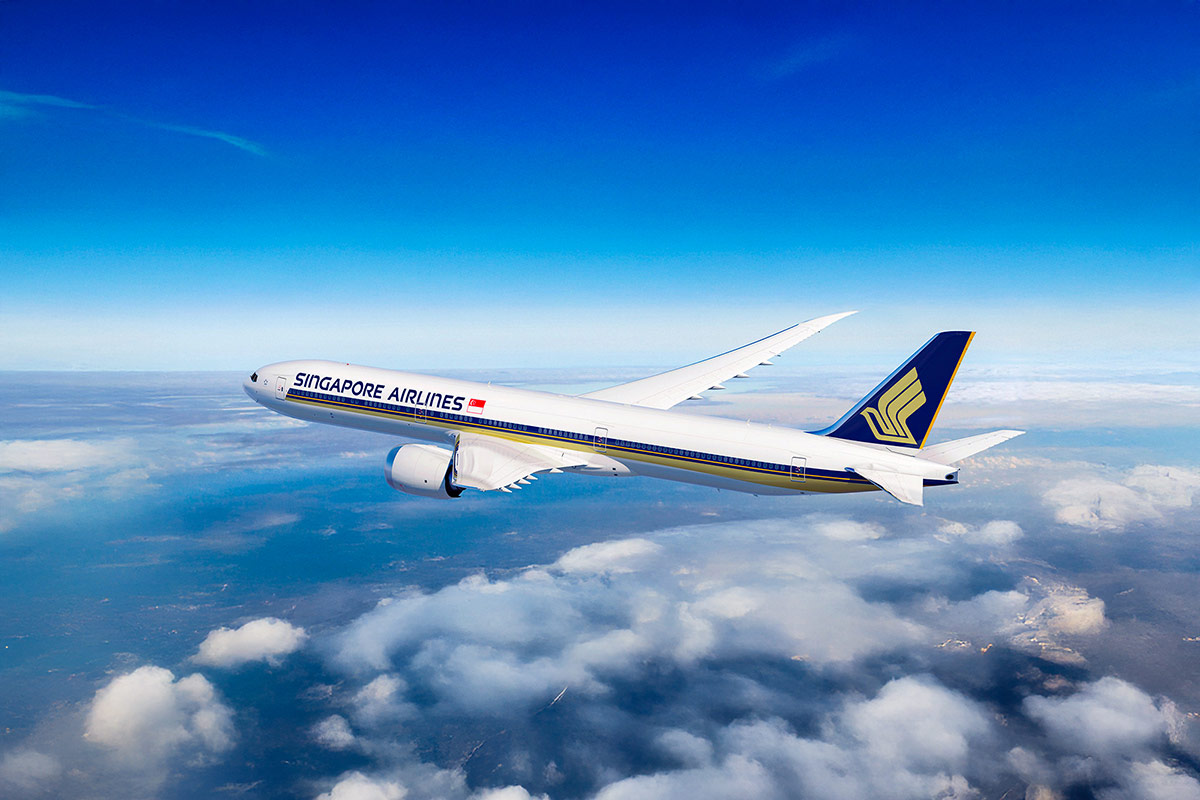
(Photo: Boeing)
When SIA drew up its plan in May, the first 777-9 may have looked like it was only a few months away. Retiring a 777-300ER as late as March 2027, with replacements potentially coming online soon afterwards, would have left only a short, manageable gap.
With the 777-9 now pushed into the second half of the year at the earliest, that gap has widened, and holding on to the older jet a little longer likely makes sense.
It’s not the first time plans like this have been tweaked. In 2023, SIA planned to trim its 777-300ER fleet from 23 to 21 aircraft by March 2024, but ended up retaining 22 of them as 777-9 delays mounted.
“Because of a delay in the 777-9s, we do have to look at extending the use of some of the aircraft that we have, particularly the older 777-300ERs.”
Goh Choon Phong, CEO, Singapore Airlines
17th May 2023
A350 retrofits may have a bigger impact than before
There’s a second factor to consider here, and it stems from the Airbus A350 Long Haul and ULR cabin retrofit programme.
When SIA announced the retrofit in November 2024, the first refitted aircraft was due in Q2 2026, with all 41 jets completed by the end of 2030. The programme is now starting more than a year late, yet management told us at the cabin launch last week that the end date “should not shift much”.
That means pushing aircraft through the hangar roughly a third faster than originally planned.
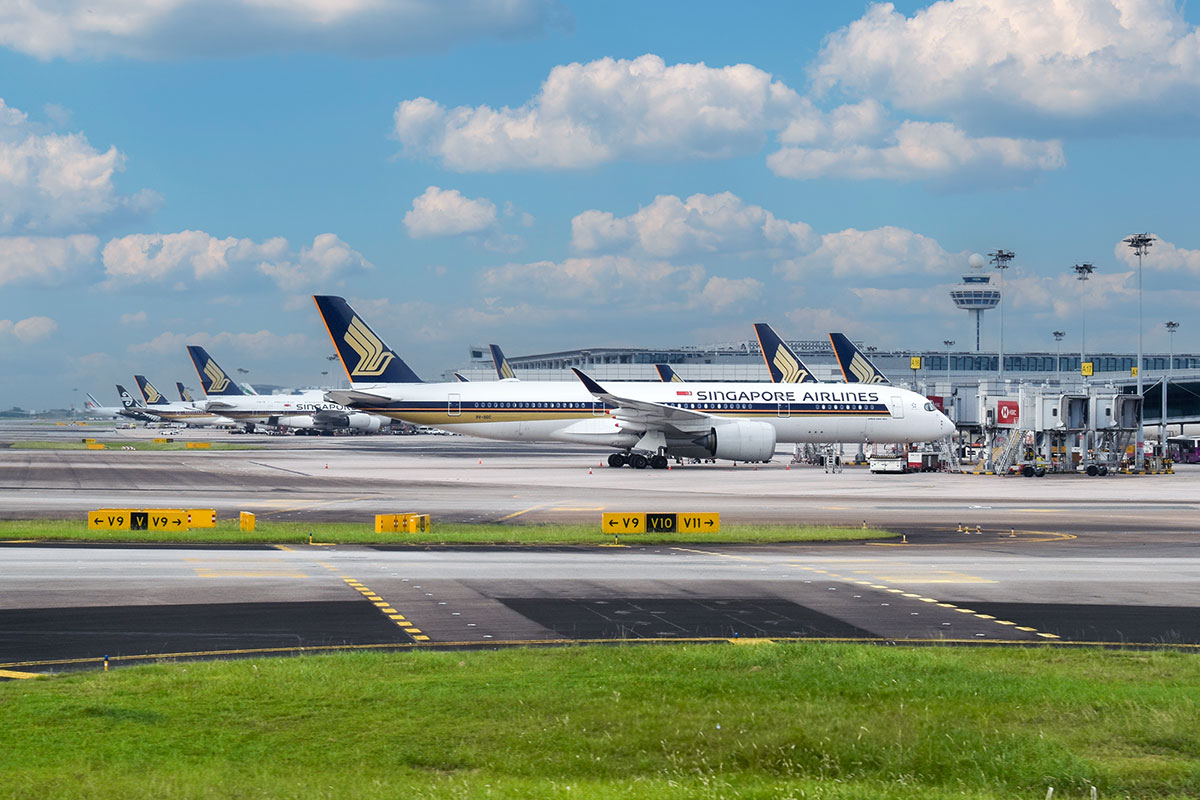
(Photo: Shutterstock)
We can already see this in the schedules. From late March 2027 the A350 ULR is pulled off its daily San Francisco rotation, and from May 2027 it leaves 3x weekly Los Angeles too, leaving only the daily Newark and New York JFK flights. Those can be flown with four aircraft plus a spare, which means two of the seven ULRs can be out of service at the same time.
Even early November 2027 schedules see no return for the A350 ULR to the US West Coast at the time of writing – will two of these aircraft be out of action until all seven are retrofitted? It’s possible.
Gatwick’s second daily A350 Long Haul service also drops to just three times weekly between June and August 2027, right through the UK school holidays, which hints at a squeeze on that sub-fleet too.
With up to two A350s potentially in the hangar at once, and no 777-9s able to fill in until the second half of 2027 at the earliest, an extra 777-300ER may give SIA the fleet capacity buffer it needs.
The 777-300ER has plenty of work in 2027
The 777-300ER fleet also has a lot on its plate next year. Here are the routes gaining the type, or more of it, in 2027.
| Singapore Airlines 777-300ER Additions in 2027 |
||
| Route | Change | From |
| Frankfurt SQ326/325 |
A380 → 777-300ER |
28 Mar 2027 |
| Dubai SQ494/495 |
Restart (A350 MH 1-27 Mar) → 777-300ER |
28 Mar 2027 |
| Christchurch SQ297/298 |
A350 LH → 777-300ER |
1 May 2027 |
| London Gatwick SQ312/309 |
A350 LH → 777-300ER |
1 Oct 2027 |
Frankfurt is perhaps the most notable, with the A380 not returning there next summer, leaving both daily flights on the four-class 777-300ER, including SQ26/25, which continues to and from New York JFK.
SIA’s provisional Airbus A380 schedule for summer 2027 can be flown with just ten of its 12 superjumbos, nine in daily rotation plus a spare. That suggests two A380s may be in the hangar for maintenance next summer, which would be yet another reason to keep every available long-haul widebody in service.
Meanwhile, Dubai is planned to resume in March 2027, switching to the 777-300ER after its first few weeks. Christchurch gains the type from May, and London Gatwick follows in October.
Most of these changes fall after 31st March 2027, beyond the scope of the current fleet plan, so the retained jet may be staying a while longer still. We’ll find out for sure when SIA publishes its FY27/28 fleet plan in May, where we’ll also be keenly looking at exactly how many 777-9s it expects to receive during that period.
Demand is also on the airline’s side at the moment. With Gulf carriers disrupted by the conflict in the Middle East, this week SIA said passenger numbers for other airlines at Changi fell 8.8% in the six months to September, while its own Group passenger numbers rose 5.0%.
The Group also grew capacity by 4.9% over the same period, against just 1.8% for its Asia-Pacific peers. While the conflict continues, the extra 777-300ER may just be a case of ‘still needed, for now’.
Good news for premium seats
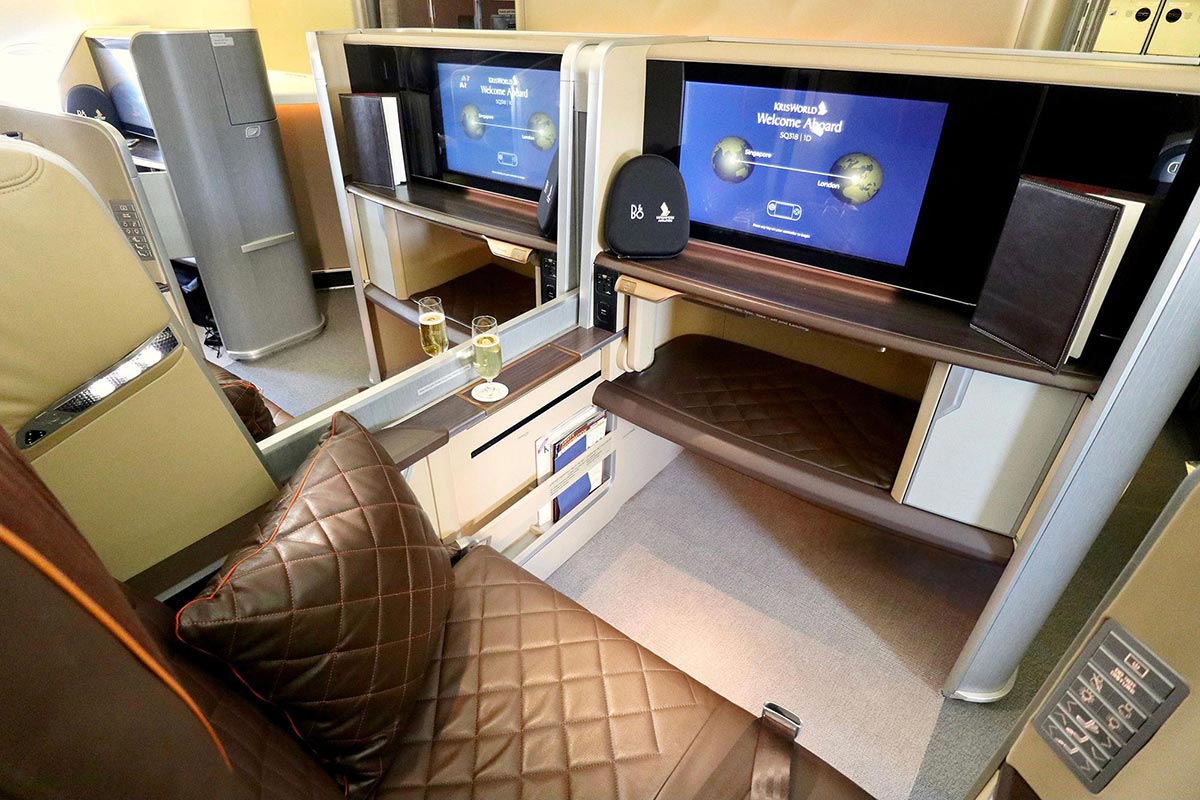
Keeping the 777-300ER also means keeping its four-class cabin, with four 2013 First Class seats, 48 Business Class, 28 Premium Economy and 184 Economy seats.
In May, we calculated that the retirement would cut SIA’s fleet-wide First Class and Suites inventory from 160 seats to 156. That total now stays at 160, still less than half the pre-pandemic figure of 334, but it’s a small win for those hunting First Class award seats, particularly with the 777-300ER coming to Christchurch and Gatwick, where we have been seeing Saver award space offered.
(Photo: MainlyMiles)
What happens next?
Once the 777-9s do start arriving, we expect them to replace the 777-300ERs roughly one-for-one at first. With 31 777-9s on order against 22 777-300ERs, genuine long-haul growth from the new type is probably more of a 2029-and-beyond story.
Further out, the A380s will eventually need replacing too, and no aircraft in production can match their 471 seats. Last week we learned that a 777-9 in SIA’s four-class configuration seats 300, as we had expected.
That’s why the airline’s reported talks for at least 50 more wide-bodies, either Boeing 777Xs or Airbus A350-1000s, aren’t some frivolous spending splurge – they’re a bare necessity.


With 75 long-haul aircraft to replace by around 2040 and only 31 777-9s on order, SIA needs that order just to complete the fleet rollover, let alone keep growing.
Summary
Singapore Airlines’ updated fleet plan for FY26/27 no longer includes the Boeing 777-300ER retirement it planned in May, so all 22 of the type will stay in the operating fleet through to 31st March 2027.
That means the carrier’s long-haul fleet won’t shrink after all, holding steady at 75 aircraft, while fleet-wide First Class and Suites capacity stays at 160 seats.
The 777-9 is the obvious culprit, with SIA now saying it is more than five years late, and its new cabins, which every 777-9 will carry, not due to launch until the second half of 2027. However, a compressed A350 retrofit programme, two A380s potentially in the hangar next summer and a busy 2027 for the 777-300ER all point the same way.
It’s a repeat of 2023, when 777-9 delays also forced SIA to keep 777-300ERs it had planned to retire, and it may not be the last time either. Ultimately, when the airline can’t rely on manufacturers to deliver new long-haul jets, it has no choice but to hold on to the ones it already has.
(Cover Photo: Julian Herzog)
Andrew, what are the odds that they will refurbish the A380 fleet with all 4 new cabin products? It seems to me that once the 779 comes on stream and they retire the A380’s there will be a serious capacity shortage in key markets such as London Heathrow. By my calculation currently there are 1,459 seats each way per day, which would reduce to 1,200 if they go for 4 x 779. That’s 259 less seats each way per day, equal to an A359 LH in lost capacity. It will probably be the same capacity issue for Sydney.
What’s the thinking for a solution? Keep the A380’s going and refurb or place an order for additional 779 or A35K, which would still be years away from delivery?