
There are several frequent flyer programmes out there running regular miles sales, with Qatar Airways, British Airways, Air Canada and Finnair among those discounting their currencies at various points through the year, often bringing the price down to something close to what the miles are actually worth.
This month’s Finnair Plus sale is a case in point, with a 50% discount allowing you to buy Avios points for 1.39 Singapore cents each in USD (after a 1.35 cents JPY option was ‘corrected’).
KrisFlyer doesn’t play that game. There’s no ‘buy miles’ option on singaporeair.com, no bonuses or discounted purchase offers, and no easy direct way to simply add miles to your account for use later.
That doesn’t mean you can’t buy them, though.
Singapore Airlines will sell you miles directly, but only to cover a shortfall on a specific award booking, and at a price that should make you wince. Meanwhile, a range of indirect methods, from bill payment facilities to credit card annual fees and hotel points sales, let you effectively buy KrisFlyer miles for a fraction of that price.
Unfortunately, 2026 has been a torrid year for payers using bill payment facilities in Singapore, with rates almost all hiked, from CardUp and ipaymy in June to Standard Chartered in August and UOB at the start of this month.
It’s meant that cost per mile figures that held true a year ago are, in many cases, no longer close.
Let’s take a look at where things stand now.
All the options
Here’s every method we cover in this article, ranked by the lowest cost per mile currently available.
| Ways to buy KrisFlyer miles (November 2026) |
|||
| Method | Cost per mile | Speed | Bill needed? |
| Credit card sign-up bonuses |
Often < 1.00¢ | Months | No |
| SC Income Tax Payment Facility |
From 0.95¢ | Weeks | Yes (IRAS NOA) |
| SC EasyBill | From 1.25¢ | Weeks | Yes |
| CardUp | From 1.26¢ | Weeks | Yes |
| ipaymy | From 1.39¢ | Weeks | Yes |
| Citi PayAll | From 1.44¢* | Weeks | Yes |
| UOB Payment Facility |
From 1.70¢ | Weeks | No |
| HeyMax (via yuu) |
From 1.75¢ | Days | Yes |
| Credit card annual fee miles |
From 1.96¢ | Once a year | No |
| Marriott Bonvoy points |
From 2.49¢ | 1-2 days | No |
| Singapore Airlines | 5.15¢ | Instant** | No** |
* 1.25¢ for Citigold Private Client customers with Accredited Investor status.
** Only available as a top-up when making an award booking, and only if you already hold at least 50% of the miles required.
We’ve shown best-case figures in the table, for the specific card or offer that unlocks the option at the most competitive rate. Most readers will pay a little more depending on which cards they hold, as we break down in each section below.
What’s a fair price?
Before you buy any miles, it’s important to decide what you’re prepared to pay for them.
We value KrisFlyer miles at around 1.8 cents each, and that’s also the upper limit at which we’d personally consider buying them, but everyone has an upper ceiling – some higher, some lower.
Why not pay more, when a Business Class Saver award can easily return 3 cents per mile or better? Because when you buy miles, you’re exchanging something completely flexible (cash) for something often very restrictive (Saver award availability). Buying at your average redemption value leaves no margin for award seats that never materialise, a devaluation, or miles that expire before you get to use them.

(Photo: MainlyMiles)
Therefore, a decent buffer is needed.
It also follows that buying miles only makes sense with a redemption in mind. Stocking up speculatively, with a three-year expiry clock ticking on every KrisFlyer mile, is rarely a good idea.
That’s one advantage of most of the indirect methods below. The points usually land in your bank rewards account rather than in KrisFlyer, so the three-year KrisFlyer clock doesn’t start until you actually transfer them.
1. Bill payment facilities
If you have regular outgoings that don’t accept credit cards, such as rent, income tax, insurance premiums, school fees or condo management fees, a bill payment facility is often the cheapest way to buy miles in Singapore.
You pay a fee, the facility charges your credit card, and the money reaches the recipient (or your own bank account). You earn miles at your card’s usual local rate on the payment.
There are two broad types:
- Bank-run facilities (Standard Chartered EasyBill and its Income Tax Payment Facility, Citi PayAll, and the UOB Payment Facility) only work with that bank’s own cards, and award points on the payment amount but not on the fee
- Third-party platforms (CardUp and ipaymy) work with cards from most banks, and charge your card for the payment plus the fee, so you earn miles on both
With the bank facilities, the cost per mile is simply the fee divided by your card’s earn rate. With CardUp and ipaymy, you also earn miles on the fee itself, since it’s also charged to your card, which brings the cost per mile down slightly.
Here’s how a typical CardUp payment works, using a DBS Vantage card (1.4 mpd) to pay S$5,000 of rent at CardUp’s 2.3% rental promo rate:
- CardUp charges your card S$5,115 (S$5,000 + 2.3% fee)
- CardUp pays S$5,000 to your landlord
- You earn 7,161 miles (S$5,115 x 1.4 mpd, ignoring rounding)
- Cost per mile: S$115 ÷ 7,161 = 1.61 cents
Rounding varies by bank, so your exact result may differ slightly, but that’s the principle.
This year it all got more expensive
If you last looked at these platforms a year ago, prepare for a shock. Almost every one of them has repriced upwards in the past six months.
| Bill payment fee changes (2026) |
||
| Date | Facility | What changed |
| 11 Jun | ipaymy | Visa one-time fee 2.4% → 2.95% Visa recurring fee 1.85% → 2.6% |
| 13 Jun | CardUp | Standard fee 2.6% → 2.9% Promo rates up by as much as 36%, now from 2.25% |
| 31 Aug | SC EasyBill | Fee 1.9% → 2.5% (first increase since 2019) |
| 1 Sep | Citi PayAll | Fee rebate cut to 0.3%, smallest discount to date |
| 2 Nov | UOB Payment Facility |
Promo fees 1.6-1.8% → 1.7-2.2% |
CardUp has publicly blamed higher card processing costs.
“Like others in the industry, we’re navigating an increase in card processing costs.”
CardUp, in a May 2026 email to customers
The third-party platforms in particular are at the mercy of what Visa and Mastercard charge them. The banks’ own facilities have a little more room to manoeuvre, but they’ve been nudging prices up too.
Here’s where each facility now stands, as of November 2026.
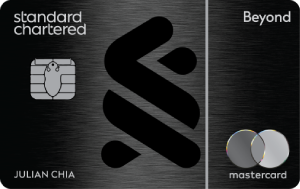
Standard Chartered Income Tax Payment Facility (1.9%)
Standard Chartered’s separate Income Tax Payment Facility escaped the EasyBill increase, and remains at 1.9%. That makes it the cheapest way to buy miles in Singapore, if you qualify.
Rather than paying IRAS directly, Standard Chartered credits the approved amount to a bank account of your choice, and you settle the tax bill yourself.
The catches:
- It’s only open to Beyond and Visa Infinite cardholders
- It covers personal income tax only, and you’ll need your current year’s IRAS Notice of Assessment
- It can only be used once per calendar year per cardholder (though principal and supplementary cardholders each get their own application)
| SC Income Tax Payment Facility (1.9% fee) |
||
| Card | Local earn rate |
Cost per mile |
| Beyond Priority Banking Priority Private |
2 mpd | 0.95¢ |
| Beyond Regular |
1.5 mpd | 1.27¢ |
| Visa Infinite S$2,000+ statement spend |
1.4 mpd | 1.36¢ |
| Visa Infinite < S$2,000 statement spend |
1 mpd | 1.90¢ |
Whether the 1.9% fee survives into the 2027 tax season remains to be seen, but for now, anyone holding one of these cards should be routing their income tax through it.
SC EasyBill (2.5%)
Standard Chartered’s main bill payment facility hiked its fee from 1.9% to 2.5% on 31st August 2026, ending six years of price stability.
EasyBill covers four payment types (IRAS taxes, rent, education and insurance), with one application allowed per payment type each calendar month. All Standard Chartered credit cards are eligible, though only principal cardholders can use it.
| SC EasyBill (2.5% fee) |
||
| Card | Local earn rate |
Cost per mile |
 Beyond Priority Banking Priority Private |
2 mpd | 1.25¢ |
| Beyond Regular |
1.5 mpd | 1.67¢ |
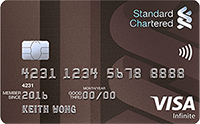 Visa Infinite S$2,000+ statement spend |
1.4 mpd | 1.79¢ |
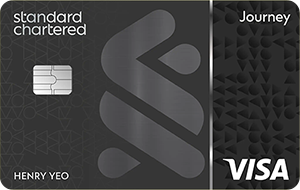 Journey |
1.2 mpd | 2.08¢ |
For Beyond cardholders with Priority Banking or Priority Private status, 1.25 cents is still one of the best deals in Singapore. For everyone else, there’s usually a cheaper route.
Citi PayAll (2.6%, or 2.3% with rebate)
Citi PayAll supports the widest range of payment categories of any facility here, from rent and taxes to insurance, renovation, medical bills and even wedding expenses.
The standard fee is 2.6%, but Citi runs regular fee rebate promotions. The current one, which we described as its worst deal yet, offers a 0.3% rebate (0.6% for Citigold Private Client customers with Accredited Investor status holding the ULTIMA or Prestige) for cardholders who put at least S$6,000 through PayAll by 31st December 2026.
You’ll pay the full 2.6% upfront, with the rebate only arriving in March 2027.
| Citi PayAll (with 0.3% / 0.6% rebate) |
|||
| Card | Local earn rate |
2.3% fee | 2.0% fee (CPC + AI) |
 Citi ULTIMA |
1.6 mpd | 1.44¢ | 1.25¢ |
 Citi Prestige |
1.3 mpd | 1.77¢ | 1.54¢ |
 Citi PremierMiles |
1.2 mpd | 1.92¢ | N/A |
 Citi Rewards |
0.4 mpd | 5.75¢ | N/A |
Without the rebate (2.6% fee), costs per mile are 1.63¢, 2.00¢, 2.17¢ and 6.50¢ respectively.
Two things to watch. First, the Citi Rewards card earns only 0.4 mpd on PayAll, so never use it here. Second, the PayAll setup screen in the Citi Mobile app offers a ‘zero fees’ option, which also means zero miles.
UOB Payment Facility (1.7% to 2.2%)
The UOB Payment Facility works differently from everything else on this list, because you don’t need a bill at all.
You simply ask UOB to transfer an amount from your credit card into a bank account of your choice (it doesn’t need to be with UOB), and pay a fee for the privilege. There’s no invoice, no tenancy agreement and no questions asked, with your credit limit (95% of it, to be precise) the only constraint.
Every card earns a flat 1 mpd (UNI$2.5 per S$5) on these payments, so the cost per mile matches the fee exactly.
UOB raised its promotional fees from 2nd November, with the following rates applying to one-time payments approved by 31st January 2027.
| UOB Payment Facility (one-time payment) |
||
| Card | Fee | Cost per mile |
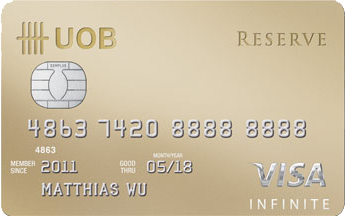 UOB Reserve |
1.7% | 1.70¢ |
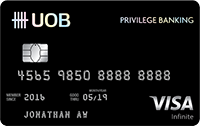 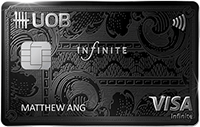 UOB Privilege Banking UOB Visa Infinite UOB Visa Infinite Metal |
2.0% | 2.00¢ |
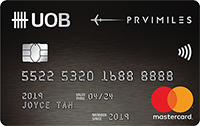 UOB PRVI Miles KrisFlyer UOB |
2.1% | 2.10¢ |
 Other UOB cards |
2.2% | 2.20¢ |
Request payments in multiples of S$10 rather than S$5, since UNI$2.5 for a single S$5 block rounds down to UNI$2.
At 2.1 cents for the widely held PRVI Miles and KrisFlyer UOB cards, this is above what we’d pay for miles in most cases. But because it needs no bill, it effectively sets the ceiling for anyone holding a UOB card. If another method costs you more than this, you’re overpaying.
It’s also handy for topping up to the next UNI$ transfer block. UOB only transfers to KrisFlyer in blocks of 5,000 UNI$ (10,000 miles), so if you’re sitting on 24,500 UNI$, a S$1,000 payment costing S$21 gets you the extra 500 UNI$ needed to move all 50,000 miles across in one go.
Processing takes four to six working days, so it’s not a quick fix.
CardUp (from 2.25%)
CardUp’s standard fee rose to 2.9% on 13th June 2026, and its promotional rates went up with it.
Nobody should be paying the standard rate, though. Here are the main promo codes currently available:
| CardUp promotional fees (November 2026) |
||
| Payment type | Card | Fee |
| Income tax, recurring (set up by 31 Dec 2026) |
Visa | 2.25% |
| Income tax, one-off (set up by 31 Dec 2026) |
Visa | 2.35% |
| Recurring payments (set up by 31 Jan 2027) |
Visa | 2.35% |
| Rent | Visa | 2.3% |
| One-off payments | Visa | 2.45% |
| One-off payments | Mastercard Amex |
2.59% |
| Standard fee | All | 2.9% |
The 2.35% recurring rate applies to the first S$20,000 of payments each month. Payment categories you haven’t used on CardUp before can get 2.35% (one-off) or 2.29% (first three recurring payments) with a Visa card until 31st December 2026. CardUp also emails bonus codes of 2.25% to 2.3% to users who’ve recently paid home expenses or 2026 income tax through the platform.
Most of the better codes are for Visa cards only, so Mastercard and Amex holders can do no better than 2.59%.
A few cards are excluded from earning rewards on CardUp payments altogether, including all HSBC and BOC cards, and Amex cards issued by DBS and UOB.
CardUp also asks for documentation for most payment types, such as your tenancy agreement or Notice of Assessment.
ipaymy (from 2.4%)
ipaymy hiked its Visa fees on 11th June 2026, and its standard rates now depend on your card network:
- Visa: 2.95%
- Mastercard: 2.85%
- Amex and UnionPay: 2.4%
ipaymy also runs seasonal promotions, particularly for income tax payments (this year’s codes were 1.79% for Visa and 1.99% for Mastercard), so it’s worth checking its promotions page when your tax bill arrives.
Outside tax season, the main attraction is the lower Amex fee, which makes ipaymy worth a look for Singapore Airlines’ own Amex co-brand cards.
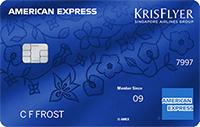
Following the earn rate boost on 1st November, the Amex KrisFlyer Ascend and both PPS Club cards now earn 1.5 mpd, and the KrisFlyer (Blue) Credit Card earns 1.3 mpd.

| ipaymy with Amex KrisFlyer cards (2.4% fee) |
||
| Card | Local earn rate |
Cost per mile |
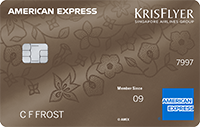 Amex KrisFlyer Ascend |
1.5 mpd | 1.56¢ |
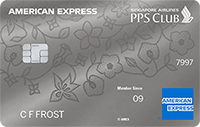 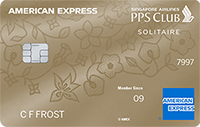 Amex PPS Amex Solitaire PPS |
1.5 mpd | 1.56¢ |
 Amex KrisFlyer (Blue) |
1.3 mpd | 1.80¢ |
There’s a KrisFlyer-specific bonus too, because miles earned on these cards credit directly into your KrisFlyer account when your monthly statement is issued, so there’s no transfer fee and no separate transfer to wait for.
The downside is that Amex limits which payment types it will accept through these platforms, so not every bill will qualify. ipaymy, for example, only accepts Amex cards for a set list of personal bills – rent and rental deposits, income tax, property tax, stamp duty, condo (MCST) fees, school fees, season parking and insurance.
Recurring payments aren’t offered on Amex or Mastercard either, so each one needs setting up individually.
The lowest possible ipaymy cost per mile is actually 1.39 cents, with Standard Chartered’s Beyond card (Priority Banking or Priority Private) at the 2.85% Mastercard rate, but anyone holding that card is better off using Standard Chartered’s own facilities anyway.
Which card, which facility?
Here’s the cheapest route to buying miles for the most popular miles cards in Singapore, assuming you have a bill that qualifies.
| Cheapest bill payment option by card (November 2026) |
||||
| Card | Local earn rate |
Best route | Fee | Cost per mile |
| SC Beyond (PB / PP) |
2 mpd | SC Tax Facility | 1.9% | 0.95¢ |
| SC Beyond | 1.5 mpd | SC Tax Facility | 1.9% | 1.27¢ |
| SC Visa Infinite | 1.4 mpd* | SC Tax Facility | 1.9% | 1.36¢ |
| Citi ULTIMA | 1.6 mpd | Citi PayAll | 2.3%^ | 1.44¢ |
| Amex KF Ascend | 1.5 mpd | ipaymy | 2.4% | 1.56¢ |
| DBS Vantage | 1.4 mpd | CardUp (recurring) |
2.35% | 1.64¢ |
| UOB PRVI Miles Visa | 1.4 mpd | CardUp (recurring) |
2.35% | 1.64¢ |
| DBS Altitude Visa | 1.3 mpd | CardUp (recurring) |
2.35% | 1.77¢ |
| OCBC 90°N Visa | 1.3 mpd | CardUp (recurring) |
2.35% | 1.77¢ |
| Citi Prestige | 1.3 mpd | Citi PayAll | 2.3%^ | 1.77¢ |
| Amex KF Blue | 1.3 mpd | ipaymy | 2.4% | 1.80¢ |
| SC Journey | 1.2 mpd | CardUp (recurring) |
2.35% | 1.91¢ |
| Citi PremierMiles | 1.2 mpd | Citi PayAll | 2.3%^ | 1.92¢ |
| KrisFlyer UOB | 1.2 mpd | CardUp UOB PF |
2.59% 2.1% |
2.10¢ 2.10¢ |
* Requires S$2,000+ spend in the same statement cycle, otherwise 1 mpd.
^ After the 0.3% rebate, for at least S$6,000 of PayAll spend by 31st December 2026.
HSBC and BOC cards don’t earn rewards on CardUp or ipaymy payments, and neither bank offers its own bill payment facility.
CardUp’s 2.25% recurring income tax code (Visa) lowers the cost to 1.57¢ at 1.4 mpd, 1.69¢ at 1.3 mpd and 1.83¢ at 1.2 mpd.
Only the first ten cards on this list can buy miles below our 1.8 cent threshold, and several of those come with hefty income requirements or annual fees.
A few more things to bear in mind with any of these facilities:
- You need a genuine bill (except with the UOB Payment Facility), and you should keep the paperwork, since banks can and do ask for proof after the event
- Your credit limit caps the payment size, so a large tax bill may need splitting, or a temporary limit increase
- None of these are quick. Points generally post with your next statement and then need transferring to KrisFlyer, which takes anywhere from instant (HSBC) to a few days (most other banks)
- Fees are non-refundable once a payment goes through
2. Paying your card’s annual fee
Pay your card’s annual fee instead of asking for a waiver, and most miles cards will hand you a block of miles in return, typically 10,000 miles at the entry level. You’re effectively buying those miles.
| KrisFlyer miles for paying the annual fee (2026) |
|||
| Card | Annual fee | KrisFlyer miles |
Cost per mile |
| Citi PremierMiles | S$196.20 | 10,000 | 1.96¢ |
| DBS Altitude | S$196.20 | 10,000 | 1.96¢ |
| HSBC TravelOne | S$196.20 | 10,000* | 1.96¢ |
| KrisFlyer UOB | S$196.20 | 10,000 | 1.96¢ |
| OCBC 90°N | S$196.20 | 10,000 | 1.96¢ |
| SC Journey | S$196.20 | 10,000 | 1.96¢ |
| Citi Prestige | S$651.82 | 32,000 | 2.04¢ |
| DBS Vantage | S$599.50 | 25,000 | 2.40¢ |
| SC Visa Infinite | S$599.50 | 25,000 (year 1) 20,000 (year 2+) |
2.40¢ 3.00¢ |
| UOB Visa Infinite Metal | S$654 | 25,000 | 2.62¢ |
| Amex KrisFlyer Ascend | S$397.85 | 15,000 (voucher)** |
2.65¢ |
* 30,000 HSBC points, worth 12,000 miles with partners on a 2.5:1 ratio, but only 10,000 KrisFlyer miles at HSBC’s inferior 3:1 KrisFlyer ratio.
** A voucher that reduces the miles needed for one Singapore Airlines award, not miles in your account (see below).
Note that the HSBC TravelOne’s headline 12,000 miles doesn’t apply to KrisFlyer. HSBC’s poorer 3:1 ratio for KrisFlyer transfers means the 30,000 points you receive convert to only 10,000 KrisFlyer miles, the same as every other entry-level card.
The Amex KrisFlyer Ascend’s 15,000 miles renewal voucher isn’t really comparable either. It knocks 15,000 miles off a single Singapore Airlines award for one passenger, must be used within 12 months, and still requires you to hold at least 50% of the award’s full price in your account when you book. It’s considerably less valuable than 15,000 miles sitting in your account.
Even taking the table at face value, the S$196.20 entry-level cards are buying miles at 1.96 cents each, slightly above our threshold. If you’d otherwise get the fee waived, paying it is a choice to buy 10,000 miles at that price, which isn’t unreasonable if you have an immediate use for them, but isn’t a bargain either.
Timing is the other catch. The fee and its miles only come round once a year, on your card’s anniversary, so this route is no help if the award seats you want are available today and your renewal is still eight months off.
3. Credit card sign-up bonuses
The cheapest miles most of our readers will ever ‘buy’ come from credit card sign-up bonuses.
Many of the best offers require you to pay the first year’s annual fee in exchange for a large bonus, on top of the miles you’d earn on the qualifying spend anyway. Divide the fee by the bonus miles and you’ll often find you’re paying well under 1 cent per mile.
The obvious limitations are that each bonus is usually a one-off, generally restricted to new customers of that bank, and comes with a minimum spend to hit.
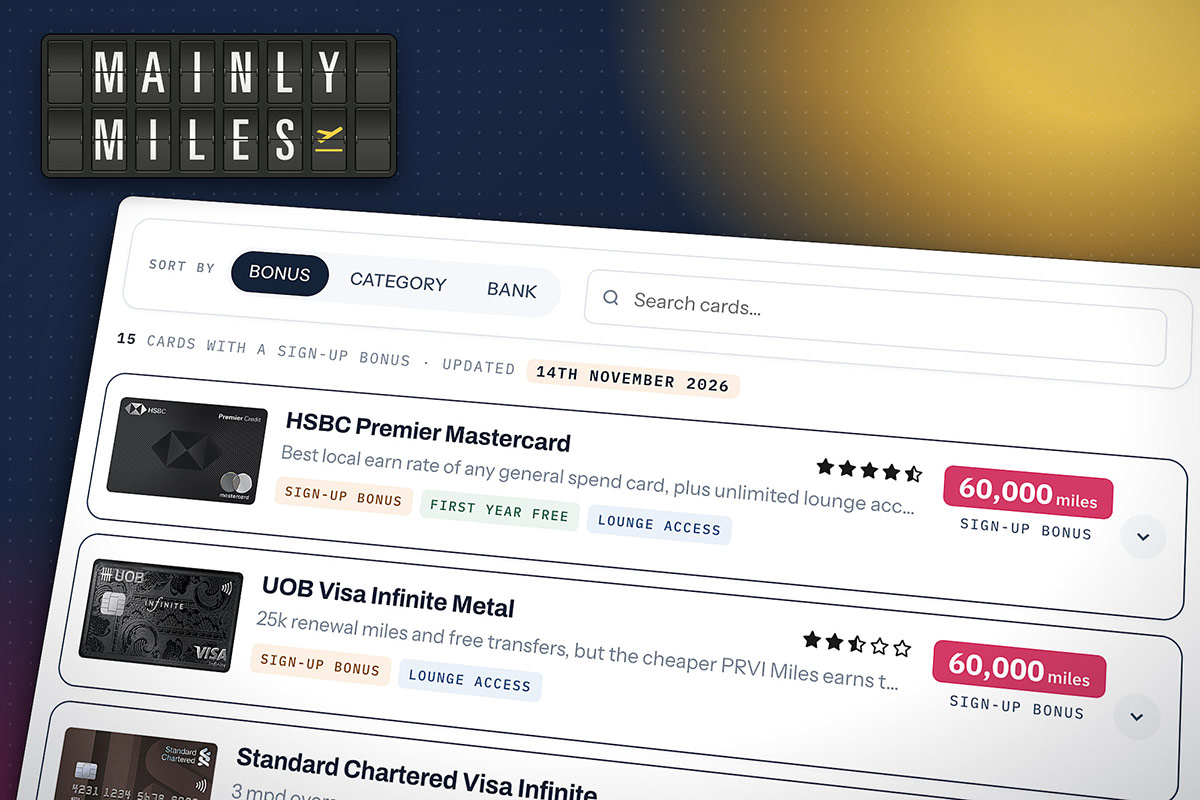
Nonetheless, if you’re planning ahead for a big redemption, it’s worth checking our current sign-up bonuses page before reaching for any of the other options here, with up to 60,000 miles currently available with selected cards.

4. Buying Marriott Bonvoy points
Marriott Bonvoy points convert to KrisFlyer miles at a ratio of 3:1, with a bonus of 5,000 miles for every 60,000 points transferred. In other words, 60,000 Bonvoy points become 25,000 KrisFlyer miles.
Marriott sells its points at a standard price of US$12.50 per 1,000, but runs frequent sales offering bonus points on purchases.
The current sale is one of the most generous in years, with a 55% bonus on purchases until 24th November 2026 (11.59am Singapore time). That takes the price down to around 0.81 US cents per point.
| Buying KrisFlyer miles via Marriott Bonvoy | |||
| Bonvoy offer | Cost of 60,000 points |
KrisFlyer miles |
Cost per mile |
| 55% bonus | ~US$484 (~S$623) |
25,000 | 2.49¢ |
| 40% bonus | ~US$536 (~S$690) |
25,000 | 2.76¢ |
| No promotion | US$750 (~S$965) |
25,000 | 3.86¢ |
Based on an exchange rate of US$1 = S$1.288, before any foreign currency transaction fee charged by your card.
Even at the best sale price, that’s around 2.5 cents per mile, well above our threshold, and you’ll usually pay a foreign currency fee on top since purchases are charged in US dollars.
The one thing in its favour is speed, since Bonvoy transfers to KrisFlyer are usually processed within a day or two, and some readers have reported them arriving almost instantly.
At these prices, KrisFlyer is one of the poorer uses of a Bonvoy balance. The same points will usually go further on Marriott hotel nights, or in one of the dozens of other airline programmes Bonvoy transfers to.

(Photo: Marriott)
Other hotel schemes are no better for this. Hilton Honors and IHG One Rewards both sell points and both transfer to KrisFlyer, but at ratios so weak that the sums never work, sale or no sale.
5. HeyMax (via yuu)
HeyMax’s Max Miles don’t transfer to KrisFlyer directly, but there is an indirect route. Max Miles convert to yuu Points at 1:3, and yuu Points then convert instantly to KrisFlyer at 3.6:1.
The net result is that 1 Max Mile becomes 0.83 KrisFlyer miles, so whatever you pay for Max Miles needs grossing up by 20% to get a KrisFlyer cost per mile.
The cheapest way to buy Max Miles right now is CardUp’s HeyMax tie-up, where paying selected bills (condo MCST fees, insurance premiums, property tax and mortgage instalments) by PayNow with the FAST585 code costs a 5.85% fee and earns 4 Max Miles per S$1. That’s 1.46 cents per Max Mile, or around 1.75 cents per KrisFlyer mile once converted.
Unfortunately, the promotional rate stops after 10,000 Max Miles (S$2,500 of payments, producing around 8,300 KrisFlyer miles), and payments must be scheduled by 31st December 2026.
HeyMax occasionally runs transfer bonuses on yuu conversions that restore a 1:1 ratio to KrisFlyer, which makes this more interesting when they’re on, but for most readers it’s a niche top-up rather than a serious source of miles.
6. Buying miles from Singapore Airlines
Finally, the one method that actually involves buying KrisFlyer miles from the airline itself.


How it works
If you’re making a KrisFlyer award booking and don’t have enough miles, Singapore Airlines will let you buy the shortfall, provided you already hold at least 50% of the miles required. In other words, you can top up by a maximum of half the award price.
Top-ups are available on Singapore Airlines awards, as well as on Star Alliance and other partner airline awards.
Search and book online through singaporeair.com or the app as normal, and if you’re short of miles but over the 50% threshold, the system offers the top-up automatically. The cost is added to the booking summary and paid alongside the usual taxes and fees, and the award confirms instantly.
It used to be much harder. The paper Miles Top-up Request Form still exists, for emailing to Singapore Airlines, but with manual processing you could easily lose the seats while you wait. There’s really no reason to use it now.
Purchased miles must be used for that specific booking. You never actually ‘see’ them in your balance, since they’re bought and spent in the same transaction, and you can’t buy miles to hold for later.
What does it cost?
Singapore Airlines charges US$40 per 1,000 miles, which is around S$51.50 at current exchange rates.
That’s approximately 5.15 cents per mile, almost three times our valuation, and more than five times what the cheapest bill payment method costs.
Even if you were genuinely prepared to pay cash for a Business Class or First Class seat, it’s hard to imagine buying a significant number of miles at this price beating simply paying for the ticket.
Is it ever worth it?
You should certainly never plan to use this. But there’s one situation where it can make sense: when you need a small number of miles, urgently.
Ken’s conundrum
Ken booked a Business Class Saver return to Sydney months ago to visit his daughter. His wife Emma couldn’t get the time off work, so he made plans to travel alone.
Two days before departure, Emma comes home with good news. She can take the time off after all.
Ken logs in and, remarkably, there’s still one Business Class Saver seat available in each direction on his flights. Then he checks his balance. He’s 2,438 miles short.
He does have more miles, locked up in credit card points, but that bank’s transfers take a couple of days at best. There’s no guarantee those two Saver seats will still be there in a few hours, let alone by the time the miles arrive.
This is where the top-up comes in. Ken can buy the 2,438 miles he needs for 2.438 x US$40 = US$97.52, or around S$125, and confirm Emma’s seats immediately.
Terrible value to a bystander, for miles he effectively already has. But to lock in the trip with his wife by his side? For Ken, it’s a lifeline.

(Photo: MainlyMiles)
Where you draw the line is personal, but the bigger the shortfall, the harder this is to justify. A few hundred miles? Barely worth worrying about. 20,000 miles at more than S$1,000? It’s time to reconsider the booking, or at least exhaust the purchase options above or instant crediting options below first.
Before you buy: Try the instant options
If speed is the issue rather than the total number of miles, there are several ways to top up a KrisFlyer balance instantly, most of them far cheaper than Singapore Airlines’ top-up.
These include transferring HSBC credit card points or Amex Membership Rewards points, earning KrisPay miles at Kris+ merchants (or buying Kris+ vouchers for merchants where you’ll use them anyway), and converting NTUC LinkPoints or yuu Points across.
We’ve covered every one of them in our dedicated guide.

If your miles are on their way but not yet in your account, it’s also worth calling KrisFlyer and asking whether they can hold the award seats for a couple of days. It isn’t official policy and there are no guarantees, but polite requests are often accommodated.
Summary
Yes, you can buy KrisFlyer miles directly from Singapore Airlines, but at over 5 cents each, it should only ever be a last resort for a small, urgent top-up. Even then, instant accrual alternatives like Kris+ and HeyMax vouchers are much cheaper, if you only need a modest amount.
For everyone else, the cheapest way to buy KrisFlyer miles in Singapore remains bill payment facilities, though they’re not the bargain they were a year ago, with CardUp, ipaymy, Standard Chartered EasyBill and the UOB Payment Facility all raising their prices.
Meanwhile Citi PayAll is offering its weakest rebate yet, making sub-1.5 cent mile purchase options now largely the preserve of premium cardholders.
Standard Chartered’s 1.9% Income Tax Payment Facility is the best deal, at as little as 0.95 cents per mile, for those who can access it. Citi ULTIMA holders on PayAll can still buy below 1.5 cents, and Visa cards earning 1.4 mpd manage 1.57 to 1.64 cents on CardUp, while Amex KrisFlyer Ascend and PPS cardholders have a useful 1.56 cent option via ipaymy, with the miles then transferring straight into KrisFlyer in a month or less.
Most mass-market cards now sit around 1.8 to 2.1 cents per mile, roughly the same as paying your card’s annual fee for 10,000 miles, and at or above what we think a KrisFlyer mile is worth.
Wherever you buy, the golden rule doesn’t change – only buy miles with a specific redemption in mind, and at a price that leaves you a healthy margin when you redeem.
(Cover Photo: MainlyMiles)