

With international travel thriving and passenger numbers continuing to rise, airport lounges have established themselves as an essential part of the modern travel experience. Across the Asia-Pacific region in particular, growing demand has made lounges more popular – and more competitive – than ever before.
That popularity has come at a price. In recent years we’ve watched airlines, alliances and card issuers alike quietly tighten who gets in, cap how often, and start charging for guests. Almost all of those changes trace back to a single question that most passengers never think about: who is actually paying for you to be in there?

(Photo: MainlyMiles)
Lounge access schemes
If you use a lounge access scheme like Priority Pass to gain entry to an airport lounge, and there are thousands of facilities worldwide accepting these methods, the lounge access scheme pays a fee to the lounge operator each time you visit.

For example, if you pay US$329 for an annual Priority Pass Standard Plus membership including 10 complimentary visits, there’s a margin for the lounge access provider between what you’re effectively paying for each visit (US$32.90) and what Priority Pass pays the lounge operator.
The cleanest illustration is actually the entry-level Standard tier, which costs US$99 a year and then charges you US$35 every single time you walk through a lounge door. That US$35 is effectively Priority Pass telling you what one visit is worth to them, and it’s a figure that keeps climbing. It was US$27 until a few years ago, then US$32, and now US$35. Guests are charged the same US$35 per visit.
How much of that reaches the lounge itself? Nobody publishes it, and the contracts are confidential, but the working assumption among those who follow this closely is somewhere in the mid-to-high US$20s per visit for a typical network lounge. That’s a thinner margin than most people assume, and it explains a great deal of what’s happened more recently.
For the unlimited access membership levels, like the one offered with DragonPass as a perk of the OCBC Voyage card in Singapore, the lounge access provider receives a fixed fee for the membership itself, either from you or your credit card company, and is then ‘betting’ on you using only a certain number of visits per year (since it still pays the usual rate for each one).
With a few memberships they will definitely lose out here, but most people aren’t accessing an airport lounge on a daily or even weekly basis this way, so the business case works out across the membership group as a whole.
Why your bank suddenly cares how often you go
Here’s the part that’s of most interest to our readers, because almost nobody buys these memberships outright – you get them with a credit card.
When your lounge access comes bundled with a card, you’re holding what Priority Pass calls a ‘Select’ membership (DragonPass has its own equivalent). You didn’t pay Priority Pass anything – your bank did. In most cases the bank is billed per visit, at a rate negotiated between the two of them.
That’s the mechanism behind almost every lounge access downgrade Singapore cardholders have seen recently. When a card offers ‘unlimited’ lounge access, the issuer is carrying an uncapped, per-visit liability on every cardholder who discovers Changi has a dozen participating lounges.
As soon as enough people work that out – particularly by making several visits in a single day – the maths stops working, and the caps arrive.
The pattern over the past couple of years has been obvious, with several previously unlimited Singapore cards (like the Citi Prestige and UOB Visa Infinite Metal) moving to fixed annual visit allowances, with per-visit charges once your allowance runs out, and some even adding cooldown periods between visits.
If you’re not currently holding a credit card in Singapore that offers free lounge access, or you’re interested in those that offer the most generous (even unlimited) access plans, check out our recently updated full guide.


Access based on your travel class
If you’re entitled to use an airport lounge on the basis of your travel class – in other words your ticket entitles you to lounge access – most of the time it’s paid for by the airline you’re flying with.
For example, a Business Class passenger flying on Malaysia Airlines from Singapore to Kuala Lumpur decides to try a couple of the Oneworld lounges at Changi. Dinner in the Qantas Singapore Business Lounge, followed by a glass of champagne (yes they do have it, on request) in the British Airways lounge.
Malaysia Airlines will pay Qantas and British Airways respectively for this passenger’s two lounge visits.

(Photo: MainlyMiles)
Many airlines operate their own lounges, even at outstation airports – for instance, Singapore Airlines in Sydney, Cathay Pacific in London, and Qantas in Singapore.
By doing so, they avoid paying other carriers or third-party lounge operators to host their passengers. However, they do endure the expenses of leasing and maintaining the facilities, not to mention employing lounge staff at these locations.
For example, without its own lounge at London Heathrow Terminal 3, Qantas might rely on the British Airways lounge. However, by operating its own facility, the airline avoids paying BA a usage fee, as its passengers are directed to the Qantas lounge – and the majority will naturally comply.
Alternatively a similar saving arises by not having to pay a third-party lounge provider, like Plaza Premium, for the same service.
Of course there is a significant cost associated with operating a branded lounge at an outstation, but airlines also want their own lounges to offer product consistency and meet customer expectations, especially on key business routes.

(Photos: Qantas)
For instance, Finnair directs its Business Class passengers and eligible status holders to the Marhaba Lounge in T1 at Singapore Changi Airport – not because it offers a superior experience, but because the airline has a cost-effective contract with the lounge provider.
Where an airline does not offer its own lounge, it usually contracts another airline or third-party provider to accommodate its premium passengers at an agreed discounted rate.
However, those Finnair passengers are also eligible to access the Qantas, British Airways or Qatar Airways lounges, which are well worth considering instead – with one 2026 caveat. The Qatar Airways lounge at T1 now opens only in bands that shadow its own (reduced) departure schedule, so check it’s actually open before you commit to the walk.
Most passengers (the large majority, in our estimation) simply don’t realise they can use the lounges of an alliance partner at the same departure airport. As a result they stick to the lounge they’re directed to, which makes the strategy an effective one for the airline.
One word of warning, though, which we perhaps wouldn’t have needed to write a year ago: don’t assume alliance reciprocity is automatic any more. Some carriers have started carving their flagship lounges out of the general alliance arrangement altogether, and we’ll come to a significant example of that later in the article.
The ‘Marketing Carrier’ complication
There are occasions when the airline you’re flying with doesn’t pick up the bill for your lounge access when you’re flying in an eligible cabin, because you are on a codeshare booking.
In these cases the ‘Marketing Carrier’ will pay for your lounge access.
Let’s say you’re flying from Kuala Lumpur to Singapore in Business Class on Malaysia Airlines, but booked on a codeshare SQ flight number – the 9.05am MH611, for instance, arriving into Changi at 10.15am, but ticketed as SQ5611 – the flight number appearing on your boarding pass.
In this example, Singapore Airlines (the ‘Marketing Carrier’) will pay Malaysia Airlines for your use of the Golden Lounge in KL.

(Photo: Malaysia Airlines)
One important distinction here. Singapore Airlines’ own website notes that on codeshare flights, the lounge access policy of the operating airline applies. That’s a rule about eligibility – which lounges you’re allowed into, and with how many guests – but it doesn’t change who settles the bill afterwards. The marketing carrier is still the one paying.
Access based on your frequent flyer tier
If you gain access to a lounge through elite status with your frequent flyer programme, for example when flying in Economy or Premium Economy with an airline in the same alliance, your frequent flyer programme (FFP) pays the lounge operator for access.
For example, if a Singapore Airlines KrisFlyer Elite Gold member (Star Alliance Gold tier) flying Economy Class on Air Canada from London Heathrow to Toronto chooses to visit the United Club at Heathrow’s Terminal 2, KrisFlyer (Singapore Airlines) will pay United Airlines for the visit.
If the passenger then wanders over to the Air Canada Maple Leaf Lounge at Heathrow T2, again KrisFlyer (SIA) will pay for the access, even though the passenger is flying with Air Canada.
Note: In Oneworld the operating carrier used to pay if you accessed a lounge based on frequent flyer status, not the frequent flyer programme, however we understand this changed several years ago and is now in line with the way it always worked in Star Alliance / SkyTeam (i.e. the frequent flyer programme pays).When we say “the frequent flyer programme (FFP) pays”, it’s important to remember that an airline’s FFP is often financially distinct from the airline.
For example, Aeroplan (Air Canada) and Qantas Frequent Flyer (Qantas) are separate companies in their own right. Even when an FFP is integrated within the airline, like KrisFlyer, it is typically managed as an independent cost centre with its own budget, revenue, and expenses.
Most FFPs operate as businesses in their own right and, in some cases, generate higher profits than the airline does itself by flying passengers!
Travel class trumps FFP status
If you hold lounge-eligible status with an alliance but you are flying in a lounge-eligible cabin class with a member airline, the travel class takes precedence over your status level when it comes to determining payment for lounge access.
For example, a KrisFlyer Gold member flying on United out of London Heathrow in Business Class can visit any of the four Star Alliance lounges there – Lufthansa’s in T2A, plus the Air Canada, Singapore Airlines and United facilities out in the T2B satellite – and United will foot the bill regardless (yes, even at the SilverKris lounge!).
In the Oneworld alliance, Emerald status holders travelling in Business Class with a Oneworld carrier are typically granted Business Class lounge access, funded by the operating carrier.
However, if they access a dedicated Oneworld First Class lounge or First Class section, the frequent flyer programme covers the cost of the visit, because access to the First Class lounge is granted solely by virtue of their Emerald status in this case.
For example, a Finnair Plus Platinum member (Oneworld Emerald tier) departing from Singapore in Business Class with British Airways visits the Qatar Airways Premium Lounge, then decides to head across to the Qantas First Lounge before departure.
British Airways pays for access to the Qatar lounge, but Finnair picks up the bill for the Qantas First Lounge visit (in Oneworld’s former policy, BA would pay for both visits).
How much?
Access rates paid by lounge programmes or airlines are commercially sensitive, so we can’t accurately say how much money is changing hands for these visits in 2026.
Those in the industry who shared some knowledge with us have suggested that when an airline permits Business Class lounge access to a passenger flying on another alliance carrier, a fee of US$40 – 60 is not far off the mark.
We understand (pre-COVID at least) that United Airlines pays Singapore Airlines around US$60 for each Business Class passenger using the SilverKris lounge at Changi before departure.

(Photo: MainlyMiles)
That sounds expensive, however it has traditionally worked both ways, with SIA paying a similar rate to United for the use of its lounges by eligible Singapore Airlines passengers in, say, San Francisco.
As we’ll come to shortly though, United no longer admits Singapore Airlines passengers to its Polaris Lounges at all, only to the United Club, so that particular invoice has likely shrunk a little.
As a historical benchmark, we know that around 15 years ago Cathay Pacific was charging Oneworld carriers HKD 450 (~US$57) for each eligible passenger to use its Business Class lounges in Hong Kong – say for a British Airways or Qatar Airways Business Class traveller. The Malaysia Airlines Satellite Golden Lounge at KLIA was charging US$45 for the same thing in that era. First Class lounges, naturally, command more.
What’s striking is how little those figures have moved. A rate of US$45 – 60 per Business Class visit was the going rate more than a decade ago, and the US$40 – 60 range still looks about right today. Meanwhile the cost of running a lounge – rent, staff, catering, and simply the number of eligible passengers turning up – has gone in one direction only.
That squeeze, more than anything else, is probably what sits behind the access restrictions we’ve started to see over the past year or so. Which brings us to the interesting part.
When the maths stops working
We’ve just described a system that runs on inter-airline invoices, but that raises an obvious question: what happens when the airline receiving those invoices decides the money isn’t worth the crowding?
Increasingly, it stops accepting the business.
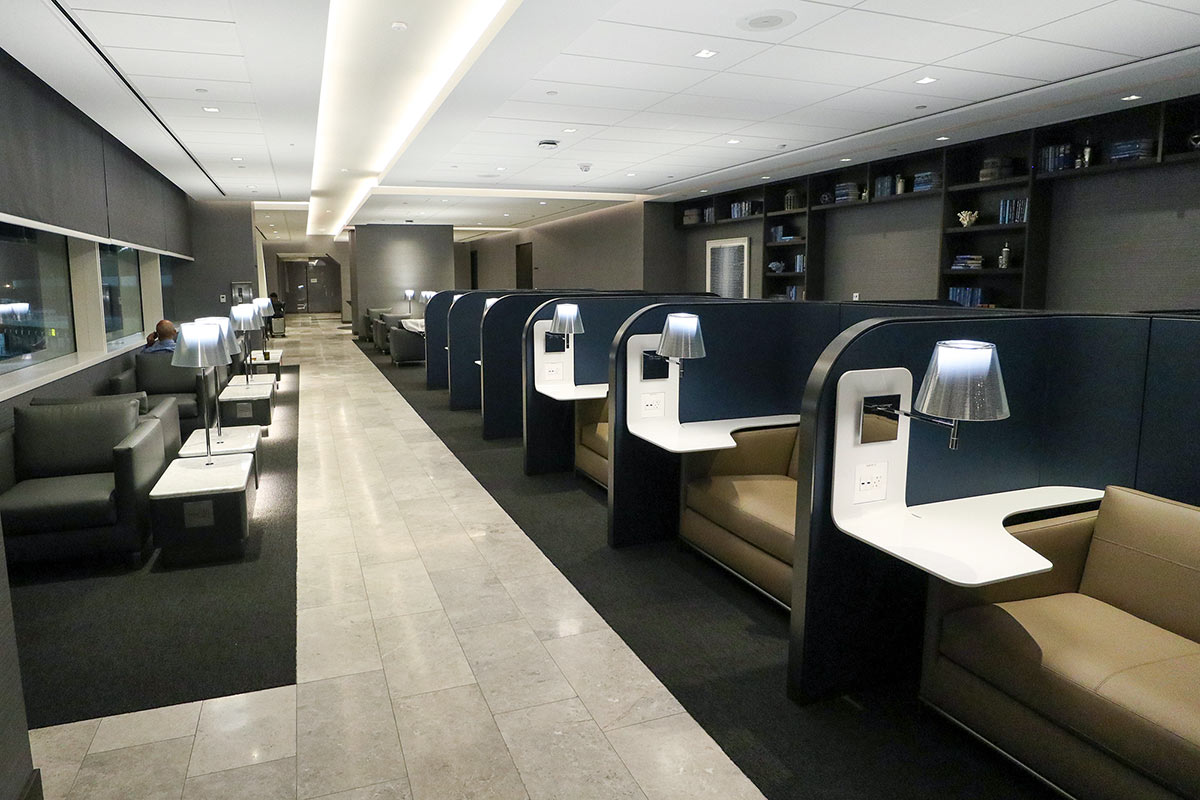
The most striking example came in April 2026, when United Airlines rewrote the access rules for its six Polaris Lounges in the USA.
Previously, any passenger departing on a long-haul Star Alliance flight in Business or First Class could use the Polaris Lounge at that gateway, with their own airline picking up the tab. Now access is limited to United’s own eligible Polaris passengers plus a short list of close partners – broadly the Lufthansa Group carriers, ANA, Air New Zealand and ITA Airways.
Singapore Airlines is not on that list. Nor are EVA Air, Thai, Turkish, Air India or most of the rest of the alliance. SIA Business Class passengers departing San Francisco, Los Angeles, and Newark are now directed to the standard United Club instead – a significant step down in food, space and facilities.
United pointed to airport space constraints, its expanding long-haul fleet and documented crowding in the lounges as the drivers. So it isn’t that Singapore Airlines refused to pay, or that United asked for more.
It’s that United would rather have the space back than have SIA’s money at all. Once a lounge is running at capacity, the partner airline passenger stops looking like revenue and starts looking like a cost to the airline’s own premium customers.
(Photo: MainlyMiles)
The same logic is playing out inside airline groups, not just between them. From 1st July 2026, Qantas Platinum and Gold frequent flyers and Qantas Club members lost their Qantas lounge access when travelling on international Jetstar flights, with only Platinum One members exempt.
Qantas framed this around the customer experience, citing member feedback and a commitment to a premium lounge product – which is to say, crowding.
A lounge seat is a finite thing, and when demand outstrips supply somebody has to be turned away. Qantas appears to have concluded that the passenger least deserving of the seat was the one holding a cheap Jetstar international fare.
From the same date, complimentary Qantas lounge invitations also became transferable only to someone travelling on your own flight, closing off the informal secondary market in “lounge pass trading”, and again thinning the numbers coming through the door.
Increasingly, it’s you paying
Throughout this article we’ve been able to reassure you that, for the most part, somebody else is paying. That’s still true much of the time, but the exceptions are multiplying lately.
Guests. If you hold a Priority Pass membership bought directly, every guest costs US$35, every time. Card-issued memberships vary enormously here, from two free guests down to none at all, and several issuers have cut their allowances recently. That means many people are quietly paying more here for the same privileges they had for free as little as a year ago.
Co-pays. A growing number of premium lounges participate in the access networks but price themselves above what the network will reimburse, and bill you the difference at the door. The Chase Sapphire Lounges in the USA are the obvious example, charging Priority Pass members a ‘preferential’ US$75 per person against a US$100 standard rate – and from 15th August 2026, dropping complimentary access altogether for anyone whose Priority Pass didn’t come from a Chase card.
Excess visit charges. Once your card’s annual visit allowance is used up, some issuers will still let you in, at a per-visit charge that lands on your statement. That’s simply the bank passing its own per-visit cost to the network straight through to you.
Extras that used to be included. Collinson, which owns Priority Pass, has begun charging for showers at some of its own lounges. Reservation and pre-booking fees for guaranteed entry are spreading too, something commonly seen at UK airport third-party facilities.
Even the American Express Global Lounge Collection, long the most generous proposition of the lot, has tightened. From 8th July 2026 Centurion Lounge guest allowances were reduced, guests must be travelling on the same flight as the cardmember, and cardmembers on a connection can only enter within five hours of their onward departure.
None of these individually is dramatic. Collectively though they show an industry that spent over a decade selling lounge access as an all-inclusive perk, but that’s now slowly unbundling it, due to both capacity and profit margins.
Summary
You might never have cared who was paying for your airport lounge access (well, provided it wasn’t you!) but now you know – and it’s not necessarily who you might have thought.
Generally speaking, when you’re flying in an eligible travel class the operating airline either provides its own lounge or foots the bill for a third-party facility or any same-alliance lounge you choose to visit. On a codeshare booking, that liability shifts to the marketing carrier whose flight number is on your ticket.
When you’re accessing a lounge on the basis of your frequent flyer status, it’s the programme you hold that status with which covers the cost – unless your travel class entitles you to that lounge anyway, in which case it’s back to the operating or marketing carrier.
For lounge access schemes like Priority Pass and DragonPass, the annual fee or per-visit cost is set above what they pay the lounge operator, giving them a margin. On ‘all-you-can-eat’ tiers, including those bundled with several Singapore credit cards, they’re simply betting that the membership won’t bleed them dry on aggregate.
What’s changed since we first tackled this question a few years ago is that those bets have started to go wrong, and everyone involved is now managing the consequences.
Airlines are narrowing which partner passengers they’ll admit, and airline groups are pulling lounge access away from their own cheapest fares, or loyal customers flying with their budget arms.
Airlines are narrowing which partner passengers they’ll admit, frequent flyer programmes are declining to pay when the underlying fare is too cheap.
Moreover, card issuers are replacing unlimited access with fixed allowances, while a growing list of guest fees, co-pays and excess visit charges means the honest answer to “who’s paying for your airport lounge access?” is, more often than it used to be, you.
(Cover Photo: Qantas)
Thanks for the article!
I never knew I can visit more than one lounge before my flight! Since my boarding pass was scanned at the lounge entrance, I assumed there was some form of tracking of lounge visits to make sure I can only visit one lounge per boarding pass! Once my boarding pass is scanned I have “used up the entitlement” and hence can’t go to another eligible lounge. Aiya wasted so many past opportunities to try different lounges for the same boarding pass.
Oh yes you can use as many lounges as you like within the same alliance / partnership.
When we flew from Singapore to Sydney on BA First Class last month we visited:
Qantas Business Lounge
BA Business Lounge
BA The Bar Singapore
Qantas First Lounge
Qatar Premium Lounge
Sadly BA does not do early check-in for the Sydney flight, so we had to cram all that into about 3 hours.
All in all we probably cost BA about US$200 each in lounge access fees (paid to Qantas and Qatar), and the flight only cost us 34,000 Avios each!
How to manage that with 34k Avios?
The fewer people who know that the better.
Thanks for an interesting article!
I have made done a good amount of lounge hopping among Star Alliance lounges. But there have also been a few cases where I was rejected from entering a Star Alliance member’s lounge, even though I flew on a Star Alliance airline, and hold a Star Alliance Gold card.
Any idea under what conditions this can occur?
This was a BA 50% discount long-haul Avios redemption promo launched in October 2020, for travel by June 2021.
We took a punt on a late June 2021 F award for two of us to SYD (as far ahead as possible, given the situation at the time).
BA cancelled the flight, obviously, so we rebooked for late 2021.
They cancelled that one too. We rebooked for SG National Day weekend – Aug 2022. Finally the flight went ahead and off we went!
No one ever asked us to top up the Avios, even though the original promotion was strictly for travel by 30 June 2021! Better still, since BA had cancelled the original flight(s), they gave us pick of any service with 2+ First class seats for commercial sale, we weren’t restricted to award space.
And you probably earned Avios for the flight too, considering BA would have to book in revenue class since redemption class would’ve dried up.
Haha I wish but sadly not, they just force the space manually. Booking class still Z.
Fascinating read Andrew, my lounge safaris are costing MH a pretty penny it seems!
Yes, I tend to agree with you.
Super interesting article!!! I do have a question in relation to the FFP programmes though. What happens if say you’re on a Lufthansa flight from SIN to Munich, with Krisflyer Elite Gold membership, and you visit both the Singapore Krisflyer Gold lounge and the Munich Senator Lounge, is it correct to say that Krisflyer pays for both of these visits (essentially Krisflyer also pays for my visit to its own lounge)?
Great article. While I appreciate getting access to lounges and certainly use them, I don’t really like the idea of lounge hopping just for the sake of doing that.
How about in the case if one is flying out from Singapore on business class.
technically can visit both the SilverKris and KF gold lounge one after another?
Good narrative.
But it’s all common sense to see who may be or should be paying for my visit to the lounge.
Again, if you are savvy frequent flyer, no full marks for guessing it right.
Air Canada bought Aeroplan in 2018.
Amazing post!
Amazing read!! just curious, may I know where you got the numbers for – Cathay Pacific charging oneworld carriers HKD 450 (~US$60) for each eligible passenger Malaysia Airlines charging US$45; from?
I would this article to include info on AMEX Platinum Card ,/ Centurion lounges.
Clearly the bank (yes, Amex is now a bank) foots the bill.
What about the case of guesting? i.e. Somebody (A) who flies business guests another (B) on the same flight (flying economy), on the basis of A’s FFP status. I am guessing the airline would foot A’s fee, and the FFP would foot B’s fee? Do they really have a system to differentiate this, cos at the entrance, it just seems to be a simple scan of a QR code.
The user pays for it. Either in the ticket price, in the membership or in the card fees. No one else pays, but us.
I was flying SQ from BKK to SIN and use 4 lounges. SQ must be hating me so much.
I used Thai lounge, Turkish lounge, SQ lounge and EVA for shower before boarding.
The experience with priority pass has deteriorated heavily over the last few years, specially on major hubs like Bangkok, KL, Abu Dhabi or Istanbul to name a few. Tried to visit a lounge in all of them, and they were at full capacity. Even if you enter (eg. Doha), it was full and the experience was subpar (eg. food or seating). The perk is not that valuable anymore. I end up getting food from one of their restaurant partners and simply chill by the gate.